Looking for efficient on-demand hot water solutions? This guide highlights five tankless and tank water heaters that suit different homes and needs. It explains who each unit is best for, how they perform, and practical considerations to help you choose. Each option emphasizes energy efficiency, space savings, and reliable hot water delivery for busy kitchens and bathrooms.
Summary of selected products
| Product | Type | Best For | Key Benefit |
|---|---|---|---|
| 110V Tankless Water Heater Electric, 3000W | Electric Tankless | Under-sink apps, small apartments | Fast instant heating with compact design |
| 14kW Tankless Water Heater Electric 240V | Electric Tankless | Kitchen + bathroom needs | High efficiency, strong flow for two points |
| 110V Tankless Water Heater Electric, Jflapil 3000W | Electric Tankless | Under-sink use, limited space | LED display and precise temp control |
| MIZUDO Natural Gas Tankless Water Heater | Gas Tankless | Whole-home high demand | High GPM and app control |
| Rheem 8kW Multi Fixture Tankless Electric Water Heater | Electric Tankless | Multiple fixtures | Reliable on-demand water with space savings |
Compact 110V Tankless Electric With Digital Display
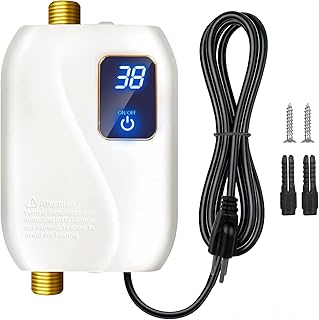
Product highlights: This tankless electric heater uses stainless steel and ABS, features an LED display, and provides rapid heating. With 3000W, it can raise water by up to 82°F at lower flow or 131°F at moderate flow in seconds. Temperature is adjustable in Fahrenheit or Celsius by holding the power button for six seconds. Safety features include IPX4 waterproofing, water-electrical isolation, leakage protection, dry-boil protection, and automatic shutoff when overheating or idle. Efficiency reaches up to 98% to conserve energy.
Best for: small apartments, under-sink installation, or compact kitchens and bathrooms where space is at a premium. This unit is ideal for users who want quick hot water at the point of use without preheating time.
Limitation: Designed for 0.3–0.5 GPM ranges, so very high flow demands may not maintain consistent temperatures.
14kW Electric Tankless Water Heater, 240V
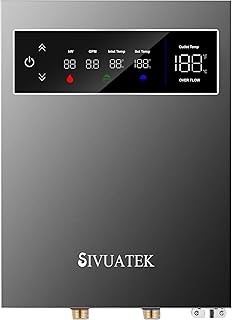
Product highlights: This model delivers 14kW of heating power with up to 99.8% thermal efficiency. It’s designed for 240V circuits and requires a 60-amp circuit breaker. Dimensions are compact, enabling easy under-sink or wall-mounted installation. The unit supports 1–2 simultaneous hot water points such as a kitchen faucet and a bathroom, offering instant hot water without preheating.
Best for: homes needing quick, simultaneous hot water at two points while saving space. Suitable for households upgrading from tank systems with higher demand.
Caution: Installation requires appropriate electrical capacity and professional setup to ensure safe operation.
Jflapil 110V 3000W Tankless Electric Heater

Product highlights: This unit uses stainless steel and ABS for durability and features an LED display with Celsius/Fahrenheit switching via a long press. It heats water instantly without preheating and allows precise temperature control from 82°F to 131°F. Safety protections include IPX4 waterproofing, water-electric isolation, leakage prevention, dry-burn protection, and auto power-off on idle or overheating. High energy efficiency reaches 98%.
Best for: users seeking precise temperature monitoring in tight spaces like under-sink installations or apartments. The touchpoint display is helpful for quick adjustments.
Limitation: Like other electric tankless units, real-world performance depends on electrical supply and installation quality.
MIZUDO Natural Gas Tankless Water Heater

Product highlights: A gas-fired tankless heater with up to 199,000 BTU and 10.3 GPM flow supports multiple fixtures across 2–3 bathrooms plus kitchen and laundry. It supports precise temperature control between 95–149°F with a default comfort setting of 107°F. Features include app-based control and CSA certification, enabling whole-home hot water with on-demand efficiency.
Best for: larger homes or families with higher hot water needs, where multiple outlets must be serviced simultaneously. Gas models can provide higher GPM at consistent temperatures.
Caution: Gas installation requires proper venting, clearances, and local code compliance. Ensure compatibility with your home’s gas supply and venting options.
Rheem 8kW Multi Fixture Tankless Electric Water Heater

Product highlights: The Rheem 8kW model is a compact electric tankless option designed for multi-fixture use. When properly sized and installed, it delivers reliable on-demand hot water while saving space. This unit is suitable for households seeking an electric solution with solid performance for multiple fixtures and compact footprint.
Best for: households needing dependable, space-saving hot water for limited points of use with a straightforward electrical setup. Ideal as a secondary or supplemental heater in smaller homes or apartments.
Limitation: 8kW capacity may limit simultaneous high-demand usage in very large homes or when multiple outlets need hot water at once.
Buying Guide
What should you consider when choosing between tankless and tank water heaters?
- Hot water demand: Assess peak GPM needs across bathrooms, kitchen, and laundry. Gas models generally handle higher simultaneous demand better than most electric units.
- Power and electrical capacity: Electric models depend on available circuits and amperage. Ensure your panel can support the unit’s requirements or plan for upgrades.
- Space and installation: Tankless units save space and can mount on walls or under sinks. Consider venting needs for gas models and wiring for electric ones.
- Temperature control: Look for clear displays and precise digital control. Fahrenheit/Celsius switching and stable setpoints help maintain comfort.
- Efficiency and standby loss: Tankless systems offer on-demand heating with minimal standby energy. Gas models may provide higher flow with consistent temps in busy homes.
- Safety features: IP ratings, dry-burn protection, leakage protection, and automatic shutoff add reliability, especially in under-sink installations.
What type fits which home?
- Under-sink or apartment living: Compact electric tankless heaters are ideal for point-of-use hot water near a sink or small bathroom.
- Small to mid-sized homes: A multi-point electric tankless unit or compact gas-powered model can serve two fixtures at once.
- Large homes or busy households: Gas tankless units with higher GPM are better for multiple simultaneous outlets across rooms.
Installation and safety tips
- Follow manufacturer wiring or venting instructions precisely. Incorrect installation can affect performance and safety.
- Hire licensed professionals for electrical or gas connections and venting when required.
- Check local codes and permits for gas venting and electrical work.
FAQ
- What is the main difference between tankless and tank water heaters?
Tankless units heat water on demand, reducing standby energy. Tanks store hot water and can waste energy through standby heat loss. - Do electric tankless heaters need special electrical service?
Yes, many require dedicated circuits and adequate amperage. Check the unit’s electrical requirements before purchase. - Can tankless heaters provide hot water for multiple fixtures?
Some models can, especially higher-capacity electric or gas units. Review GPM ratings to match your needs. - Is gas or electric more cost-effective for tankless systems?
Gas often provides higher flow for multiple fixtures; electric units may be easier to install in smaller spaces but depend on electrical capacity. - Do these units require venting?
Gas tankless heaters require venting; most electric models do not, simplifying installation in many spaces. - What maintenance is needed?
Maintain venting (gas models) and inspect connections for leaks. Descale as needed if you have hard water.