When shopping for tubing insulation that withstands high temperatures, you want materials that resist heat, abrasion, and chemical exposure while keeping wires and hoses organized. This guide features five top options that perform well in demanding environments. It’s ideal for buyers seeking durable fiberglass sleeves, silicone-coated insulation, and heat-shielding sleeves for automotive, industrial, and residential applications.
| Product | Best For | Key Benefit |
|---|---|---|
| uxcell Insulation Braid Sleeving, 9.8Ft-5mm | Small-diameter wiring | High temp fiberglass sleeve with VW-1 flame resistance |
| uxcell Insulation Cable Protector, 16.4Ft-6mm | Medium-diameter cables | Long length and strong heat tolerance |
| Silicone Fiberglass Sleeve Heat Shield, 5/16″-9ft | Brake lines and fuel lines | Silicone coating adds abrasion resistance and dielectric protection |
| 25mm – 1″ Self Closed Aluminized Heat Shield Sleeve, 39″ | Automotive hoses and high-temp bundles | Aluminum foil and fiberglass for reflective heat shielding |
| ZhiYo 20FT 3/4” Wire Loom Split Tubing | Protects and hides wires in harsh environments | High-temp capable split tubing for flexible routing |
uxcell Insulation Braid Sleeving, 9.8Ft-5mm High Temp Fiberglass Sleeve White

Best for: Compact wiring harnesses and tight bundles. This alkali-free fiberglass sleeve handles up to 600℃ and provides flame resistance (VW-1). Its 5mm inner diameter fits smaller cables, making it ideal for automotive sensor lines or short electrical runs in industrial equipment.
Why selected: The combination of high-temperature tolerance, thin profile, and a robust binder coating offers clean routing and insulation without bulk. It helps keep wires neat and protected from heat exposure while maintaining accessibility for service.
Limitation: The 5mm diameter may be too small for thicker wire bundles; consider larger diameters if you need to wrap multiple cables together.
uxcell Insulation Cable Protector, 16.4Ft-6mm High Temp Fiberglass Sleeve Black

Best for: Medium-diameter cables and longer runs where heat exposure is consistent. Its 6mm inner diameter accommodates thicker wires or small bundles, and its 600℃ working temperature supports high-heat environments found in machinery and exhaust areas.
Why selected: Its longer length provides flexibility for extended installations, reducing the need for joints. The black fiberglass sleeve is durable and easy to route along harnesses while maintaining protective separation from heat sources.
Limitation: The sleeve may be bulkier than ultra-thin options; plan routing to avoid sharp bends that could stress the material.
Silicone Fiberglass Sleeve Heat Shield Wire Protective High Temp (5/16″-9ft)
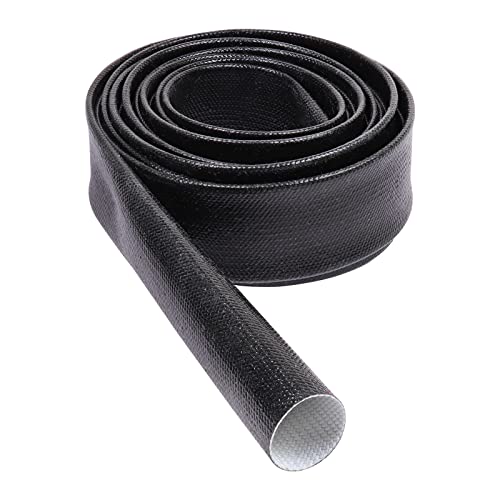
Best for: Direct-heat exposure lines, such as brake lines, fuel lines, and critical wiring in automotive or industrial settings. The silicone outer layer provides dielectric resistance and abrasion protection up to 500℉.
Why selected: The dual-layer design offers strong protection against radiant heat and fluids while resisting wear from oil and fuels. It’s well-suited for environments where hoses run near hot engine components.
Limitation: Silicone coatings can add some rigidity; ensure bends remain within recommended radii to prevent cracking over time.
25mm – 1″ Self Closed Aluminized Heat Shield Sleeve

Best for: Automotive and industrial applications needing reflective heat protection for hoses, cables, and ducts. The side-entry sleeve with aluminum foil captures radiant heat and minimizes heat transfer to sensitive components.
Why selected: This sleeve combines aluminum foil with fiberglass and polyester layers for a robust heat-shielding solution. It supports high-temperature environments and helps prevent heat-induced damage to wiring and hoses.
Limitation: The reflective surface may need clean mounting to maintain reflective efficiency; ensure proper overlap and sealing to maximize insulation performance.
ZhiYo 20FT 3/4” Wire Loom Split Tubing

Best for: Flexible routing of larger wire bundles in automotive or industrial settings. Its split design makes installation easier around existing hardware, while its polypropylene-based construction provides substantial heat resistance.
Why selected: The split tubing enables quick access for maintenance and upgrades without dismantling entire harness lines. It supports better organization and protection in high-temperature areas where movement and vibration occur.
Limitation: Not a dedicated high-temperature sleeve; verify that its temperature range aligns with your specific heat exposure levels to avoid degradation over time.
Buying Guide: How to Choose High-Temp Tubing Insulation
What diameter do I need? Measure the largest cable or hose in your bundle and choose a sleeve with a comfortable fit. If possible, select a slightly larger inner diameter to allow airflow and cooling.
What temperature range is required? For extreme heat, fiberglass and silicone-coated sleeves offer strong resistance. For radiant heat, aluminized shields provide an extra layer of protection.
Is flexibility important? Split or braided sleeves improve ease of installation and future upgrades. Thin-walled sleeves reduce bulk in tight spaces.
What about chemical exposure? Some sleeves resist fuels, oils, and coolants better than others. Confirm compatibility with the liquids present in your system.
What environment will it endure? Automotive and industrial settings may require flame resistance (VW-1) and adhesive heat shields. Outdoor or marine use benefits from durable coatings and moisture resistance.
Frequently Asked Questions
- Question: What is the difference between fiberglass sleeves and silicone-coated sleeves? Answer: Fiberglass sleeves provide high-temperature resistance; silicone-coated sleeves add abrasion protection and dielectric properties in addition to heat resistance.
- Question: Can these sleeves be cut to length? Answer: Yes, most sleeves can be trimmed with standard cutting tools, but follow manufacturer guidelines for clean cuts and edge protection.
- Question: Are these sleeves flame resistant? Answer: Many options have VW-1 flame resistance or similar standards as noted in product features.
- Question: Which product is best for automotive fuel lines? Answer: Silicone fiberglass sleeves with a silicone outer layer offer abrasion and fuel resistance, making them suitable for fuel lines and brake hoses.
- Question: Should I use a heat shield sleeve for all high-heat areas? Answer: Use heat shields for radiant heat and areas near hot exhaust or engines; combine with sleeves for direct insulation when needed.
- Question: Do these sleeves require special installation tools? Answer: Basic cutting tools and careful routing are typically sufficient; some products benefit from clamps or zip ties for secure mounting.