If you’re upgrading a hydronic hot-water baseboard system, these baseboard heater covers offer a practical blend of style, durability, and easy installation. They’re best for homeowners seeking rust-proof, low-maintenance options that fit standard baseboard units without special tools. Ideal buyers include DIY enthusiasts, renters updating spaces, and homeowners upgrading aging covers for living rooms, bedrooms, and hallways. The following picks emphasize easy, tool-free installation, compatibility with common baseboard brands, and finishes that resist heat and humidity while boosting room aesthetics. The chart below highlights five top choices to compare at a glance.
| Product | Best For | Key Benefit |
|---|---|---|
| 4FT Baseboard Heater Cover (Bvlikorr Store) | DIYers seeking rust-proof, snap-on covers | Tool-free install with end caps |
| neatheat 6ft Baseboard Front Cover | Longer runs needing a single piece | Easy cut-to-fit option |
| NeatHeat 4ft Baseboard Front Cover | Most common 4 ft units | Measuring guide advised |
| Redants 4 FT Baseboard Covers | Hydronic, rusty fronts | Slide-on with two wall brackets included |
| [2 Pack] End Caps For Baseboard Heaters | Fine-tuning fit for various brands | Two caps, trim-friendly plastic |
4FT Baseboard Heater Cover, Adjustable Size

Best for DIY homeowners replacing worn covers without custom fabrication. The white, rust-resistant baseboard cover uses a powder-coated surface that stands up to heat and humidity. It’s adjustable from 1 to 4 feet, fits most standard pipes, and installs with a snap-on design and end caps—no drilling required. This makes it a solid choice for updating living rooms, bedrooms, and bathrooms with minimal downtime.
Why this pick: The tool-free installation and rust-proof construction reduce maintenance while improving appearance. It’s especially suitable for spaces where the existing baseboard runs vary slightly in length. A potential limitation is fitting very nonstandard baseboard profiles that require precise measurements before purchase.
Best for: DIY enthusiasts seeking a simple, durable upgrade for typical 4 ft baseboard runs. Choose this if you want a straightforward, no-tools install with a clean white finish and minimal risk of warping.
neatheat 6ft Baseboard Front Cover

Best for longer baseboard runs where a single piece covers the length. This 6-foot cover is designed to slide over standard front-baseboard profiles and can be cut if needed, offering flexible adaptation to rooms with extended runs. It’s well-suited for living rooms or hallways with continuous baseboard features.
Why this pick: A longer profile reduces seam visibility and can simplify installation on uninterrupted walls. The option to cut with household tools provides a practical balance between customization and speed. Limitation: verify your baseboard height and depth against the product’s approximate fit before purchasing.
NeatHeat 4ft Baseboard Heat Front Cover

Best for standard 4-ft baseboard units with emphasis on ease of installation. This cover prioritizes compatibility across most baseboard heaters, and the included measuring guide helps buyers confirm a proper fit before purchase. End caps and accessories may be sold separately, offering expandable customization.
Why this pick: It’s a reliable option for typical homes with common 4-foot sections. The guidance to measure ensures fewer mismatches. Limitation: some installations may require additional accessories to complete a clean look.
Redants 4 FT Baseboard Covers
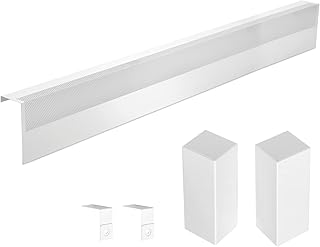
Best for hydronic baseboard systems with rust concerns. These covers slide over the old plates in about three minutes and include two wall brackets for added stability. They’re designed specifically for hydronic bases, with a hidden knob on electric models and a simple end-cap removal option for thermostats.
Why this pick: Quick, tool-free installation makes renovation tasks efficient. The fit check ensures alignment with standard back-plates and depths. Limitation: verify the back-plate height and element depth to ensure compatibility with your unit.
[2 Pack] End Caps For Baseboard Heater Covers

Best for achieving a tailored finish across various brands. This 2-pack includes left and right end caps, with a clip-on design that snaps into place for a secure fit. The caps are trim-friendly, allowing precise sizing with household tools.
Why this pick: Great for compatibility with multiple brands and for those who need to fine-tune end lengths. Limitation: plastic caps can be trimmed but may wear over time with frequent adjustments.
Buying Guide
What to consider when choosing hot water heat register covers:
- Fit and measurements: Measure baseboard height, depth, and length. Look for covers labeled as adjustable or with a measuring guide to minimize guesswork.
- Material and finish: Powder-coated steel resists rust and heat better than plastic. White or neutral finishes blend with most interiors and resist discoloration from heat.
- Installation: Tool-free, snap-on designs save time and reduce the risk of damaging old walls. End caps and brackets add stability for longer runs.
- Compatibility: Hydronic (hot-water) baseboards vs. electric models can differ in knob visibility and end-cap design. Confirm fit with your exact system type.
- Maintenance: Choose covers that are easy to wipe down. A smooth surface simplifies cleaning around dust and debris that accumulate near heating elements.
How to measure for the right cover
1) Measure the height of the back-plate from the floor. 2) Measure the depth from the wall to the front edge of the heater. 3) Measure the total length of the baseboard run. Compare with product specs to ensure the cover length and depth will align with your unit.
Which features matter most
- Durability: Rust-proof materials extend life and maintain appearance.
- Ease of installation: Snap-on designs reduce installation time and avoid wall damage.
- Versatility: Adjustable lengths and end-cap options allow coverage across multiple room sizes and brands.
FAQ
- Q: Are these covers suitable for all baseboard sizes?
- A: Most covers fit standard baseboard profiles; always verify the height, depth, and length against product measurements.
- Q: Do these covers require tools for installation?
- A: Many options offer tool-free installation, with some needing basic measuring or trimming for a precise fit.
- Q: Can I cut these covers to fit non-standard lengths?
- A: Some models are designed to be cut with household tools; check product notes before modifying.
- Q: Will covers affect heating efficiency?
- A: Properly fitting covers should not impede heat output when installed correctly and sized to the unit.
- Q: How do I maintain these covers?
- A: Wipe with a damp cloth to remove dust and debris; avoid abrasive cleaners on powder-coated surfaces.