Answering the search intent for buyers seeking reliable baseboard heater thermostats, this guide highlights five models that fit common 240V and 120V installations. These options are best for homeowners upgrading an older system, apartments needing quick control, and spaces that benefit from precise temperature management. Each choice is selected to balance accuracy, ease of installation, and compatibility with line-voltage baseboard heaters. Use the quick reference table below to compare core specs at a glance.
| Product | Voltage / Type | Key Benefit |
|---|---|---|
| 240V Only 4-Wire Manual Electric Baseboard Thermostat | 240V / 4-wire, single pole | High accuracy with 40–80°F range |
| Mysa Smart Thermostat LITE | 120V-240V, WiFi smart | Remote control and scheduling |
| Cadet F Series Double Pole Built-In Thermostat | 120/208/240V, double pole | Easy end-to-end installation with twist dial |
| Cadet Double Pole Line Voltage Thermostat | 120/208/240V, double pole | Simple replacement and solid control range |
| 110V-265V 4-Wire Manual Electric Baseboard Thermostat | 110V-265V, 4-wire | High capacity and precise temperature control |
Note: This guide emphasizes practical installation notes, clear temperature ranges, and how each model fits typical baseboard heating setups. Read each product section to see who benefits most and what to watch for before buying.
240V 4-Wire Manual Electric Baseboard Thermostat

Brand: YeloDeer Store
Best for: Homes with 240V baseboard systems seeking precise control. The unit claims higher accuracy than traditional mechanical thermostats and supports up to 4800 W, which suits mid-to-large rooms. The large dial makes setting temperatures straightforward for quick thermostatic changes.
Why selected: This model emphasizes accuracy and a wide 40–80°F (4.4–26.7°C) range, helping maintain consistent comfort. The flush design reduces wall protrusion and blends with most interiors.
Caution: It is a single-pole device, so it controls only one leg of the circuit; ensure this aligns with existing wiring practices in your setup. Professional wiring may be needed for complex installs.
Mysa Smart Thermostat LITE for Electric Baseboard Heaters

Brand: Mysa Store
Best for: Tech-savvy homes that want remote control, voice assistant integration, and weekly scheduling for electric baseboard heat. Works with HomeKit, Alexa, and Google, with WiFi connectivity for on-demand adjustments from anywhere.
Why selected: The thermostat supports 7-day scheduling and remote access, which can yield meaningful energy savings without sacrificing comfort. It’s a good fit for spaces where inhabitants value automation.
Caution: Requires a stable WiFi connection and compatible mobile device to maximize features. Some users may require a professional wiring assessment for compatibility with existing panels.
Cadet F Series Double Pole Built-In Thermostat

Brand: Cadet Store
Best for: Homeowners with Cadet F series baseboard heaters who want a convenient, end-of-heater installation option. The large dial and broad 45–80°F range help maintain steady comfort with minimal adjustments.
Why selected: Designed to mount at either end of Cadet baseboard units, this model minimizes wiring complexity and offers a straightforward replacement path for existing Cadet thermostats.
Caution: Only compatible with Cadet F series heaters; mixing brands may require adapters or a different mounting approach.
Cadet Double Pole Line Voltage Thermostat

Brand: Cadet Store
Best for: Homes needing a robust, universally compatible line-voltage thermostat for baseboard or wall heaters. It handles higher wattage at 240V and supports easy DIY replacement with color-coded wiring.
Why selected: The double-pole design switches both legs, improving safety and control accuracy. The simple twist-dial range (40–80°F) helps maintain stable temperatures with a clear off position.
Caution: Ensure compatibility with your specific heater model and electrical panel. Incorrect wiring can affect performance or safety.
110V-265V 4-Wire Manual Electric Baseboard Thermostat
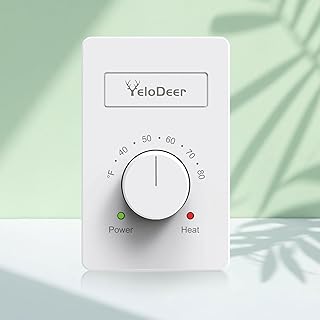
Brand: YeloDeer Store
Best for: Diverse voltage setups needing flexible control across a wide 110–265V range. Suitable for homes with mixed voltage heating systems or older installations converting to line voltage control.
Why selected: This model emphasizes a wide voltage window and a strong temperature control range (40–80°F), making it adaptable for different installations and climates.
Caution: Check terminal wire size and ensure the 4-wire configuration matches your wiring plan; a professional install may be prudent for complex layouts.
Buying Guide
What should you consider when choosing a baseboard heater thermostat?
- Voltage compatibility: Confirm your heater operates at 120V, 208V, or 240V, and whether you need a single-pole or double-pole thermostat.
- Temperature range and accuracy: Look for a device offering a practical range (typically around 40–80°F) and higher accuracy for stable comfort.
- Wiring and installation: End-mounted vs. wall-mounted, and whether the unit supports easy DIY replacement or requires professional wiring.
- Smart features vs. basic control: If remote control, scheduling, or voice integration matters, prioritize models with WiFi or smart home compatibility.
- Compatibility with baseboard brands: Some thermostats are designed for specific heater families; verify compatibility to avoid fit and function issues.
- Reliability and safety: Double-pole designs can enhance safety by switching both hot conductors; consider this for long-term use and safety compliance.
FAQ
- What is the difference between single-pole and double-pole thermostats?
Answer: Single-pole thermostats switch one leg of the circuit and are common for simple setups; double-pole thermostats switch both legs, offering better electrical isolation and safety for rated loads. - Can I install a line-voltage thermostat myself?
Answer: Basic replacements are possible for some models, but many installations involve high voltage and require electrical safety practices. If unsure, hire a licensed electrician. - Do smart thermostats work with baseboard heaters?
Answer: Yes, some models are designed for baseboard heaters and offer WiFi and voice integration, enabling remote control and scheduling. - How do I know the right thermostat for my heater brand?
Answer: Check the heater’s voltage, pole configuration, and the thermostat’s compatibility notes. Some thermostats are brand-specific, while others are universal with proper wiring. - What is the typical temperature range to set for comfort?
Answer: Common comfort settings fall between 68°F and 72°F (20–22°C); many thermostats provide a 40–80°F operating range for flexibility.