If you’re seeking American-made water heaters, this guide highlights five models with domestic design or origin clues and practical features. Each option targets a specific buyer: compact homes needing point‑of‑use heat, small to medium families demanding steady supply, or busy households seeking high flow and on‑demand performance. The following summaries help you compare capacity, efficiency, and installation considerations at a glance.
| Product | Best For | Key Benefit |
|---|---|---|
| Hatco S-12 Imperial Booster Heater | Commercial or multi-appliance setups | Boosts hot water supply for high-demand periods |
| AO Smith EJC-10 Residential Electric Water Heater | Under-sink or compact residential use | Compact design with easy side connections |
| Rheem Mini-Tank Electric Water Heater, 2.5 Gallon | Point-of-use hot water near a sink or appliance | Small, easy to install, adjustableTemp |
| MIZUDO Natural Gas Tankless Water Heater | Whole-home on-demand with several outlets | High flow with WiFi control |
| Rheem PROE50 M2 RH95 | 3–5 person homes needing reliable electric heat | Space-efficient, robust output |
Hatco S-12 Imperial Booster Heater

The Hatco S-12 Imperial Booster Heater is designed for boosting hot water supply during peak demand. Best for commercial kitchens, restrooms, or multi-appliance setups where instant hot water is critical. It complements existing water heating systems by ensuring consistent output when demand spikes. A potential limitation is the need for appropriate plumbing and electrical wiring to integrate with current systems.
AO Smith EJC-10 Residential Electric Water Heater

AO Smith EJC-10 is a compact electric heater intended for residential use where space or plumbing routes are constrained. It features side-mounted connections for easy installation in limited spaces. Best for apartments or small homes needing a space-efficient, reliable hot water solution. A caution: verify electrical compatibility and mounting clearance in your installation area.
Rheem Mini-Tank Electric Water Heater, 2.5 Gallon
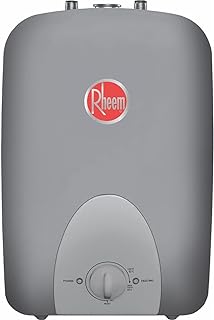
Rheem’s 2.5-gallon mini-tank offers a convenient point-of-use hot water source. Best for under-sink or near-appliance needs, it provides adjustable temperature control from 50° to 140°F. Choose this if you want fast hot water at a single faucet or small appliance area. Limitation: small capacity means frequent reheat for multiple simultaneous uses.
MIZUDO Natural Gas Tankless Water Heater

MIZUDO’s tankless model delivers up to 10.3 GPM, suitable for whole-home use with 2–3 bathrooms. It features precise temperature control (±1°F) and a wide 95–149°F range. Best for households seeking on-demand hot water and energy efficiency. A potential limitation is the need for proper venting and gas installation proficiency.
Rheem PROE50 M2 RH95 50-Gallon Electric Water Heater

This 50-gallon electric model is intended for households with 3–5 people or homes with 3+ bathrooms. It is designed to fit in smaller spaces compared with other 50-gallon units while delivering reliable hot water. Best for replacing an older tank with a compact, steady electric heater. Limitation: space savings come with a standard electric power draw; ensure circuit capacity matches requirements.
Buying Guide
What should you ask before buying a water heater made in the USA?
- Capacity vs. Demand: Do you need bulk hot water for showers and laundry, or a point-of-use unit for a sink?
- Fuel Type: Is gas or electric preferable for your home’s energy profile and installation?
- Space and Mounting: Does your space support under-sink, closet, or outdoor installation? Check clearances and connections.
- Efficiency and Control: Is precise temperature control important? Look for units with adjustable settings and good modulation.
- Installation Requirements: Are electrical, venting, or plumbing adjustments feasible in your area?
- Maintenance: Consider anode rods, drain valves, and potential serviceability in your climate.
How to choose by scenario
- Small apartment or workspace: Choose compact electric models or a 2.5–6 gallon unit for immediate hot water near the point of use.
- Family home with multiple bathrooms: Consider 50-gallon electric or a high-flow gas tankless model for steady supply.
- High-usage households: A booster heater can help sustain hot water during peak times when paired with a larger primary heater.
Installation and safety tips
- Follow manufacturer instructions for connections and venting (gas models require proper venting and gas lines).
- Verify electrical service capacity for electric models to avoid overloading circuits.
- Schedule professional installation when dealing with gas, venting, or complex plumbing.
FAQ
- What is the advantage of a tankless water heater? Answer: Tankless units heat water on demand, reducing standby energy loss and offering endless hot water when properly sized.
- Do American-made water heaters come with standard warranty coverage? Answer: Warranty terms vary by model and manufacturer; check the product page for specifics.
- Can I install a hot water heater myself? Answer: Some electric or small-unit models may be DIY-friendly, but gas models typically require a professional.
- What should I consider for space efficiency? Answer: Look for compact dimensions, wall-mounted options, and 2–4 gallon mini-tanks for point-of-use needs.
- Is a booster heater necessary for all homes? Answer: Not always; boosters help during peak demand when the primary heater can’t keep up.
- Which fuel type is more cost-effective? Answer: It depends on local energy prices and availability; gas often offers lower operating costs in many markets, while electric models are easier to install in apartments.