The best direct vent gas stove options deliver reliable warmth, realistic flame aesthetics, and simple installation without venting through a chimney. This guide highlights five top choices suited for different homes and heating needs. Whether you want true dual-fuel flexibility, remote operation, or a log-set appearance, there is a model that fits. The following selections are ideal for small-to-mid-sized living spaces, apartments, or rooms needing supplemental heat. The quick comparison table below helps you compare core specs at a glance.
- Product: Ashley DV Cast Iron Gas Stove
- Fuels: Natural gas
- Heating area: Up to 1,000 sq. ft.
- Key feature: Remote control, blower, realistic log set
| Product | BTU | Area (sq. ft.) | Fuel | Best For |
|---|---|---|---|---|
| Ashley DV Cast Iron Gas Stove | 23,500 | Up to 1,000 | Natural gas | User seeking realistic fire and remote control |
| Duluth Forge Ventless Liquid Propane Gas Stove | 25,000 | Up to 1,100 | Propane | Small-to-mid spaces needing ventless heat |
| Duluth Forge Ventless Natural Gas Stove | 25,000 | Up to 1,100 | Natural gas | Ventless option for natural gas users |
| Bluegrass Living Panorama Vent Free Dual Fuel 3-Sided Gas Stove | 23,000 | Up to 1,100 | Natural gas or propane | Dual-fuel flexibility and immersive view |
| Duluth Forge Dual Fuel Ventless Gas Stove | 26,000 | Up to 1,200 | Natural gas or propane | Remote control and large room heating |
Ashley DV Cast Iron Gas Stove
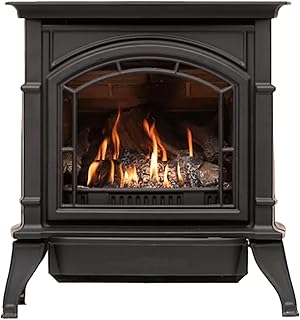
Best for users who value a realistic, brick-lined fireplace look with convenient control. This unit heats up to 1,000 square feet using 23,500 BTUs and is designed for natural gas. A built-in 130 CFM blower helps distribute warmth, and the remote control adds ease of operation. The Ridgewood timber logs and red brick liner contribute to a convincing flame presentation, making this model appealing for living rooms or dens where ambiance matters as much as heat.
Who it’s best for: Homeowners seeking a traditional stove aesthetic with modern convenience and substantial heat for medium-sized spaces. Choose this if you want a prominent, decorative flame look and remote operation.
Limitation: It is designed for natural gas only; if you need propane, you would require a different fueling option or conversion kit depending on model allowances.
Duluth Forge Ventless Liquid Propane Gas Stove

Best for spaces without chimney access or where venting is restricted. This 25,000 BTU unit heats up to 1,100 square feet and uses propane with thermostat-controlled settings for customized warmth. The design includes hand-painted logs cast in concrete to imitate real wood and durable refractory ceramics to support long service life. A remote thermostat makes it simple to maintain comfort without constant manual adjustment.
Who it’s best for: Buyers needing a ventless propane solution for open floor plans or rooms where ducting is impractical. Opt for this if you want a strong heat output with a hands-off temperature control.
Limitation: Ventless units require careful fuel source planning and room oxygen considerations; ensure compliance with local codes and safe clearance recommendations.
Duluth Forge Ventless Natural Gas Stove
Best for natural gas users who want a heat-efficient, ventless installation. With 25,000 BTUs heating up to 1,100 square feet and thermostat-based control, this model mirrors the propane version in function but runs on natural gas. The hand-painted logs and concrete detailing create a high-end appearance, while refractory ceramics improve durability. The remotely adjustable thermostat provides convenience for maintaining consistent warmth.
Who it’s best for: Homes with natural gas lines seeking a strong ventless option that matches the propane model in power and aesthetics. Choose this if you prefer natural gas and a without-venting setup.
Limitation: Ventless operation requires proper room ventilation planning and adherence to regional codes for safety and efficiency.
Bluegrass Living Panorama Vent Free Dual Fuel 3-Sided Gas Stove

Best for installations where a three-sided view enhances the room’s focal point. This 23,000 BTU unit supports dual-fuel operation (natural gas or propane) and covers up to 1,100 square feet. Features include a U-Burner chassis for a lifelike flame and three-sided viewing, plus a thermostat remote with an LCD display for easy adjustments. The remote makes it practical to fine-tune heat without approaching the unit.
Who it’s best for: Homes wanting flexible fuel choice and a dramatic, three-sided viewing experience. Choose this if you value ambiance as much as practical heat and want remote control features.
Limitation: Dual-fuel design adds complexity; confirm the installation feasibility for your gas supply and ensure proper venting or vent-free compliance as required.
Duluth Forge Dual Fuel Ventless Gas Stove

Best for larger spaces needing robust heat and flexible fuel options. The unit delivers 26,000 BTU and heats up to 1,200 square feet. It includes a remote control for temperature settings and flame control. The design emphasizes six hand-painted logs with ceramic fiber material for long-lasting life. As a ventless option, this model provides a convenient heat source without a chimney or dedicated venting pathway.
Who it’s best for: Homeowners seeking maximum heat output in ventless form, with the advantage of dual-fuel capability. Choose this if you need higher BTU output and remote control functionality in a ventless setup.
Limitation: Ventless operation requires proper room ventilation and adherence to local codes; ensure the space is suitable for continued use in all seasons.
Buying Guide: Direct Vent Gas Stove Essentials
- Vent Type: Direct vent vs. ventless. Direct-vent stoves expel combustion byproducts through a dedicated vent, while ventless models burn cleaner and don’t require ductwork. Ventless units may require oxygen depletion sensors and installation in compliant spaces.
- Fuel Type: Natural gas vs. propane. Natural gas is typically convenient if a gas line is present; propane offers flexibility for locations without a gas line but may require better ceiling and space planning for safe operation.
- BTU Output: Higher BTUs heat larger spaces but may be unnecessary in compact rooms. Match BTU to room size and insulation to avoid overheating or underheating.
- Remote and Thermostat Control: Remote control and built-in thermostats improve usability, particularly in living rooms or bedrooms where reaching the unit isn’t convenient.
- Realistic Flame Aesthetics: A convincing log set and flame presentation enhances ambiance. Look for hand-painted logs and durable ceramic fiber materials if aesthetics are important.
- Installation Considerations: Check room size, clearance requirements, and local codes. Venting needs, electrical connections for blowers, and distance from combustibles should guide the final choice.
- Maintenance: Remote controls, blower fans, and decorative logs require periodic cleaning. Ventless models may need vent-free regulator checks and safety inspections.
Frequently Asked Questions
- What is the main difference between direct vent and ventless gas stoves? Direct vent stoves vent combustion gases through a dedicated vent, while ventless stoves do not require external venting but rely on room air for combustion and safety sensors.
- Do ventless models require a lot of space? Ventless units are often favored for spaces without chimney access, but they still need adequate clearance and ventilation per local codes.
- Can I use propane or natural gas interchangeably? Some models support dual-fuel operation, while others are dedicated to one fuel type. Always follow the manufacturer’s fuel requirements.
- Is remote control energy-efficient? Remote control helps optimize thermostat settings and flame levels, potentially saving energy by maintaining comfortable temperatures.
- Which stove is best for a large open room? Look for higher BTU outputs (e.g., 25,000–26,000 BTU) and models with robust heat distribution features like built-in blowers or multi-sided flame views.
- What safety features should I expect? Thermostat-controlled operation, oxygen depletion sensors on ventless models, and proper clearances from combustibles are essential safety considerations.