When selecting a kerosene heater with a blower, look for strong heat output, safety features, fuel versatility, and portability. This guide highlights five reliable options suited for workshops, garages, outdoor job sites, and emergency use. Best for large, semi-outdoor spaces; better for quick, zone heating; choose this if you need a portable option with robust airflow; avoid models with limited fuel compatibility if you require versatility. The table below summarizes key choices to help compare at a glance.
| Product | Best For | Heat Output | Fuel & Run Time |
|---|---|---|---|
| VEVOR Kerosene Forced Air Heater | Industrial/Workshop | 215,000 BTU | K-1 kerosene, diesel; 13.2 gal tank |
| Reddy Heater 80,000 BTU (RFA80T-V3) | Construction & Garage | 80,000 BTU | Multi-fuel; kerosene, fuel oil, diesel |
| Sengoku HeatMate Portable Kerosene Heater | Small to medium spaces | 10,000 BTU | Standard kerosene |
| AHUAWA 10,000 BTU Kerosene Heater | Emergency & Compact spaces | 9,000–10,000 BTU | Kerosene; portable |
| Sengoku KeroHeat 23,500 BTU (2 Pack) | Indoor/Outdoor versatility | 23,500 BTU | Wood; kerosene variants (pack) |
VEVOR Kerosene Forced Air Heater
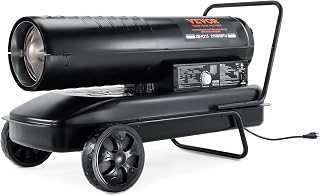
Best for industrial spaces and large workshops that require robust, continuous heat with a blower-assisted distribution. This model features a massive 13.2 gallon tank and a thermostat for energy efficiency, making it suitable for extended use in semi-outdoor environments.
Who: Ideal for shop crews, contractors, and maintenance teams managing cold work zones. Why: High BTU output with portable design supports rapid whole-area warming.
Caution: Check ventilation requirements; ensure safe clearance around heat-exposed equipment when operating indoors.
Reddy Heater 80,000 BTU Kerosene Heater

Best for construction sites and larger garages needing reliable, multi-fuel capability. The RFA80T-V3 delivers 80,000 BTU and supports kerosene, fuel oil, diesel, JP8, and jet fuel, enabling flexible fuel sourcing on remote worksites.
Who: Suitable for contractors and shop owners who value fuel flexibility. Why: Versatility reduces downtime if a preferred fuel source is unavailable.
Caution: Heavier fuel options may affect availability and handling; confirm local fuel compatibility before use.
Sengoku HeatMate Portable Kerosene Heater

Best for compact spaces and mobile heating needs. The HeatMate delivers 10,000 BTU and runs on a 1.2-gallon tank for up to 14 hours, with automatic safety shut-off and a push-button start for quick setup.
Who: Great for apartments, small workshops, and outdoor setups where portability matters. Why: Lightweight design and simple operation support flexible use.
Caution: Suitable for well-ventilated areas; monitor fuel levels to prevent unexpected shutdowns during extended use.
AHUAWA 10,000 BTU Kerosene Heater

Best for emergency preparedness and small living or work areas. This 9,000–10,000 BTU heater provides heat without electricity, powered by a kerosene tank that can last up to about 20 hours in typical conditions.
Who: Ideal for power outages and compact rooms. Why: Electricity-free operation ensures warmth during outages and storms.
Caution: No electrical start means manual lighting considerations; use with proper ventilation and follow safety guidelines.
Sengoku KeroHeat 23,500 BTU (2 Pack)

Best for flexible indoor-outdoor use with higher heat output per unit. The two-pack design provides extended coverage and can heat zones up to 900 square feet collectively, featuring automatic safety shut-off and push-to-start operation.
Who: Suitable for backyard gatherings, tents, and larger rooms needing portable, reliable heat. Why: Higher BTU per unit and a multi-heater setup improve versatility for variable spaces.
Caution: Pack configuration requires careful management of multiple fuel sources and clearances for safe operation.
Buying Guide
What to look for when choosing a kerosene heater with a blower:
- Heat output vs. space size: Larger spaces require higher BTU models; smaller areas do fine with 10,000 BTU or less.
- Fuel flexibility: Multi-fuel capabilities offer resilience if one fuel type is hard to source.
- Ventilation and safety: Ensure proper ventilation; use automatic shut-off features and keep combustibles away.
- Portability: Consider handle/wheel design if you need to move the heater between rooms or jobsites.
- Fuel efficiency and run time: Tanks with larger capacities extend operation between refills, important for ongoing work or outages.
- Electrical dependence: If you want operation during power outages, non-electrical ignition and manual start can be essential.
Frequently Asked Questions
- What space size is best for kerosene heaters with blowers?
– High-BTU units are better for large workshops; smaller rooms benefit from 10,000 BTU or less. - Are kerosene heaters safe for indoor use?
– They require good ventilation and adherence to safety guidelines; automatic shut-off features add protection. - Do kerosene heaters require electricity?
– Some models can start with a push button or manually without electricity, others may require electricity for igniters. - Can I use diesel or other fuels in kerosene heaters?
– Some models allow multi-fuel use; always verify the manufacturer’s fuel compatibility before operation. - How long do kerosene heaters run on a full tank?
– Run time varies by tank size and BTU; typical small units last many hours, larger tanks extend usage significantly. - What safety features should I prioritize?
– Look for automatic shut-off, tip-over protection, stable bases, and clear labeling of fuel requirements.