Looking for a gas heater with an accurate thermostat to maintain a steady room temperature? These five options deliver built‑in thermostats, compact design, and reliable performance for small to mid‑size spaces. The top picks suit different buyers: homeowners needing indoor wall-mounted heating, garages or workshops requiring more BTU, and those who prefer ventless options for quick heat with minimal installation.
Summary Table
| Product | Best For | Key Point |
|---|---|---|
| Rinnai FC824N Ventless Natural Gas Heater | Indoor wall-mounted spaces | Programmable thermostat, energy efficient |
| Reznor 30K BTU Propane Garage Heater | Garages and shops | Large output, ceiling-mount option |
| Heagstat Non-Programmable Thermostat | Basic climate control | Simple single‑stage control |
| ProCom ML100TBAHR | Small offices or rooms | 10,000 BTU with thermostat control |
| ProCom MN100TPA‑B | Infrared comfort in rooms | 10,000 BTU infrared heat |
Rinnai FC824N Ventless Natural Gas Heater

Best for indoor, wall-mounted heat with programmable control. The Rinnai FC824N offers a nest-like programmable thermostat to maintain comfortable temperatures with energy efficiency. Choose this if you want precise scheduling and compact installation in living rooms, bedrooms, or offices that require reliable ambient warmth.
Best for: spaces that benefit from consistent, programmable heat without a vent or ductwork.
- Programmable thermostat for scheduled heating
- Ventless natural gas operation
- Wall-mounted and easy to install
Caution: Ensure proper ventilation guidelines are followed for indoor gas appliances and confirm electrical compatibility for the model.
Reznor 30K BTU Propane Garage Heater
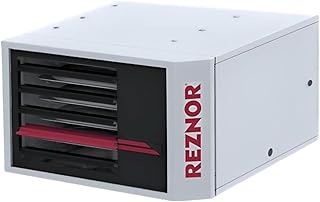
Best for garages and workshops needing higher heat output. The Reznor 30K BTU propane unit provides robust warmth with ceiling-mount options and quiet operation. Opt for this if you require rapid heating and ample BTU in an uninsulated or partially insulated workspace.
Best for: larger, enclosed spaces like garages or small workshops that benefit from forced-air delivery.
- Large 30,000 BTU output
- Ceiling-mount compatibility
- Indoor use with propane supply
Limitation: Propane fuel setup and venting considerations apply; verify installation clearances and fuel sourcing.
Heagstat Non-Programmable Thermostat

Best for simple needs where a basic thermostat control is sufficient. The Heagstat thermostat provides non‑programmable heat regulation for conventional single‑stage systems. Choose this if you want a straightforward, budget-friendly option without scheduling features.
Best for: rooms or spaces that do not require complex scheduling and already have a compatible gas heater.
- Non-programmable single‑stage control
- White backlit display
- Plug‑and‑play compatibility with standard systems
Caution: Lacks advanced scheduling; upgrade to programmable models for energy savings in variable use spaces.
ProCom ML100TBAHR (Liquid Propane Ventless)**

Best for small to mid‑sized spaces where portable, ventless propane heat is desired. This 10,000 BTU unit uses liquid propane with a thermostat control to automatically cycle for stable comfort. It’s suitable for offices, bedrooms, or living rooms where venting is not available.
Best for: small rooms needing dependable, cordoned heat with minimal setup.
- 10,000 BTU output
- T‑Stat control
- Includes hose and regulator
Limitation: Propane fuel supply and ventless operation require proper room sizing and CO monitoring considerations.
ProCom MN100TPA‑B Infrared Plaque Heater
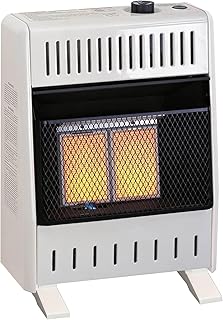
Best for ambient warmth in rooms where infrared comfort is preferred. The MN100TPA‑B provides 10,000 BTU of natural gas infrared heat, with thermostat control and a slim, modern profile. It suits home offices and living spaces that benefit from radiant heat without heavy airflow.
Best for: heating intimate spaces with even radiant warmth and a low profile design.
- 10,000 BTU infrared heat
- Thermostat control
- Wall‑mount or floor placement options
Limitation: Infrared heat can feel different from forced air; best used where radiant warmth is prioritized.
Buying Guide: Gas Heaters With Thermostats
What should I consider when choosing a gas heater with a thermostat?
- Fuel type and venting: Ventless models offer easier installation but require proper indoor air safety practices. Vent‑based units may need venting clearance and professional installation.
- Heat output vs. space size: Match BTU ratings to room size to avoid under‑ or over‑heating. Larger spaces benefit from higher BTUs or multiple units.
- Thermostat features: Programmable thermostats save energy by scheduling heat, while non‑programmable models provide simple operation. Consider whether you want auto cycling and remote controls.
- Installation type: Wall‑mounted units save floor space; floor models or portable units offer flexibility in placement.
- Safety and compliance: Ensure CO safety features, shutoffs, and adherence to local codes. Check for required clearances around the heater.
How do I choose between garage and indoor models?
- Garages: Prefer higher BTU propane or natural gas units with robust airflow and optional ceiling mounting for even heat distribution.
- Indoors: Look for ventless options with programmable or reliable thermostats to maintain comfortable living spaces while meeting ventilation guidelines.
Frequently Asked Questions
- What is the advantage of a programmable thermostat on a gas heater?
Answer: It allows you to schedule heating to match daily routines, improving energy efficiency and comfort. - Are ventless gas heaters safe for indoor use?
Answer: Yes, when installed according to manufacturer guidance and local codes, with proper CO monitoring and ventilation considerations. - Can I install a gas heater myself?
Answer: Some smaller units are designed for DIY installation, but many require professional installation to ensure safety and code compliance. - What space size is appropriate for a 10,000 BTU heater?
Answer: It can effectively heat a small to medium room, typically around 300–500 square feet depending on insulation and climate. - Do gas heaters require electrical power?
Answer: Most programmable or thermostat‑controlled units need some electrical power for the thermostat and safety controls. - What maintenance is needed for ventless gas heaters?
Answer: Regular inspection of venting (if applicable), CO detectors, and periodic mechanical checks per manufacturer guidelines.