The best circulation pump for a water heater depends on the plumbing layout and the type of heater. The Watts Heat H2O and APCOM UT1 are under-sink options for tank-heater systems, while the Grundfos Comfort System is a timer-equipped recirculation kit. VEVOR is a higher-flow pump with three speed settings. The Tankless Water Heater Flushing Kit is for cleaning a tankless heater, not for circulating hot water during everyday use.
| Product | Best suited for | Key distinction |
|---|---|---|
| Watts Heat H2O | Tank-heater homes seeking a timed system | Thermal bypass; no dedicated return line needed |
| Grundfos Comfort System | Timer-equipped recirculation | 25-watt pump with timer and line cord |
| APCOM UT1 | Automatic under-sink operation | Built-in thermostat and timer |
| VEVOR Recirculating Pump | Buyers seeking adjustable pump speeds | Three speed settings and listed 10 GPM maximum |
| Tankless Heater Flushing Kit | Periodic tankless-heater cleaning | Maintenance pump, not a household recirculator |
Watts Heat H2O Recirculation System

Best for: Homeowners with a compatible tank water heater who want hot water sooner without adding a dedicated return line. This system uses a pump and thermal bypass valve to move cooled water from the hot-water line back toward the heater.
The listed features say the valve opens as water in the hot line cools and closes when the line reaches 98°F. The manufacturer states that hot water can reach a faucet or shower in about 15 seconds. The kit includes a pump, a 10-foot cord, adapters, mounting screws, and two 12-inch supply lines. It operates on 120 volts.
Why it was selected: Its under-sink valve arrangement offers an alternative to installing a separate return line, and the described thermal control is relevant to households seeking on-demand circulation. The listing also identifies water conservation as a benefit, but actual savings depend on household use and plumbing conditions.
Limitation: The product is explicitly not designed for tankless water heaters. Check heater type and plumbing requirements before choosing it.
Grundfos Comfort System Recirculating Pump

Best for: Buyers who want a recirculation kit with a timer and line cord. The listed kit details include a timer, a six-foot line cord, and a single-phase 115-volt motor. Its stated flow range is 0–9 U.S. gallons per minute, with a head range of 0–6 feet.
Why it was selected: The Grundfos option is clearly identified as a hot-water recirculating system, and its stated pump range gives buyers useful specifications to compare with their plumbing needs. The included timer can be relevant for people who want to schedule operation rather than run a pump continuously.
Before buying, confirm that the kit configuration and installation approach fit the home’s existing hot-water piping. The available product details do not specify every component in the kit or explain whether a return line is required for a particular installation.
Limitation: The listed head range tops out at 6 feet. Compare this specification with the system’s layout and installation requirements rather than assuming it suits every home.
APCOM UT1 Under-Sink Recirculation Pump

Best for: Buyers looking for automatic under-sink recirculation for a tank water heater. The product is described as having a built-in thermostat and timer, so operation is controlled automatically rather than requiring the user to switch it on for each hot-water draw.
The listing says the pump typically runs three to four times per hour for one to two minutes. It also describes water conservation as a goal of the system. These operating details can help buyers compare it with systems that use a different control approach.
Why it was selected: Its under-sink design and automatic thermostat-and-timer controls make it a straightforward candidate for shoppers prioritizing scheduled or temperature-responsive operation. It is specifically described for tank heaters, which helps distinguish it from products intended for other water-heating setups.
Limitation: The product information does not provide flow or head specifications. Confirm that its installation requirements and system arrangement match the home before purchase.
VEVOR Three-Speed Hot Water Pump

Best for: Buyers who want a pump with adjustable speed settings and a listed maximum flow of 10 gallons per minute. The product has three speed settings, with listed flow rates of 2.13, 1.69, and 1.21 cubic meters per hour and corresponding power figures of 99, 67, and 44 watts.
The listing gives a 21.6-foot maximum head lift and describes a stainless-steel pump head. It also lists applications including home hot-water circulation, boilers, floor heating, solar and electric water heaters, and radiators. Check the product documentation to verify suitability for the intended water system and connections.
Why it was selected: The speed choices and stated flow and head figures make this model easier to compare on performance specifications than products whose provided details focus mainly on controls or installation. It may suit buyers who need to consider adjustable circulation rather than a single operating setting.
Limitation: The listing’s broad application claims do not establish compatibility with every plumbing arrangement. Verify connection sizes, installation requirements, and the system’s needs before selecting it.
Tankless Water Heater Flushing Kit
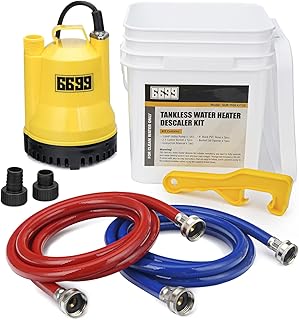
Best for: Tankless-water-heater owners who need a pump and accessories for periodic flushing, not homeowners seeking a pump for everyday hot-water recirculation. The kit includes a 1/6-horsepower submersible utility pump, two six-foot PVC hoses, adapters, and a three-gallon bucket.
The pump is listed with a maximum flow rate of 1,100 gallons per hour and a maximum lift of 16.5 feet. The kit instructions describe circulating a mixture of cleaner and water through a tankless heater connected at isolation valves. Vinegar or biodegradable cleaner is not included.
Why it was selected: The keyword can lead shoppers to different kinds of water-heater pumps. This kit is useful to compare because it is a pump-related product for tankless-heater maintenance, but it should not be mistaken for a permanent recirculation system.
Limitation: It is a flushing kit, not a hot-water circulation pump for supplying faster hot water at faucets. Choose a dedicated recirculation system for that purpose.
Buying Guide: How To Choose A Water-Heater Circulation Pump
A circulation pump moves hot water through plumbing so that a faucet may receive hot water sooner. Product designs differ: some use a pump and under-sink valve, others include a timer, and some are standalone pumps with adjustable speeds. Start by identifying the heater type and plumbing layout. A maintenance pump for flushing a tankless heater serves a different purpose from a household recirculator.
Does the system work with your water heater?
Check whether the product is intended for a tank heater, a tankless heater, or a broader system. The Watts product states that it is not designed for tankless water heaters, and the APCOM is described for tank heaters. Do not infer compatibility from the word “pump” alone. Review the product documentation and consult a qualified plumber if the heater or piping arrangement is unclear.
Do you have a return line?
Some recirculation arrangements use a dedicated return line to carry cooled water back to the heater. The Watts listing says its system does not need a return line, using a thermal bypass arrangement instead. Requirements vary by product. Confirm how water travels through the loop and whether the pump kit includes the valves and fittings needed for the specific installation.
Should you choose a timer, thermostat, or speed control?
A timer can schedule operation for periods when hot water is commonly used. A thermostat responds to temperature conditions; the APCOM listing describes a built-in thermostat and timer, while Watts describes a bypass valve that closes when the hot line reaches 98°F. A variable-speed pump offers another type of control. Select the control approach that fits the household’s routine, and check what settings the product actually provides.
How should you compare pump specifications?
Flow rate and head lift describe different aspects of pump performance. Flow indicates how much water a pump can move under stated conditions, while head relates to the lift or resistance it can overcome. Compare the listed values with the product’s installation instructions and the plumbing design. A higher maximum flow alone does not establish that a pump is the right match for a particular home.
What should you check before installation?
- Confirm heater type and whether the product is a recirculator or a maintenance flushing pump.
- Check voltage, cord length, connection sizes, and included fittings against the planned location.
- Determine whether the design requires a dedicated return line or uses an under-sink bypass.
- Review the manufacturer’s installation instructions and local plumbing requirements.
- Ask a plumber to assess the system if the piping layout or compatibility is uncertain.
Installation details can affect both performance and water use. A product’s stated water-saving potential is not a guaranteed result for every household. The actual outcome depends on how often hot water is used, the distance to fixtures, the plumbing arrangement, and how the controls are set.
Frequently Asked Questions
What does a hot-water circulation pump do?
It moves water through a hot-water supply loop so cooled water is returned toward the heater and hot water can reach a fixture sooner. The circulation method depends on the system design.
Can I use a tankless flushing pump as a recirculation pump?
Not based on the product information provided here. The flushing kit is intended for periodic tankless-heater cleaning and is not described as a permanent household hot-water recirculator.
Does every recirculation pump require a dedicated return line?
No. The Watts system is described as using a thermal bypass and not requiring a return line. Other products may have different installation requirements, so check their instructions.
Is a timer or thermostat better?
Neither is universally better. A timer schedules pump operation, while a thermostat or temperature-responsive valve reacts to water temperature. Choose based on the product’s controls and the household’s usage pattern.
Are these pumps suitable for tankless water heaters?
Compatibility depends on the specific product. The Watts listing says it is not designed for tankless heaters, while the flushing kit is for maintenance rather than everyday circulation. Verify product guidance before buying.