The best non-electric shed heaters in this selection are the vnekjse 10,000 BTU kerosene heater and the Karelwui 9,000 BTU kerosene heater; both operate without an electrical outlet. The remaining three products below are electric heaters, so they do not meet a strict non-electric requirement, but they provide useful comparisons if your shed has power. Check local fire and building rules before using any fuel-burning heater in a shed, and follow the heater’s instructions for ventilation and safe placement.
| Product | Power source | Best suited for |
|---|---|---|
| vnekjse Kerosene Heater | Kerosene, no electricity | Higher stated heat output and a larger fuel tank |
| Karelwui Kerosene Heater | Kerosene, no electricity | Portable, focused radiant heat |
| Buyplus Portable Heater | Electric | Powered sheds needing selectable heat modes |
| Joanolga Greenhouse Heater | Electric | Powered spaces with a stated coverage figure |
| SEEYANG Portable Heater | Electric | Powered spaces needing three operating modes |
vnekjse 10,000 BTU Kerosene Heater

Best for: Shed owners seeking a non-electric heater with the higher stated heat output among the two fuel-burning options in this list. It uses kerosene rather than household electricity and is described as providing 10,000 BTU per hour with 360-degree heat distribution.
The listed features include a 6-liter fuel tank, adjustable flame, fuel gauge, sealed filler cap, protective safety grills, and an automatic tip-over shutoff. The manufacturer also lists a one-touch flame-out device and fuel consumption of 0.2 liters per hour. These features make it a potential choice where outlets are unavailable, provided the heater can be used safely in the intended location.
Limitation: It burns fuel, so it is not a vent-free substitute for checking ventilation requirements. Confirm the product manual and applicable local rules before operating it in an enclosed shed. The listing’s “indoor use” wording should not replace safe-use instructions.
Karelwui 9,000 BTU Kerosene Heater

Best for: Buyers who need portable, outlet-free heat for a shed, workshop, or other remote area. This heater is described as delivering 9,000 BTU of radiant heat, which warms nearby people and objects directly rather than relying only on circulating warm air.
The product listing specifies a 4.5-liter fuel capacity and a claimed continuous burn time of 16 to 21 hours per fill. Its stated dimensions are 33 by 33 by 46 centimeters, and the product is described as portable. Those details may help buyers compare storage and relocation needs with a larger or heavier heater.
Limitation: The burn-time figure is a listing claim, not a guarantee for every operating condition. This is a kerosene-burning appliance, not an electric heater; follow its operating instructions and check whether the shed’s ventilation and use conditions are appropriate.
Buyplus 1500W Portable Electric Heater

Best for: Shed owners who have electrical power and want an electric alternative rather than a non-electric heater. The product uses PTC ceramic heating and offers fan-only, 750-watt, and 1,500-watt modes. The listing claims heating coverage of up to 200 square feet.
It is described as reaching operating heat in three seconds and includes a self-resetting thermal breaker that cuts off power if the internal temperature reaches its protection threshold. Those features make it a better fit for a powered workspace where users want more than one heat setting.
Limitation: This heater requires electricity and cannot provide heat during an outage without a suitable power source. The listed coverage is a manufacturer claim; actual comfort can vary with shed insulation, drafts, ceiling height, and outdoor temperature.
Joanolga 1500W Greenhouse Heater
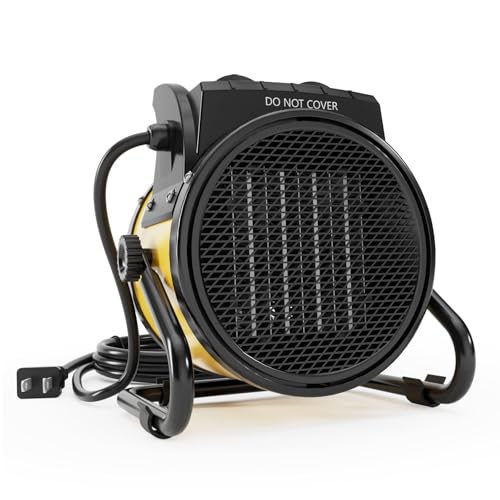
Best for: A powered shed or greenhouse where an electric heater is acceptable and the buyer wants a stated coverage area for comparison. The listing describes three output settings: 20 watts, 750 watts, and 1,500 watts. It states coverage of up to 160 square feet.
The product uses PTC ceramic heating and is described as warming quickly. Its multiple settings allow the user to select lower or higher output according to conditions. This makes it a more relevant option for a small powered workspace than a heater that offers only one setting.
Limitation: Despite the title’s use of “non-electric” in the overall search context, this product is electric and does not meet an off-grid requirement by itself. Confirm that the shed’s electrical supply and the heater’s instructions support the intended use.
SEEYANG 1500W Three-Mode Heater

Best for: Buyers with shed power who want a compact electric heater with a fan-only option and two heat levels. Its three settings are listed as 25 watts for natural air, 750 watts for low heat, and 1,500 watts for high heat. The heater uses PTC ceramic technology and a high-speed fan.
The manufacturer says it produces warm air in two seconds and is designed for relatively quiet operation. The selectable modes can be useful when the heater is used for different purposes across seasons, though the product remains an electric appliance rather than a fuel-powered solution.
Limitation: It is not suitable as a stand-alone heat source where there is no electricity. The listing does not provide a specific shed coverage figure, so do not assume it can heat a particular floor area without considering insulation and conditions.
Buying Guide: How to Choose a Non-Electric Shed Heater
Does the heater actually work without electricity?
Check the energy source before comparing heat output or features. In this selection, only the vnekjse and Karelwui heaters are identified as non-electric kerosene heaters. The other products require electricity. A heater that has “garage,” “patio,” or “greenhouse” in its name is not necessarily suitable for an unpowered shed.
If you need heat during a power outage, a plug-in heater will not meet that need unless it is supplied by a compatible independent power system. For the listed kerosene products, fuel availability and the safe storage and handling of fuel are part of the decision.
How much heat does the shed need?
Use the heater’s stated heat output as a starting point, not a guarantee of room temperature. The two kerosene models list outputs of 10,000 BTU and 9,000 BTU. The electric models list wattage instead. These ratings are not directly interchangeable without considering the full design and operating conditions.
A small, insulated shed may need less heat than a drafty shed with a high ceiling. Measure the area and consider insulation, air leaks, intended use, and local winter temperatures. Do not rely on a product’s coverage estimate as a promise that it will maintain a specific temperature.
Is radiant heat or warm airflow a better fit?
The Karelwui listing describes radiant heating, which directs warmth toward nearby people and objects. That can suit a work area where the user stays in one location. The electric PTC models use fans to distribute heated air. The vnekjse listing describes 360-degree heat distribution, but buyers should consult its instructions to understand placement and clearance needs.
Choose based on how the shed is used. A stationary workbench may benefit from focused warmth, while a space used for general movement may call for broader air distribution. Neither approach removes the need to use the heater according to its manual.
What safety checks matter for fuel-burning heaters?
Before using a kerosene heater, read the complete operating manual and verify that the manufacturer permits the intended shed environment. Follow all specified ventilation, clearance, refueling, ignition, and shutdown instructions. Keep the heater away from combustibles and do not use it in a way that conflicts with local fire codes or building rules.
The vnekjse listing mentions a tip-over shutoff and protective grills; the Karelwui listing emphasizes portability and radiant output. Listed safety features do not make a heater risk-free. Check for relevant safety instructions and requirements rather than relying on marketing language alone.
What should buyers compare on the product page?
- Fuel or power source: Confirm whether the heater uses kerosene or requires an electrical outlet.
- Heat rating: Compare the stated BTU output or wattage, while accounting for different rating systems.
- Run time and tank size: For a fuel-burning model, check the listed capacity and claimed burn duration.
- Controls: Look for adjustable flame or selectable heat modes if output flexibility matters.
- Placement and safety: Review the manual for required clearances, ventilation, and operating limitations.
- Shed conditions: Consider insulation, drafts, ceiling height, and the area you need to warm.
Frequently Asked Questions
What is a non-electric shed heater?
A non-electric shed heater produces heat without relying on an electrical outlet. The non-electric products listed here are kerosene-burning heaters. They still require proper fuel handling and must be used according to their instructions.
Which listed heater has the highest stated heat output?
The vnekjse kerosene heater lists a maximum output of 10,000 BTU per hour. The Karelwui model lists 9,000 BTU. Actual heating results depend on the shed and operating conditions.
Can I use an electric heater in a shed with no power?
Not without an appropriate independent power source. The Buyplus, Joanolga, and SEEYANG heaters are electric models, so they do not independently provide heat in an unpowered shed.
Can a kerosene heater be used in an enclosed shed?
Do not assume that it is safe in every enclosed shed. Check the specific heater’s manual and applicable local requirements for ventilation, placement, and permitted use before operating it.
Is a higher BTU rating always better?
No. The right output depends on shed size, insulation, drafts, and the heating task. A higher rating alone does not establish that a heater is suitable for a particular space.
What is the main difference between the two listed kerosene heaters?
The vnekjse lists 10,000 BTU output and a 6-liter tank, while the Karelwui lists 9,000 BTU output and a 4.5-liter tank with a stated 16-to-21-hour burn time. Compare the full manuals and intended-use requirements before choosing.