The best LPG on-demand water heater depends on how much hot water you need at once and where the unit will be installed. The Ranein 3.6 GPM model suits modest household demand, while the APUS 4.42 GPM model is specified for multiple fixtures. The VELPAX offers a higher listed flow rate, the Ranein 8.5 GPM model is the highest-capacity option in this group, and the compact MAWI is aimed at portable outdoor use. Compare flow, BTU output, installation type, and safety requirements before choosing.
| Product | Listed flow | Best suited for |
|---|---|---|
| Ranein Indoor | 3.6 GPM | Smaller household demand |
| VELPAX Indoor | 4.74 GPM | Several points of use |
| Ranein High-Capacity Indoor | 8.5 GPM | Higher peak demand |
| APUS Indoor | 4.42 GPM | Multiple showers and a sink |
| MAWI Portable | 1.6 GPM | Outdoor or mobile use |
Ranein 3.6 GPM Indoor Propane Water Heater

This Ranein model combines an 80,000 BTU input with a stated flow of 3.6 gallons per minute. Its listed capacity is intended to support two or three water points simultaneously, although actual delivered flow depends on the incoming water temperature and demand at each fixture.
The temperature setting is adjustable from 95°F to 149°F. Product features also describe two heating chambers and dynamic temperature control intended to help maintain a steadier outlet temperature. These details make it a practical option for buyers who want a moderate-capacity indoor LPG unit with adjustable settings.
- Best for: Smaller homes or households with moderate simultaneous hot-water needs.
- Why it was selected: Its 3.6 GPM rating, 80,000 BTU input, and stated multi-point support provide useful capacity details for comparison.
- Limitation: Its listed flow is lower than the 4.42, 4.74, and 8.5 GPM options below, so it may be less suitable for heavier peak demand.
VELPAX 4.74 GPM Indoor LPG Heater
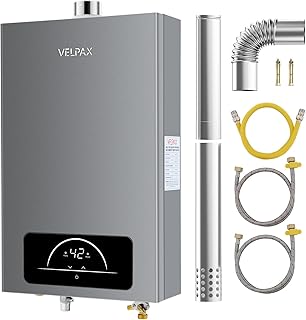
The VELPAX is a propane-only indoor model rated at 4.74 GPM and 68,000 BTU per hour. Its product information says it can serve two or three points of use and can start with water pressure as low as 3.6 PSI. A digital display provides temperature adjustments from 95°F to 149°F.
Its listed protections include flame-failure, anti-freeze, and overheating protection. The product description also specifies a stainless-steel body and an oxygen-free copper water tank. For buyers comparing safety features and low-pressure operation, those stated details distinguish it from the other listed models.
- Best for: Buyers seeking a higher listed flow than a 3.6 GPM unit, plus several stated protection features.
- Why it was selected: It combines a 4.74 GPM rating, low-pressure starting specification, and adjustable digital temperature control.
- Limitation: Its 68,000 BTU rating is lower than the 95,000 and 190,000 BTU figures listed for other products; compare expected demand and local conditions rather than flow alone.
Ranein 8.5 GPM High-Capacity Indoor Heater

The product name identifies this Ranein as an indoor propane tankless heater rated at 8.5 GPM and 190,000 BTU. Those figures place it at the highest stated flow and heat-input capacity among the five products in this comparison, making it the option to examine first when household demand is high.
Detailed feature information was not provided for this listing. Before selecting it, confirm the manufacturer’s specifications for temperature range, safety protections, minimum water pressure, venting, and installation requirements. Do not assume that a high flow rating alone guarantees a particular number of simultaneous showers or fixtures.
- Best for: Buyers comparing higher-capacity indoor LPG heaters for a home with substantial hot-water demand.
- Why it was selected: The listed 8.5 GPM and 190,000 BTU ratings are the largest stated capacity figures in this product group.
- Limitation: The supplied listing details do not include additional features or safety specifications, so verify them before purchase.
APUS 4.42 GPM Indoor Propane Heater

The APUS heater is specified at 95,000 BTU and 4.42 GPM. Its product description says it can meet simultaneous demand for two showers and one sink. A stated low-flow start point of 0.66 GPM may be relevant for buyers concerned about whether a low-volume draw will activate the heater.
Temperature is adjustable from 95°F to 140°F. The listing describes high-precision sensors and smart CPU control, with a stated temperature variation of ±1°F. It also identifies an oxygen-free copper heat exchanger and segmented combustion technology, and lists up to 98% thermal efficiency and a UEF of 0.81.
- Best for: Households that want a mid-to-high flow rating and a product specifically described for two showers and a sink.
- Why it was selected: Its capacity, low-flow start specification, temperature-control claims, and heat-exchanger details support direct comparison.
- Limitation: Its maximum setting is 140°F, lower than the 149°F maximum listed for some other models.
MAWI 1.6 GPM Portable Propane Heater

The MAWI is a portable propane model listed at 1.6 GPM and 41,000 BTU. Its product description emphasizes compact size, light weight, wall mounting, and outdoor installation. It is presented for RV trips, off-grid use, and other situations where a portable on-demand hot-water supply is useful.
This unit is a different kind of choice from the indoor household heaters above. Its listed flow is substantially lower, so it is better considered for limited or mobile use than for serving several household fixtures at once. The description calls it vent-free and intended for outdoor installation; follow the manufacturer’s instructions and applicable local requirements for placement and operation.
- Best for: Buyers looking for a compact LPG water heater for outdoor, RV, or off-grid applications.
- Why it was selected: It is the only portable model in this group and is explicitly described for travel and outdoor use.
- Limitation: The 1.6 GPM rating is the lowest listed, making it a poor match for high simultaneous household demand.
Buying Guide: How to Choose an LPG On-Demand Water Heater
How much flow rate do you need?
Flow rate, measured in gallons per minute (GPM), indicates how much water a heater can deliver under specified conditions. List the fixtures that may run at the same time, such as a shower, kitchen faucet, and bathroom sink. Then compare that combined demand with the heater’s stated output.
Do not treat a product’s maximum GPM as a guarantee of performance in every home. Incoming water temperature, desired outlet temperature, water pressure, and simultaneous use affect the hot-water flow available. In colder regions, a larger temperature increase may reduce the usable flow for a given heater.
Why compare BTU input as well as GPM?
BTU per hour describes the heater’s rated heat input, while GPM describes its stated water flow. Both are useful for comparing capacity, but neither should be considered in isolation. For example, the VELPAX lists a higher GPM than the APUS, while the APUS lists a higher BTU input. Check the product’s performance specifications for the temperature rise associated with its flow rating.
Is the heater made for indoor or outdoor installation?
Choose an installation type that matches the product instructions and your site. The first four products above are identified as indoor units, while the MAWI is described for outdoor installation. Gas-burning appliances require appropriate combustion air and exhaust handling. Follow the manufacturer’s manual and local building, fuel-gas, and plumbing codes; use a qualified installer when required.
Do not assume that a model advertised as indoor can be installed without venting or other preparation. Confirm the permitted vent arrangement, clearances, gas supply requirements, and any electrical needs before purchasing. For an outdoor unit, confirm that the intended location and climate conditions are allowed by the manual.
Which safety and temperature features matter?
Look for clearly stated protections and control features, including overheating protection, flame-failure protection, freeze protection, and adjustable temperature settings. The VELPAX listing names flame-failure, anti-freeze, and overheating protection. The Ranein 3.6 GPM lists an adjustable 95°F–149°F range, while the APUS specifies a 95°F–140°F range.
Compare features from the manufacturer’s documentation rather than inferring them from a product title. If the listing does not provide details—as with the high-capacity Ranein information supplied here—verify the complete manual and safety specifications before buying.
Does low-flow startup matter?
A heater must detect water movement to begin heating. If you frequently use small draws, such as a low-flow faucet, check the minimum activation flow or water-pressure requirement. The APUS lists a 0.66 GPM low-flow start, while the VELPAX states operation with water pressure as low as 3.6 PSI. These are different measurements, so compare each with the conditions in your plumbing system.
What should RV and off-grid buyers check?
Portable use calls for a different checklist from a permanent household installation. Verify that the model’s instructions permit the intended application, and check its water connections, gas supply, mounting method, and operating location. The MAWI is described for RV and outdoor use, but its 1.6 GPM rating is relatively limited compared with the indoor household models.
Confirm that your LPG supply and regulator meet the appliance specifications. Check water pressure and winterization requirements as well. A portable heater should not be assumed suitable for indoor use simply because it is compact or used with an RV.
How should you compare efficiency claims?
Efficiency figures can help when they are reported in a consistent, understandable format. The APUS listing claims up to 98% thermal efficiency and gives a UEF of 0.81. These are distinct metrics; do not compare them as though they use the same calculation. Review the manufacturer’s documentation for test conditions and the exact meaning of each rating.
On-demand operation avoids keeping a stored tank of water hot, but real fuel use depends on demand, settings, incoming water temperature, and installation. Choose capacity based on actual household needs rather than relying on general energy-saving language alone.
Frequently Asked Questions
What is an LPG on-demand water heater?
It is a water heater that uses liquefied petroleum gas, commonly propane, to heat water as it flows through the unit. It does not rely on a stored tank of heated water in the same way a conventional storage heater does.
Which product has the highest listed flow rate?
The Ranein high-capacity indoor model has the highest listed flow rate in this comparison at 8.5 GPM. Its supplied product information does not include other detailed features, so confirm its full specifications before purchase.
Can one tankless heater supply two showers?
Some models are described for multiple simultaneous fixtures, but actual performance depends on flow demand, water temperature rise, and site conditions. The APUS listing specifically describes use for two showers and one sink; check its performance details against your household’s needs.
Is a portable propane water heater suitable for indoor use?
Not necessarily. Use a heater only in the locations and configurations allowed by its manufacturer. The MAWI product information describes it for outdoor installation, so do not assume it is appropriate for indoor operation.
What size LPG tankless water heater should I buy?
Estimate which fixtures will run simultaneously, add their hot-water flow needs, and compare that demand with the heater’s rated output at the required temperature rise. Also check gas supply, water pressure, installation type, and local code requirements.