The best supplemental hot water heater depends on whether you need a permanent point-of-use supply, portable bucket heating, or small amounts of hot water for drinks. The VEVOR 12-gallon tank is suited to a small apartment or remote water point; the 3000W tankless models are compact options for an under-sink location; and the 2000W immersion heaters are better for temporary bucket or tub use. Match the heater to your water volume, installation needs, and electrical setup.
| Product | Best For | Type |
|---|---|---|
| VEVOR 12-Gallon Electric Tank Water Heater | Small apartments and remote outlets | Storage tank |
| xwdzswgs 3000W Tankless Water Heater | Compact under-sink hot water | Point-of-use tankless |
| Jflapil 3000W Tankless Water Heater | Adjustable point-of-use water heating | Point-of-use tankless |
| Laoaivena 2000W Immersion Water Heater | Portable heating with thermostat control | Immersion heater |
| Supellerous 2000W Immersion Water Heater | Temporary heating for buckets and tubs | Immersion heater |
VEVOR 12-Gallon Electric Tank Water Heater

Best for: Small apartments, studios, or remote water points that need a stored supply for everyday tasks. This 12-gallon point-of-use tank is intended to serve one or two outlets, with the listing naming showers, handwashing, and dishwashing as uses.
The heater uses a 1600W element and a storage design. Its LED display and knob control provide visible temperature information and straightforward adjustment. The listing also describes 20 mm foam insulation intended to reduce heat loss, plus an enamel interior and built-in protections for dry heating, overheating, and overpressure.
Why it stands out: Unlike a portable immersion rod, this is a small installed storage heater for recurring hot-water needs. Choose it if you want a dedicated reserve near a sink or other outlet.
Limitation: The 12-gallon tank occupies more space than a tankless unit, and its stored capacity is finite. Confirm that its side outlet and installation requirements suit the intended location.
xwdzswgs 3000W Tankless Water Heater

Best for: A compact supplemental hot-water point, such as an under-sink location where a small, wall-mounted unit is preferred over a storage tank. The listing describes a 110V, 3000W electric heater with an LED display and on-demand operation without preheating.
Its stated temperature rise varies with flow: the listing gives an increase of 82°F at 0.3 gallons per minute and 131°F at 0.5 gallons per minute. It also lists Fahrenheit/Celsius display switching and protections including leakage protection, dry-boil protection, overheating shutoff, and automatic power-off during inactivity.
Why it stands out: It offers a space-saving alternative to a tank and specifies how flow rate affects the stated temperature rise. Choose it if the intended use is a low-flow point of use rather than several outlets at once.
Limitation: Its listed flow rates are low, so it should not be assumed to supply high-volume hot water. Check the electrical and plumbing requirements before installation.
Jflapil 3000W Tankless Water Heater

Best for: Buyers comparing compact under-sink heaters who want an adjustable temperature display. This 110V, 3000W wall-mounted model is described as heating water on demand and supporting a displayed range tied to flow: 82°F at 0.3 GPM and 131°F at 0.5 GPM.
The unit includes an LED display that can switch between Celsius and Fahrenheit. The listing also describes IPX4 waterproofing, water-electric isolation, leakage and dry-burn protection, overheating protection, and automatic power-off when idle. It is presented for narrow spaces such as kitchens and bathrooms.
Why it stands out: Its stated flow-and-temperature details make it easier to compare with other low-flow supplemental heaters. Choose it if a compact wall-mounted design and visible temperature readout are priorities.
Limitation: The product information does not establish that it can support multiple fixtures or a high-flow shower. Verify installation and electrical suitability for the intended site.
Laoaivena 2000W Thermostat Immersion Heater
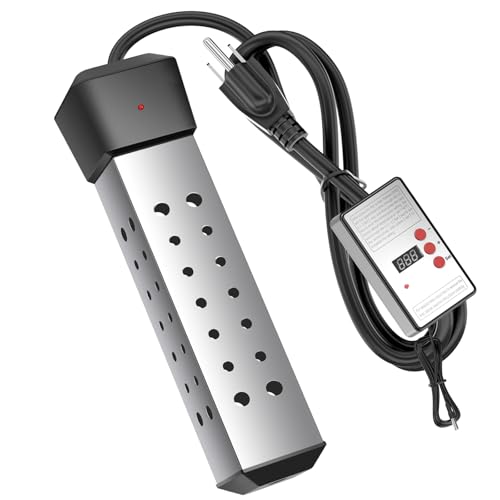
Best for: Temporary water heating in a bucket, tub, or small pool when a built-in temperature setting is useful. The 2000W heater has an adjustable thermostat with a stated maximum setting of 180°F and a real-time temperature display.
The listing says the heater can restart when the water temperature drops by 10°F and includes a 304 stainless steel guard and overheat protection. It describes use for emergency hot water and small-volume water heating, including family baths and kiddie pools.
Why it stands out: Compared with basic immersion rods, this model lists thermostat control and automatic reheating. Choose it if you need adjustable heating for a temporary water container rather than a permanently installed heater.
Limitation: The listing recommends full submersion and a GFCI outlet. It is not a substitute for an installed household water heater; follow the manufacturer’s safety instructions and keep the plug and outlet dry.
Supellerous 2000W Guarded Immersion Heater

Best for: Portable, temporary heating for non-metal containers such as buckets, basins, and tubs. This 2000W submersible heater features a 304 stainless steel guard and an LCD thermometer, making it a practical choice when users want to check water temperature during heating.
The product listing says it can heat five gallons of water to a comfortable temperature in minutes, although the actual time depends on starting temperature and water volume. It describes use in settings such as home, camping, and outdoor work, and says the guard helps prevent direct contact with the heating element.
Why it stands out: It combines a high-power immersion design with a protective guard and temperature display. Choose it for portable container heating when you do not need a built-in thermostat.
Limitation: The listing requires full submersion before use and says to unplug the heater before removing it from water. It does not provide automatic thermostat control, so monitor the water and follow all safety directions.
Buying Guide: How to Choose a Supplemental Hot Water Heater
Do you need stored hot water or on-demand heating?
A storage tank holds a limited volume of heated water for later use. It can suit a small apartment or a remote outlet where hot water is needed for recurring tasks. A tankless unit heats water as it flows, so it can save space, but the temperature rise depends on flow rate. Immersion heaters warm water in a container and are intended for temporary, localized needs rather than plumbing several fixtures.
How much water will you heat?
Estimate the volume and the job before choosing a heater. A 12-gallon tank provides a stored reserve, while an immersion heater is placed directly in a bucket or tub. A low-flow tankless model is more appropriate for a single point of use than for high-volume demand. Heating time also changes with water volume and starting temperature; cold-weather water may take longer to warm.
Will the heater fit the electrical and installation setup?
Check voltage, wattage, outlet or circuit requirements, mounting space, and plumbing connections against the product instructions and the home’s electrical system. The listed tankless models are 110V and 3000W; the immersion options are 2000W. Do not assume that a heater can be plugged into an existing outlet or installed in a wet area without checking its requirements. Consult a qualified professional when installation or electrical capacity is uncertain.
What safety features matter?
Look for specific protections in the product information, such as overheat shutoff, dry-boil protection, a protective element guard, or pressure protection for a storage tank. These features do not remove the need to follow instructions. For immersion heaters, use only as directed, fully submerge the heating element before operation, keep electrical connections dry, and unplug the unit before removal. Follow any recommendation to use a GFCI-protected outlet.
Which type is easiest to use for backup?
An immersion heater is portable and can warm water in a suitable container, but it requires close attention and careful handling. A small tank provides a ready reserve after installation, while a tankless heater can deliver on-demand hot water at a fixed point if its flow and installation requirements match the task. Select a backup option based on how quickly hot water is needed and how much water must be available.
Frequently Asked Questions
What is a supplemental hot water heater?
It is an additional heater used to provide hot water at a particular location or for a specific task. Common formats include small storage tanks, point-of-use tankless heaters, and portable immersion heaters.
Can an immersion heater replace a household water heater?
No. The listed immersion heaters are portable devices for heating water in containers. They do not provide a permanent, plumbed hot-water supply for a home.
Is a tankless heater always better than a small tank?
No. Tankless models save storage space and heat water on demand, but output depends on flow rate and temperature rise. A small tank stores a defined volume for use, but takes up space and has limited capacity.
How long does an immersion heater take to warm water?
Heating time depends on the heater’s wattage, water volume, starting temperature, and conditions. Product estimates are not guarantees; colder water or a larger container can take longer.
Can I use an immersion heater in a bathtub?
Use it only if the manufacturer explicitly permits that type of container and follow all safety instructions. Keep the plug and socket dry, fully submerge the heating element before operation, and unplug it before removing it from the water.
What should I check before buying an under-sink heater?
Check the required voltage and wattage, available electrical capacity, mounting space, plumbing connections, intended flow rate, and stated safety protections. Confirm the product is appropriate for the specific installation before purchase.