A heat recovery extractor fan removes stale indoor air while transferring some of its heat to incoming fresh air. Of the products listed here, the GANGPINWT is the only one explicitly described as a heat recovery ventilator, but its listing provides almost no technical details. The Amico and Mdeinu are adjustable wall exhaust fans, the Hon&Guan is a high-airflow portable blower, and the Hawkrown combines bathroom ventilation with heating. These alternatives move or condition air, but their supplied features do not confirm heat recovery.
| Product | Best suited for | What the listed features say |
|---|---|---|
| GANGPINWT Fan Motor Energy Recuperator | Shoppers seeking a heat-recovery product | Identified as a heat recuperator; performance details are not supplied |
| Amico 8-inch Exhaust Fan | Adjustable household exhaust | 686 CFM, nine speeds, remote, and timer |
| Mdeinu 8-inch Exhaust Fan | Wall-mounted ventilation with a damper | 700 CFM, variable speed, and automatic closing valve |
| Hon&Guan 12-inch Utility Blower | Portable high-volume air movement | Up to 3,243 CFM and 16-foot duct |
| Hawkrown 4-in-1 Bathroom Fan | Bathroom ventilation plus heat and light | 190 CFM, two heating modes, lighting, and remote |
GANGPINWT Fan Motor Energy Recuperator

Best for: Buyers specifically looking for a product described as a heat recovery ventilator or energy recuperator. Its product name is the closest match to the heat recovery extractor fan search.
The supplied feature information says only “Fan.” It does not state airflow, heat recovery efficiency, sound level, dimensions, installation method, controls, or whether the unit exchanges heat between separate incoming and outgoing air streams. Those details are important for determining whether it suits a particular room or ventilation system.
- Why it was selected: It is the only product in this list explicitly named as a heat recuperator.
- Limitation: The provided listing details are too limited to verify its performance or installation requirements.
Choose this only after checking the complete product documentation for heat-exchange operation, airflow capacity, duct requirements, and electrical specifications. Do not assume that the product name alone confirms a specific recovery rate or whole-home ventilation capability.
Amico 8-Inch Exhaust Fan

Best for: Buyers who need controllable exhaust for a kitchen, garage, attic, or greenhouse and value remote operation. The listed specifications include 686 CFM airflow, a 29W EC motor, nine speed settings, and an eight-hour timer.
The remote allows users to adjust the speed and set a timer without operating a fixed control at the fan. Its listed 50 dB noise level gives buyers a stated sound figure to compare against other options. This is an exhaust fan, however, and the supplied features do not describe a heat exchanger or heat recovery function.
- Why it was selected: It offers several adjustable ventilation settings and a stated airflow figure for comparison.
- Limitation: It moves air out; the listed information does not say that it recovers heat or supplies filtered fresh air.
Choose this if adjustable exhaust is your priority. If your goal is to retain indoor heat while ventilating, verify that a separate heat recovery system is included in your plan.
Mdeinu 8-Inch Exhaust Fan
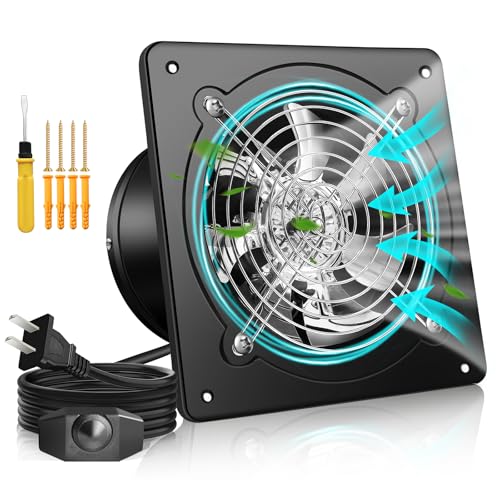
Best for: Buyers seeking a wall-mounted exhaust fan with variable speed and an automatic closing valve. The listed airflow is 700 CFM, and the product is described for spaces such as kitchens, bathrooms, garages, basements, and workshops.
The speed controller allows airflow to be adjusted rather than relying on a single fixed setting. The product also lists a metal housing, a dense protective mesh, and a valve that closes automatically to help prevent insects or objects from entering through the fan opening. These features describe exhaust ventilation, not heat recovery.
- Why it was selected: The adjustable speed and closing valve make it a relevant comparison for buyers evaluating extractor fans.
- Limitation: No heat exchange or heat recovery feature is specified.
Choose this if a wall-mounted exhaust fan with adjustable airflow and a closing valve matches the room setup. Check the full installation information before buying to confirm that the opening and mounting arrangement suit your project.
Hon&Guan 12-Inch Utility Blower
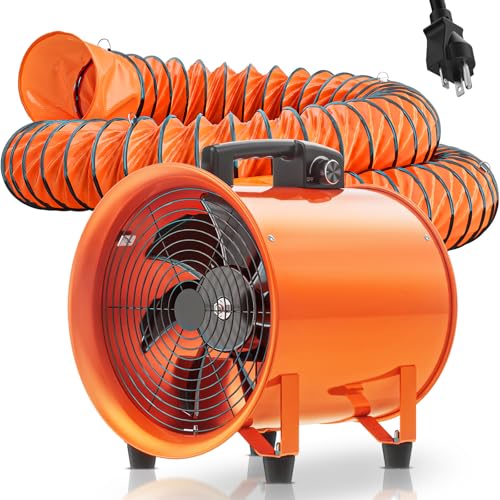
Best for: Buyers who need portable, high-volume air movement for a basement, workshop, warehouse, or similar work area. The product lists airflow up to 3,243 CFM, a 550W AC motor, a stepless speed regulator, and a 16-foot flexible duct.
The included duct can be positioned or hung using its straps and D-rings, according to the product details. The variable speed control gives users a way to change airflow for different tasks. This is a utility blower intended for intake or exhaust ventilation, rather than a listed heat recovery ventilator.
- Why it was selected: Its high stated airflow, portable format, and included duct address ventilation needs in larger or temporary work areas.
- Limitation: Its size and high airflow may be more than needed for a small room, and heat recovery is not specified.
Choose this if directed airflow and duct flexibility matter more than a compact, fixed residential installation. Avoid treating it as a heat-saving ventilation system unless separate product documentation confirms heat exchange.
Hawkrown 4-in-1 Bathroom Fan

Best for: Buyers looking for bathroom ventilation combined with heating and lighting. The listed features include 190 CFM exhaust, an eight-key remote, two heater settings at 900W and 1,800W, and a 1,200-lumen LED light.
The fan is described as having ventilation, lighting, air purification, heating, fan, and shower modes. Its listed noise level is 1.0 sone. Those functions may suit a bathroom where comfort features are needed alongside moisture removal, but the supplied information does not say that exhaust heat is recovered and returned in incoming air.
- Why it was selected: It combines bathroom exhaust with heating and lighting in one product.
- Limitation: The listed heater warms the room, but that is not the same as recovering heat from exhaust air.
Choose this if bathroom heating and ventilation are the primary needs. Check the product’s installation and electrical requirements before planning a replacement or new installation.
Buying Guide: How To Choose A Heat Recovery Extractor Fan
What does heat recovery mean?
A heat recovery ventilator (HRV) exchanges heat between outgoing stale air and incoming outdoor air. In typical operation, the two air streams transfer heat through a heat exchanger without simply mixing together. This can reduce the amount of indoor heat lost during ventilation. An energy recovery ventilator (ERV) can also transfer some moisture, depending on its design.
A standard extractor fan usually exhausts indoor air without recovering its heat. An exhaust fan may help remove humidity, odors, or smoke, but it should not be described as a heat recovery unit unless the product specifications confirm a heat exchanger or equivalent recovery design.
Does the product provide both supply and exhaust air?
Check whether the unit handles incoming fresh air as well as outgoing stale air. Some ventilation arrangements use separate supply and exhaust paths, while a basic extractor may only push indoor air outside. Confirm the duct layout and whether the product is intended to ventilate one room or connect to multiple spaces.
How much airflow does the space need?
Compare the fan’s stated airflow with the room size and the ventilation task. Higher CFM can move more air, but it does not by itself prove that the unit is appropriate for a particular room or that it will operate quietly. For heat recovery products, check the airflow rating at the pressure conditions relevant to the planned ductwork, if that information is available.
Which controls and installation details matter?
- Speed control: Variable speeds can help match ventilation to changing conditions.
- Timer: A timer can limit operation to a selected period, where the product provides one.
- Duct and mounting: Confirm duct diameter, required wall or ceiling opening, and whether the unit includes the parts needed for installation.
- Electrical details: Verify voltage, wiring, and connection requirements from the product documentation.
- Noise: Compare stated sound information where available; do not assume that airflow alone predicts noise.
Should you choose an HRV or an ERV?
An HRV is generally considered when heat transfer is the main recovery goal. An ERV may be worth evaluating where transferring some moisture is also relevant. The right choice depends on the building, climate, ventilation requirements, and product specifications. Neither category should be selected based only on a product name; check its documented airflow, recovery performance, filters, and installation requirements.
How should the listed options be compared?
For the exact heat recovery category, the GANGPINWT listing is the closest match by name, but the supplied details are insufficient to assess its capabilities. The Amico and Mdeinu provide stated airflow and speed-control features for exhaust ventilation. The Hon&Guan is a portable blower with a duct, while the Hawkrown adds bathroom heating and lighting. These products are not interchangeable: select based on whether the priority is heat recovery, general exhaust, portable airflow, or bathroom comfort functions.
Frequently Asked Questions
Is an extractor fan the same as a heat recovery fan?
No. A basic extractor fan removes indoor air. A heat recovery ventilator is designed to transfer heat from outgoing air to incoming air. Confirm that a product specifies heat recovery rather than assuming it from the word “extractor.”
Can a regular exhaust fan recover heat?
Not based on the features provided for the Amico, Mdeinu, or Hon&Guan products. Their descriptions cover exhausting or moving air, but do not specify a heat exchanger or heat recovery function.
Which listed product is most directly described as a heat recovery unit?
The GANGPINWT Fan Motor Energy Recuperator is the only product named as a heat recuperator. Its supplied feature field says only “Fan,” so buyers should verify its full specifications before purchase.
Does a bathroom fan with a heater recover heat?
No, not automatically. The Hawkrown listing describes a built-in room heater and an exhaust fan, but does not state that heat from the outgoing air is transferred to incoming air.
What should I verify before buying a heat recovery ventilator?
Check documented heat recovery performance, airflow, duct and mounting requirements, electrical specifications, sound information, and any filtration details. Confirm that the unit suits the space and ventilation plan.