An aluminum-zinc anode rod can be a practical replacement for a water heater’s sacrificial magnesium rod, especially when a sulfur or “rotten egg” odor is a concern. Among these options, the Ozek is best for tight installation spaces, the About Fluid kit is best for buyers who want a removal tool and support, and the 44-inch kit is best for a basic flexible replacement. The powered titanium model is an alternative, not an aluminum-zinc rod. The small pure-zinc rod is for experiments, not water heater replacement.
| Product | Best suited for | Key distinction |
|---|---|---|
| Ozek 44-inch Segmented Aluminum Zinc Rod | Tight access areas | Flexible sections with stainless steel joints |
| About Fluid Aluminum Zinc Kit | Buyers wanting a removal tool | Includes a dedicated 6-point tool |
| 44-inch Flexible Aluminum Zinc Kit | Basic replacement needs | Includes sealing tape and a socket |
| Chromex Powered Titanium Rod | Buyers comparing powered alternatives | Not a sacrificial aluminum-zinc rod |
| High-Purity Zinc Rod | School or lab projects | Not described as a water heater part |
Ozek 44-Inch Segmented Aluminum Zinc Rod
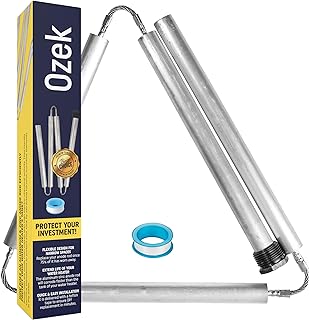
This Ozek anode rod is made from an aluminum-zinc alloy and measures 44 inches in total length. Its segmented design uses stainless steel joints, allowing the rod to bend through narrow access areas where a single rigid rod may be difficult to maneuver.
Best for: Homeowners who need a flexible replacement for a water heater in a cramped utility closet or another restricted installation area. It was selected because the product description specifically emphasizes its segmented construction and tight-space installation.
The listing describes the material as safe for the human body and says it will not modify water quality. It is intended as a sacrificial anode rod to help protect the water heater from corrosion.
Limitation: The listed features do not mention an included removal tool or installation accessories. Check the heater’s required rod dimensions and connection before buying.
About Fluid Aluminum Zinc Kit

The About Fluid product is an aluminum-zinc anode rod kit intended to address rotten-egg odor associated with some water heaters. The description says the rod replaces a factory-installed magnesium rod and uses a proprietary aluminum-zinc alloy. It also includes a six-point removal and installation tool made with chrome-vanadium core steel.
Best for: Buyers who want a rod and a dedicated removal tool in one kit, particularly when odor is part of the reason for replacing an existing anode. Its listed tool and installation guidance distinguish it from rod-only options.
The seller also highlights customer support and says it provides help with anode questions. This may be useful for buyers who want assistance while planning an installation, although the listing does not guarantee a particular outcome for every odor problem.
Limitation: The product’s odor-reduction claim is not a guarantee that every sulfur smell will be resolved. Odor can have causes beyond the anode rod, so persistent issues may need additional diagnosis.
44-Inch Flexible Aluminum Zinc Kit

This 44-inch flexible aluminum-zinc anode rod is hinged into four sections, each described as less than 12 inches long. The listing says the rod can be safely shortened with a hacksaw if needed. The package includes the rod, Teflon sealing tape, and a 27 mm chrome-finished socket.
Best for: Buyers looking for a flexible rod with several basic installation items included. It was selected because its sectional design may help with limited overhead clearance and its listed kit contents are more extensive than a rod alone.
The product is marketed for reducing rotten-egg odor and protecting a water heater tank from corrosion. As with other odor-focused anodes, the listing does not establish that a rod will resolve every source of sulfur smell.
Limitation: The listed socket size is 27 mm. Confirm that the tool and rod connection suit your particular heater before starting work. Do not cut a rod unless the heater’s clearance and installation requirements allow it.
Chromex Powered Titanium Anode Alternative

This product is a powered titanium anode, not an aluminum-zinc or tin rod. The listing specifies water heaters from 40 to 89 gallons with a standard top anode port. It says the powered rod is not consumed like a sacrificial rod and is intended to provide long-term corrosion protection. A power cord, adapter, and two sockets are included.
Best for: Buyers comparing a powered anode system with sacrificial aluminum-zinc replacements. It is included as a clearly different alternative for people considering another anode type, not as a direct match for the keyword.
The product listing says it removes sulfur or egg smell, corrosion, and scale. It also identifies an important compatibility exception: the listing says it is not for Bradford White heaters.
Limitation: This model requires a power connection and is not a drop-in aluminum-zinc replacement. Verify the heater’s capacity, port arrangement, and brand restrictions before considering it.
High-Purity Zinc Rod for Lab Projects

This item is a 99.995% pure zinc rod measuring 20 mm in diameter and 100 mm in length. Its listing identifies school science experiments, research, and laboratory projects as its intended uses. It is not described as an aluminum-zinc alloy anode or as a replacement part for a water heater.
Best for: Educational or research projects that specifically call for a small zinc metal rod. It is included because it is the only other listed zinc-based item, but it should not be confused with the full-length water heater anodes above.
Limitation: At 100 mm long, it is not the 44-inch flexible form factor of the water heater rods. Do not select it as a water heater replacement based on the word “anode” alone.
Buying Guide: Choosing an Aluminum Zinc Anode Rod
What does an aluminum-zinc anode rod do?
A sacrificial anode rod is designed to corrode in place of parts of a water heater tank. Aluminum-zinc rods are an alternative to magnesium rods. The products listed here are marketed for corrosion protection, and some are also marketed for reducing sulfur-like odors. An anode rod is a maintenance component, not a general-purpose water treatment device.
Listings may use phrases such as “aluminum zinc,” “aluminum/zinc,” or “aluminum-zinc alloy.” These describe alloy rods, not pure zinc bars. None of the listed water heater rods is described as an aluminum-zinc-tin alloy. If tin content is essential, verify the material specification with the manufacturer before purchasing.
Is odor reduction your main reason for replacing the rod?
Several products in this list are promoted for rotten-egg or sulfur odor: the About Fluid kit, the 44-inch flexible kit, and the powered titanium alternative. An aluminum-zinc rod may be worth considering when odor appears after a heater’s magnesium anode is implicated, but a product claim is not a guarantee. Persistent odor can require broader water-system troubleshooting.
Choose based on the material and type of system you want. The first three product options are sacrificial aluminum-zinc rods. The Chromex model is powered titanium and operates differently. The small pure-zinc bar is not presented as a water heater component.
Will the rod fit the heater and installation space?
Check the water heater’s manual or existing part information for the rod’s required connection and dimensions. Compare the rod’s length with available clearance above the heater. A rigid rod may be hard to install where the ceiling or surrounding equipment limits vertical room; segmented designs can help with maneuvering, but the heater still needs a suitable connection.
The Ozek and the 44-inch kit both emphasize flexible, segmented construction. The 44-inch kit specifies four sections under 12 inches each. The powered titanium product instead specifies a standard top anode port and a 40-to-89-gallon capacity range. Confirm these details against your own heater rather than assuming all models fit all brands.
Do you need a tool or other installation supplies?
Compare what is included before ordering. The About Fluid kit lists a six-point removal and installation tool. The 44-inch flexible kit includes Teflon sealing tape and a 27 mm socket. The Ozek listing emphasizes the flexible rod but does not list a tool in its provided features.
Even when a kit includes a tool, the product listing does not establish that every installation will be straightforward. Follow the heater manufacturer’s instructions, use appropriate safety precautions, and seek qualified help if the rod is difficult to remove or the installation is unfamiliar.
Should you choose a sacrificial rod or a powered model?
A sacrificial aluminum-zinc rod is a replacement-style option that is designed to be consumed as it protects the tank. A powered titanium anode is a different system; the Chromex listing says it is not consumed like sacrificial rods and requires a power cord and adapter. The choice depends on the heater’s setup, your material preference, and whether you want a powered alternative.
Do not treat powered titanium as another name for aluminum zinc. Check the listed capacity and port requirements, and note that the supplied product information excludes Bradford White heaters. The product list does not provide enough information to determine compatibility with every water heater model.
Frequently Asked Questions
Does an aluminum-zinc anode rod stop rotten-egg odor?
Some aluminum-zinc rods are marketed for reducing rotten-egg odor, including the About Fluid and 44-inch flexible kits. Results are not guaranteed for every water supply or odor source. Persistent sulfur-like smells may require diagnosis beyond replacing the anode.
Is an aluminum-zinc rod the same as an aluminum-zinc-tin rod?
No. The water heater rods described here are identified as aluminum-zinc or aluminum/zinc alloy. Their supplied descriptions do not specify tin. Contact the manufacturer if you need a rod with a confirmed tin content.
Can I use the small pure-zinc rod in a water heater?
The listed 100 mm pure-zinc rod is described for school, scientific, and laboratory projects. It is not described as a water heater anode replacement, so it should not be chosen for that purpose.
Which option is best for a tight installation space?
The Ozek and 44-inch flexible models are the clearest choices for limited access because their product descriptions emphasize segmented or hinged construction. Check the heater’s connection and available clearance before buying.
Does the powered titanium model replace an aluminum-zinc rod?
It is an alternative anode type, not an aluminum-zinc rod. The listing specifies a powered titanium design for certain water heater capacities and a standard top port, and it excludes Bradford White heaters.