A rusty water heater leaking from the bottom may have a corroded tank, a loose or failing drain valve, or water running down from a connection above. A drain pan can help manage water, but it will not repair a leak or stop tank corrosion. Of the products listed here, the Eastman pan and the 20-by-13-inch pan are best suited to containing or directing water; the two flush tools are for sediment maintenance, not rust repair. If the tank itself is leaking, arrange prompt replacement.
| Product | Best suited for | Important limitation |
|---|---|---|
| Eastman Water Heater Drain Pan | Containing runoff beneath a compatible gas water heater | Does not fix a leak |
| 20-by-13-inch Drain Pan | Directing collected water through its valve and hose | Check dimensions and drain routing |
| Sediment Buster Flush Tool | Maintenance where sediment buildup is the concern | Not a remedy for rust or a leaking tank |
| Sediment Gone Flush Kit | Agitating and flushing sediment while draining | Not a remedy for corrosion |
| LOQOMI Immersion Heater | Portable water heating for separate tasks | Unrelated to repairing a tank leak |
Eastman Water Heater Drain Pan

Best for: Homeowners seeking a pan beneath a compatible gas water heater to help protect nearby floors and fixtures from runoff. This product is a containment measure, not a repair for rust or a leaking tank.
The pan has a 20-inch inside diameter and 22-inch outside diameter and is made from high-impact plastic. The listing says it is designed to resist rust, corrosion, and cracking. One 1-inch PVC fitting is included for a drain-pipe connection.
Why it was selected: A drain pan is relevant when water from a leak or runoff needs to be collected and directed away from surrounding surfaces. Its stated dimensions and included fitting make it easier to compare with the installation space and drainage arrangement.
Limitation: Confirm the water heater’s footprint and the intended drain connection before choosing it. A pan cannot stop active leakage, and it may not hold water if the tank fails rapidly or the drain is not connected appropriately.
Drain Pan With Valve and Hose

Best for: Buyers who want a pan supplied with a drain valve and flexible hose to route collected water away. It is a water-management accessory, not a solution for a corroded tank.
The listing gives dimensions of 20 by 13 inches and describes a 2.5-inch height, while also referring to a 3.55-inch side-wall height. It states that the pan has welded corners and includes a drain valve and hose. Check the actual product dimensions and layout against your heater and installation area before purchase.
Why it was selected: The included hose and valve distinguish this option from a pan that only collects water. It may be a better fit when a suitable route exists to carry water away from the heater area.
Limitation: The listed measurements should be verified because the stated height details differ. The pan cannot prevent a tank leak or guarantee protection if the leak exceeds the drainage capacity or the hose cannot discharge safely.
Original Sediment Buster Flush Tool
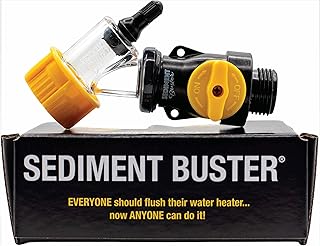
Best for: A buyer considering sediment maintenance, rather than a tool to repair rust at the bottom of a heater. The product listing says the tool is verified for heat and pressure under UL Verified V699054.
The tool can be used with a compressed gas cartridge, an air compressor, or a hand or bicycle pump; those items are sold separately. Instructions and video tutorials are included, according to the listing.
Why it was selected: Sediment can collect at the bottom of a tank, so this product is relevant when the issue is buildup and the heater is otherwise suitable for flushing. Its stated compatibility with several air sources provides a clear point of comparison for buyers evaluating a flushing tool.
Limitation: Flushing sediment does not repair corrosion, a leaking drain valve, or a tank that has rusted through. Do not treat sediment removal as a fix for visible rust or water actively escaping from the tank.
Sediment Gone Water Heater Flush Kit

Best for: Buyers whose maintenance goal is loosening compacted sediment while draining a water heater. This kit is not designed to stop a rusty tank from leaking.
The listing says the tool threads onto the heater’s drain valve and connects to a standard garden hose. Short bursts of air from a bicycle or hand pump agitate sediment during draining. The product description says removing buildup may help maintain heating efficiency and reduce the risk of clogged lines and valves.
Why it was selected: Its stated method is specifically aimed at stirring and flushing sediment from the tank bottom, making it comparable with the Sediment Buster for maintenance needs. Choose it if the described hose connection and air-pump method suit the intended task.
Limitation: The listing does not position this kit as a corrosion repair product. If water is coming through a rusted tank, flushing may not resolve the leak and should not delay assessment or replacement.
LOQOMI Portable Immersion Water Heater

Best for: Buyers needing portable water heating for separate uses such as buckets, small stock tanks, camping, or bathing. It is not a water heater repair product and should not be considered a replacement for fixing a household tank leak.
The listing describes a 2000-watt immersion heater with a stainless steel protective guard, digital display, thermostat, and automatic shutoff at 165°F (75°C). It says the unit must be fully submerged before it is plugged into a 110V outlet and should be kept at least three feet from flammable materials during operation.
Why it was selected: It is included because it is a water-heating product in the supplied selection, but it serves a different purpose from the drain pans and flushing tools. Consider it only for the portable applications described in its listing.
Limitation: It does not contain or repair a household water heater leak. Follow the listed submersion and clearance instructions; do not use an immersion heater as a workaround for an unsafe or leaking tank.
Buying Guide: What to Do About Rust and a Bottom Leak
Is the water actually coming from the tank?
Water can run down the outside of a heater and collect near its bottom, making the source difficult to identify. If it is safe to inspect, look for water above the tank, around plumbing connections, at the drain valve, and around the temperature-and-pressure relief valve discharge pipe. Do not touch hot water or electrical components. If the source is unclear, ask a qualified plumber to inspect it.
Rust-colored water or visible rust on the tank can indicate corrosion, but surface rust alone does not prove where a leak originates. Water emerging from the tank body, especially with corrosion or a wet seam, is more concerning than water from a connection that may be serviceable. A plumber can determine whether the tank has failed.
What should you do if water is leaking now?
Protect people and property first. Keep clear of hot water and wet electrical areas. If you can safely reach the heater’s shutoff controls, follow the manufacturer’s instructions to turn off the water supply and the appropriate energy source. Gas and electric shutoff procedures differ; do not guess or operate unfamiliar controls. Contact a qualified plumber promptly for an active leak, substantial rust, or uncertainty about safe shutoff.
A drain pan may help collect limited runoff if one is already installed and connected correctly. It is not an emergency stop, and it should not be relied on to contain a sudden tank failure. Move belongings away from water and arrange safe cleanup.
Can flushing fix rust or a leak?
No. The Sediment Buster and Sediment Gone products are described as sediment-removal tools. Sediment flushing may be relevant to maintenance when the tank and valves are in suitable condition, but it cannot restore metal that has corroded through. Flushing a leaking or badly corroded heater may be inappropriate; get professional advice before attempting maintenance.
How do you compare the drain pans?
Compare the pan’s inside dimensions with the heater’s footprint, then check its height, outlet or fitting, and the route water would take after leaving the pan. The Eastman listing specifies a 20-inch inside diameter, 22-inch outside diameter, and 1-inch PVC fitting. The other pan lists a 20-by-13-inch footprint and includes a valve and hose, but its height details should be verified. Neither product repairs the source of a leak.
When is replacement likely to be needed?
If a plumber confirms that the tank itself is leaking because of corrosion, replacement is generally the relevant next step rather than a flush kit or pan. Ask the plumber to assess the heater, installation, and any water damage, and to explain the appropriate replacement options. Do not rely on a product description to diagnose a specific heater.
Frequently Asked Questions
Why is my water heater leaking from the bottom with rust?
Possible causes include a corroded tank, a leaking drain valve, or water running down from a connection above. Rust and a puddle do not identify the exact source by themselves. Have an active or uncertain leak inspected.
Can I keep using a water heater that is leaking rusty water?
A leaking heater should be assessed promptly. If water is coming through the tank, corrosion may have compromised it. Follow safe shutoff guidance from the manufacturer or a qualified professional rather than assuming the heater is safe to operate.
Will a drain pan stop the leak?
No. A drain pan can collect or route some water, depending on its fit and drainage setup, but it cannot seal a tank, valve, or pipe.
Will a water heater flush tool remove rust?
The listed flush tools are designed to agitate or flush sediment. They are not described as rust-removal or tank-repair tools, and they cannot repair metal that has corroded through.
Should I flush a heater that is leaking?
Do not assume flushing is appropriate. A leak may involve a failed tank, valve, or other component. Identify the source and ask a qualified plumber before attempting to drain or flush a leaking or heavily corroded heater.