The best heat pump inground pool heater depends on your pool’s water volume, local climate, and available electrical service. BluePlenum’s 80,000-BTU model is a strong match for pools up to 22,000 gallons, while the 90,000- and 100,000-BTU options are aimed at larger pools. The 65,000-BTU Varpoolfaye suits buyers seeking a mid-capacity inverter unit, and its 45 dB noise claim may matter in quiet settings.
| Model | Listed capacity | Claimed pool size | Notable feature |
|---|---|---|---|
| BluePlenum FlowMax80 | 80,000 BTU | Up to 22,000 gallons | Heating, cooling, auto, and defrost modes |
| AQUASTRONG | 100,000 BTU | Pool dimensions listed in product name | App control and scheduling |
| Varpoolfaye 65,000 BTU | 65,000 BTU | Up to 21,000 gallons | Claimed 45 dB operation |
| Varpoolfaye 90,000 BTU | 90,000 BTU | Up to 25,000 gallons | Heating and Wi-Fi app control |
| WARMBLU H30 | 100,000 BTU | Up to 28,000 gallons | Pure titanium heat exchanger |
BluePlenum FlowMax80 80,000-BTU Heat Pump
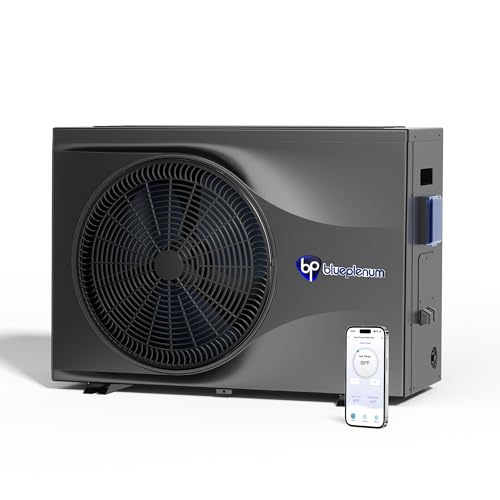
Best for: Owners of inground pools up to 22,000 gallons who want multiple operating modes and app-based smart control. The manufacturer lists up to 80,000 BTU, a 16.2 COP, and a 208–240V full DC inverter design.
The FlowMax80 offers heating, cooling, auto, and defrost modes. Its stated heating range is 47–104°F, and its cooling range is 47–83°F. The listing also describes temperature control within ±1°F and operation in ambient temperatures down to 10°F. Pool capacity depends on location, so the stated gallon figure should be checked against the manufacturer’s selection guidance.
Why it stands out: It combines a listed pool-size range, four modes, Wi-Fi control, and a stated 3-year warranty with a California-based service center. The listing says it meets FCC standards and California Energy Commission requirements.
Limitation: It requires 208–240V service, so buyers should verify their electrical setup. Its stated pool capacity is not a guarantee of heating speed in every climate.
AQUASTRONG 100,000-BTU Inverter Heat Pump

Best for: Pool owners looking for a higher-capacity heater with app controls for temperature adjustments and heating schedules. AQUASTRONG lists a 100,000-BTU output, a 15.8 COP, and a dual-mode system for heating and cooling.
The product name gives pool dimensions of 20 by 43 by 48 inches, but the supplied information does not state a gallon-capacity limit. That makes it important to confirm the model’s sizing guidance for the specific inground pool before choosing it. The listed heating range is 47–104°F, and its cooling range is 47–83°F.
The manufacturer describes full DC variable-frequency inverter operation that adjusts power in real time. The app and control panel are listed for remote temperature adjustments, energy-use tracking, and scheduling. These features may be useful to owners who want to manage operation without relying only on a local control panel.
Why it stands out: It offers higher listed output than the 65,000- and 80,000-BTU picks, along with app scheduling and both heating and cooling modes.
Limitation: The product information provided does not give a pool-gallon rating. Buyers should confirm sizing and the required 220V electrical supply before purchase.
Varpoolfaye 65,000-BTU Inverter Pool Heater
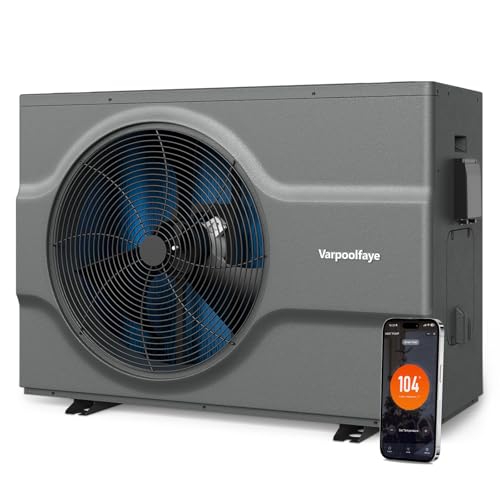
Best for: Owners seeking a mid-capacity heat pump for a pool listed at up to 21,000 gallons. This 220V model is rated at 65,000 BTU and a COP of 6.6, according to the product information.
The manufacturer says the unit transfers heat from ambient air to pool water and uses inverter technology. It also lists a touch control panel with a one-button fast-heat function. The model is described as suitable for freshwater and saltwater pools, and its stated operating noise level is 45 dB.
Why it stands out: It offers a useful middle ground between lower-capacity models and the 90,000- or 100,000-BTU options. Its listed pool volume, claimed noise level, and panel controls can help buyers compare it against larger units.
Limitation: The 21,000-gallon figure is the manufacturer’s stated maximum, not a universal sizing recommendation. Heating performance depends on conditions, and the unit requires 220V service.
Varpoolfaye 90,000-BTU Inverter Heat Pump
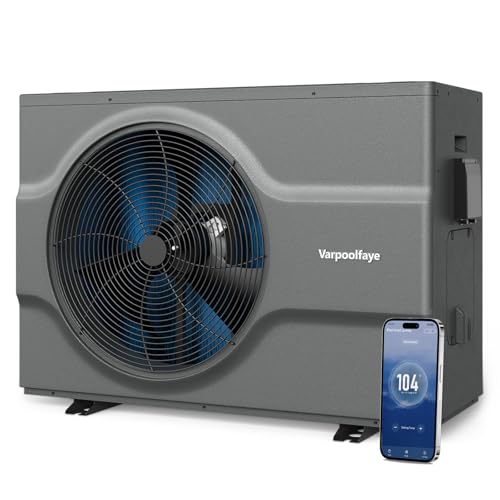
Best for: Owners of larger pools who want more listed heating output than a 65,000- or 80,000-BTU model. Varpoolfaye specifies 90,000 BTU, a COP of 12.5, and a maximum pool volume of 25,000 gallons.
The 220V heat pump is described as using inverter technology to draw heat from surrounding air and transfer it to the pool. Its listed features include Wi-Fi app control and an upgraded touch panel with a one-button fast-heat function. The manufacturer says it is designed for freshwater and saltwater pools and gives a noise figure of 47 dB.
Why it stands out: It pairs a larger stated pool capacity with remote control and a listed noise level. It is a direct comparison option for buyers deciding whether the added capacity over a 65,000-BTU model is appropriate for their pool.
Limitation: The 25,000-gallon limit and COP are manufacturer-provided specifications. Buyers should confirm that the unit’s sizing assumptions fit their climate, pool exposure, and desired heating schedule.
WARMBLU H30 100,000-BTU Heat Pump

Best for: Owners of larger inground pools who want a high-capacity model with a listed maximum of 28,000 gallons. WARMBLU specifies 100,000 BTU and a maximum COP of 16.0 for the H30.
The product listing describes a pure titanium heat exchanger and intelligent inverter control. It also lists mobile app operation and a touch panel. The stated capacity makes this model relevant to buyers comparing larger pool heat pumps, though the product information does not provide a specific voltage requirement or a noise figure.
Why it stands out: Its claimed pool-volume limit is the largest among these five selections. The titanium heat exchanger and app controls are additional listed features that may matter when comparing large-pool models.
Limitation: The listing’s “up to” capacity and maximum COP are manufacturer claims. Confirm electrical requirements and sizing details with the seller or product documentation before buying.
Buying Guide: How to Choose an Inground Pool Heat Pump
What capacity does your pool need?
Start with the pool’s water volume, then compare that figure with the manufacturer’s stated gallon range. The products here list capacities from 21,000 gallons to 28,000 gallons where a maximum is supplied. A model’s gallon figure is a starting point rather than a universal promise: climate, desired water temperature, wind exposure, and pool-cover use affect heating needs.
Do not choose solely by BTU output. A higher BTU rating can indicate greater heating capacity, but it does not automatically mean the model is the right fit for every pool. Compare the full set of sizing recommendations and operating conditions for the specific unit.
How should you compare BTU and COP?
BTU describes heat output, while COP is a measure of heat-pump efficiency under specified conditions. A higher listed COP can be useful when comparing models, but the figure may depend on test conditions. The listings use different claimed COP values, so treat them as manufacturer specifications rather than direct, guaranteed real-world results.
For a meaningful comparison, review both the BTU rating and the COP, along with the conditions used to report them. Also consider whether you need a faster temperature increase or are primarily maintaining a set temperature over time.
Does voltage affect your choice?
Yes. The products list different electrical requirements, including 208–240V, 220V, and other voltage descriptions. Confirm the actual model’s required supply and whether your pool equipment area has the appropriate service. An electrician can help verify installation requirements. Do not assume that a heat pump will work with existing wiring just because it is intended for a pool.
Is a heat pump suitable for your climate?
Heat pumps use heat from ambient air, so local outdoor conditions matter. Some listings state an operating temperature range, but those figures do not replace detailed sizing guidance for your location. If you expect to heat a pool during colder weather, check the manufacturer’s operating limits and performance information at the air temperatures you expect.
Also consider whether you want cooling. Several models listed here include both heating and cooling modes, which can help owners manage pool-water temperature in different seasons. Compare each model’s stated temperature ranges rather than assuming all heat pumps offer the same modes.
Which controls and construction features matter?
Wi-Fi or app control can support remote temperature adjustments and, on some models, scheduling or energy-use tracking. A local touch panel can provide another way to operate the heater. Decide whether remote access is important, and verify which app functions are actually listed for the model.
For construction, compare only documented features. For example, WARMBLU lists a pure titanium heat exchanger, while the Varpoolfaye models list freshwater and saltwater suitability. Those claims do not establish that every component has the same material or suitability, so check full product documentation for pool-water requirements.
Should noise and warranty influence the decision?
Noise specifications can help buyers compare units near patios or neighboring homes. Two selected models provide listed figures of 45 dB and 47 dB, while the other supplied descriptions do not state a noise level. These are product claims and may not indicate the sound level in every installation.
Warranty and service details are also worth checking. The BluePlenum listing states a 3-year warranty and describes its service and online support. The other supplied product details do not provide comparable warranty information, so review their current documentation before purchase.
Frequently Asked Questions
What size heat pump do I need for an inground pool?
Use your pool’s gallon volume and the manufacturer’s sizing guidance as the starting point. Then account for local air temperatures, the target water temperature, and how quickly you want the pool to warm up. A listed maximum pool size should not be treated as a guaranteed fit for every climate.
Are pool heat pumps more efficient than gas heaters?
Heat pumps transfer heat from the air to pool water, and several listings claim efficiency advantages over gas or conventional electric heating. Actual operating costs depend on conditions, energy rates, and system performance. Compare documented specifications rather than assuming a fixed savings amount.
Can an inground pool heat pump also cool the water?
Some models can. The selected listings for BluePlenum, AQUASTRONG, and other options describe heating and cooling modes. Check each model’s stated cooling range and confirm that the feature is included in the specific version you are considering.
Can I use a heat pump in cold weather?
Operating limits vary by model. BluePlenum states ambient operation down to 10°F, while other supplied listings do not provide the same ambient-temperature information. Check the product’s complete operating specifications for your local conditions before choosing a heater for cold-season use.
Do these pool heat pumps require special electrical service?
Several selected models specify 208–240V or 220V power. Requirements differ by unit, so verify the exact voltage and installation instructions. Have a qualified electrician assess the available service if you are unsure.
Is app control necessary for a pool heater?
No. App control is a convenience rather than a requirement for heating pool water. It may be useful for remote adjustments or scheduling when the model supports those features. Buyers who prefer local operation can compare the included control-panel functions instead.