The best submersible water heater with a thermostat depends on your water volume, desired temperature range, and preferred safety features. The QENIVO is a strong fit for buyers who want digital temperature settings and clear operating instructions; the yoisie offers an LCD controller and anti-dry-burn shutoff; and the KINEMORA provides 14 preset temperatures. For corrosion resistance in different liquids, consider the titanium Briidea. The Fextaoty combines thermostat control with built-in ground-fault protection.
| Product | Best For | Standout Feature |
|---|---|---|
| QENIVO 1500W | Precise digital control | Current and target temperature display |
| yoisie 1800W | Portable bucket and tub heating | Anti-dry-burn protection and LCD controller |
| KINEMORA 1500W | Preset temperature selection | 14 temperature presets |
| Briidea 1500W | Corrosion-resistant applications | Titanium heating tube |
| Fextaoty 1500W | Ground-fault protection feature | Built-in protection in the power plug |
QENIVO 1500W Digital Temperature-Controlled Heater

Best for: Buyers who want to set a specific temperature and see both the current and target readings. The controller allows settings from 32°F to 212°F and switches heating off at the target, then back on when the water cools below it.
The 1500W element has an open-slot protective guard, and the product description gives a heating example of five gallons warming from 68°F to 83°F in about eight minutes. Actual heating time varies with starting temperature, water volume, and other conditions. The instructions specify keeping the heater submerged and the temperature probe in the water before plugging in.
Why it was selected: Its adjustable digital control, automatic cycling, and explicit setup guidance make it a practical choice for buyers prioritizing temperature management. Limitation: The probe must remain in the water for accurate sensing, and the heater requires careful setup before use.
yoisie 1800W Heater With LCD Controller
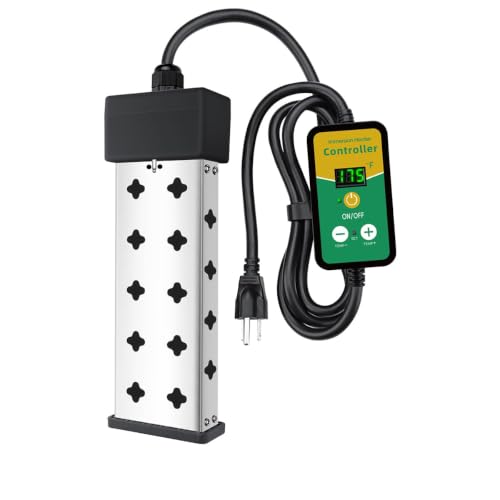
Best for: People heating water in a bucket, tub, or bathtub who want a higher stated wattage and an at-a-glance temperature display. The controller shows real-time temperature and allows a target setting up to 175°F.
The heater uses a 304 stainless steel heating tube and a 14AWG cord. Its listed controls include an automatic stop at the set temperature and a restart if the water drops by 15°F. It also has anti-dry-burn protection that cuts power if the water level is too low.
Why it was selected: It combines adjustable temperature control with two specific protective functions, making it a useful option for buyers who want more than a basic immersion element. Limitation: Its stated temperature ceiling is 175°F, so choose another model if you need a higher setpoint.
KINEMORA 1500W Heater With 14 Presets
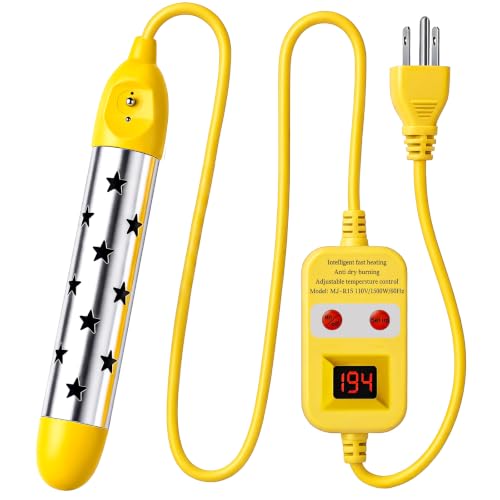
Best for: Buyers who prefer selecting from preset temperatures rather than entering a custom number. The thermostat offers 14 settings from 68°F to 194°F, and an LED screen displays the current water temperature.
The 1500W heater is described for use with bathtubs, buckets, and pools. Its listed safety features include a UL-certified plug, copper wire, dual insulation, and a sensor that monitors water level and temperature and cuts power if a problem is detected. The product also gives a five-gallon heating example, though heating time depends on conditions.
Why it was selected: The broad preset range and automatic temperature maintenance suit buyers who want a straightforward selection process. Limitation: It offers listed preset temperatures, so it may not suit users who specifically need fine, custom increments.
Briidea 1500W Titanium Immersion Heater

Best for: Buyers who want a titanium heating tube and need to consider liquid types beyond ordinary fresh water. The product description lists fresh water, salt water, groundwater, nutrient solutions, and other liquids among its intended environments.
This 1500W model uses an immersion temperature sensor to monitor liquid temperature. It automatically pauses when the preset temperature is reached and resumes heating when the temperature drops. Its adjustable range is 32°F to 240°F. Titanium construction is described as resistant to rust, corrosion, and chemical exposure.
Why it was selected: It stands apart from stainless-steel options through its titanium construction and wide stated adjustment range. Limitation: The product information does not specify a digital display or provide a detailed operating procedure, so buyers seeking those details should compare other models.
Fextaoty 1500W Heater With GFCI Plug

Best for: Buyers who want thermostat control alongside a plug with built-in ground-fault protection. The product states that the plug cuts power if electrical leakage is detected.
The heater has a smart thermostat intended to control the selected temperature and help maintain warmth. Its 304 stainless steel heating rod is described as a seamless, one-piece structure. The listed applications include bathtubs, baptistries, small pools, and buckets.
Why it was selected: The combination of thermostat control, stainless steel construction, and ground-fault protection gives it a distinct feature set among these options. Limitation: The provided product details do not state a temperature range or provide a display specification, so buyers who need those details should confirm them before choosing.
Buying Guide: How to Choose a Submersible Water Heater With a Thermostat
What water volume will you heat?
Start with the amount of water you usually need to warm. A bucket requires less heat than a bathtub or small pool, and larger volumes generally take longer to reach the same temperature. Wattage is one factor in heating speed, but it does not establish an exact warm-up time for every container. Water volume, starting temperature, container material, and surrounding conditions also matter.
Use a product’s stated heating example as a reference rather than a guarantee. For example, the QENIVO and KINEMORA listings provide examples for five gallons, while the yoisie listing emphasizes its 1800W output. These claims are not directly comparable unless the starting and target temperatures and test conditions match.
Do you need a preset or adjustable thermostat?
A preset thermostat can simplify operation if one of its settings meets your needs. The KINEMORA lists 14 presets between 68°F and 194°F. An adjustable controller offers more direct target selection: the QENIVO lists a range from 32°F to 212°F, and the yoisie allows settings up to 175°F. Compare the stated range with your intended use instead of assuming every heater can reach the same temperature.
Check how the thermostat cycles. Some models stop at the target and restart after the water cools; the yoisie specifies restarting after a 15°F drop. Automatic cycling can help maintain warmth, but it does not remove the need to monitor use and follow the manufacturer’s instructions.
Which material and safety features matter?
Stainless steel and titanium are different construction choices. The yoisie and Fextaoty list 304 stainless steel, while Briidea uses a titanium heating tube and describes resistance to corrosion and chemical exposure. Consider the liquid and environment you plan to heat, and verify that the manufacturer’s instructions permit that application.
Look at the protective features separately. The yoisie lists anti-dry-burn shutoff; the KINEMORA describes a sensor that monitors water level and temperature; and the Fextaoty lists ground-fault protection in its plug. A protective feature is not a substitute for correct setup. Follow the product instructions for minimum water level, full submersion, probe placement, and electrical connection.
How important is a display?
A display helps you check water temperature without relying on guesswork. The QENIVO shows current and target temperature, while the yoisie lists an LCD screen with real-time temperature. The KINEMORA lists an LED screen showing the current reading. If a model’s product details do not mention a display, do not assume one is included.
What should you check before use?
- Confirm the heater is intended for your container and use case.
- Read the operating instructions, including water-level and immersion requirements.
- Place any temperature probe as instructed before powering the heater.
- Keep hands and objects away from the heater while it is operating.
- Unplug the heater before removing it, and allow it to cool as directed.
- Check the electrical requirements and use the outlet and setup specified by the manufacturer.
These are electrically powered heating devices used in water. Treat setup and supervision as essential parts of the purchase decision, not as optional extras. If the product documentation does not answer a safety or compatibility question, seek clarification before using the heater.
Frequently Asked Questions
What does a thermostat do on a submersible water heater?
A thermostat monitors water temperature and controls heating based on a selected target or preset. Depending on the model, the heater may stop when the target is reached and restart after the water cools.
Can a submersible heater maintain a set water temperature?
Some models are described as automatically cycling to maintain warmth. Check the product’s listed control behavior: the yoisie, for example, states that it restarts when the water drops by 15°F.
Is higher wattage always faster?
Not necessarily in every real-world setup. Heating time also depends on water volume, starting temperature, target temperature, and conditions. Compare wattage and heating examples only when the listed test conditions are similar.
Which heater is best for a specific temperature?
Choose a model whose stated range includes your target. The yoisie lists settings up to 175°F, while the KINEMORA lists presets up to 194°F and the QENIVO lists an adjustable range up to 212°F.
Can these heaters be used in any liquid?
No. Use the heater only in liquids and applications allowed by its instructions. Briidea specifically lists several liquid types, but that does not establish suitability for every chemical or solution.
Should I touch the water while the heater is on?
Follow the manufacturer’s safety directions and do not touch the heater or place hands in the water while it is operating. Unplug the unit before removing it and let it cool as directed.