The best electric hot water unit depends on whether you need hot water at a sink, a stored supply for a small home, or boiled water for drinks. The VEVOR 12-gallon heater is best suited to a small point-of-use plumbing setup, while the 110V tankless model is intended for compact, on-demand use. For beverages, Chefman and Cosori offer kettle-style options; the EUHOMY dispenser provides bottled hot and cold water.
| Product | Best suited for | Type |
|---|---|---|
| VEVOR 12-Gallon Electric Tank Water Heater | Small homes and one or two water outlets | Storage tank |
| 110V 3000W Tankless Water Heater | Compact, on-demand sink hot water | Tankless |
| Chefman 1.8L Electric Kettle | Boiling water for drinks and cooking | Electric kettle |
| Cosori 1.7L Electric Kettle | Hot water with no plastic contact inside the kettle | Electric kettle |
| EUHOMY Hot and Cold Water Dispenser | Homes or offices using 3- or 5-gallon bottles | Bottled-water dispenser |
VEVOR 12-Gallon Electric Tank Water Heater

Best for: A small apartment, studio, or remote water point that needs a stored supply for one or two outlets. This is the most conventional plumbing-oriented option in this selection: it stores heated water in a 12-gallon tank rather than heating a small flow instantly or boiling a kettle.
The listed specifications include 1600W power, 120V operation, an LED display, knob control, a side outlet, and a temperature and pressure relief valve. The manufacturer describes an extended immersion heating tube and a 20 mm foam insulation layer intended to reduce heat loss. The enamel interior is described as resistant to high temperatures and corrosion.
Why it was selected: Its storage design and stated capacity make it a better fit for household hot-water use than countertop kettles or bottle dispensers. The product listing identifies showers, handwashing, and dishwashing among its intended uses.
Limitation: A 12-gallon tank is a finite reserve. The listing positions it for one or two outlets and smaller households, so it may not suit a larger home or several simultaneous high-demand uses.
110V 3000W Tankless Water Heater
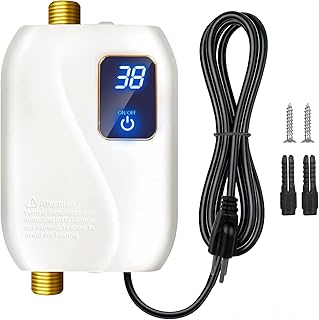
Best for: Buyers seeking a compact, wall-mounted unit for an under-sink or other small point-of-use application. The unit heats water on demand instead of maintaining a tank of stored hot water.
The listing describes a 3000W, 110V heater with a digital display that can show Fahrenheit or Celsius. It claims a temperature rise of 82°F at 0.3 gallons per minute and 131°F at 0.5 gallons per minute. It also lists IPX4 water resistance, water-and-electricity isolation, leakage and dry-boil protection, and automatic shutoff for overheating or inactivity.
Why it was selected: Its compact form and on-demand design make it a better fit than a storage tank when the goal is a small, localized hot-water supply. The display and stated protections are useful features to compare when evaluating compact electric heaters.
Limitation: The listed temperature rise is tied to specific flow rates. Do not assume it will provide the same output at a higher flow or work as a whole-home replacement. Confirm that the unit’s electrical and plumbing requirements suit the intended installation before buying. The listing also says it qualifies for ETL standard; verify documentation directly if certification is a purchasing requirement.
Chefman 1.8L Electric Kettle

Best for: People who need boiled water for tea, coffee, instant meals, or other kitchen tasks, rather than a heater connected to a sink. Its 1.8-liter capacity is designed for batches of water, and its cordless serving design lets the kettle lift away from its base.
The listed features include 1500W power, a removable lid for cleaning, a stainless steel filter, borosilicate glass, automatic shutoff, and boil-dry protection. The manufacturer states that it can boil water in about three minutes; actual heating time can depend on the amount of water and other conditions.
Why it was selected: This is a practical choice when “electric hot water unit” means a countertop appliance for preparing hot water quickly. The safety shutoff and boil-dry protection distinguish it from a basic vessel that must be watched during heating.
Limitation: A kettle does not supply hot water through a faucet or provide a continuous plumbing supply. Choose a tank or tankless heater if you need hot water at a sink or shower.
Cosori 1.7L Electric Kettle

Best for: Buyers looking for a countertop kettle whose listed design keeps water from touching plastic inside the kettle. It is intended for boiled drinking water, not as a replacement for a household or point-of-use water heater.
Cosori lists a 1.7-liter capacity, a wide mouth, and a large-angle lid intended to make the interior easier to reach during cleaning. The product description says it heats 0.5 liters, or about two cups, in under three minutes. That figure refers to the stated amount, not necessarily a full kettle.
Why it was selected: Its no-plastic-contact claim offers a clear point of comparison for shoppers who prioritize the materials that water touches. The wide opening is also relevant for people who want easier access when cleaning the kettle.
Limitation: This is a batch-heating appliance. Its 1.7-liter capacity means users need to refill and reheat it for additional water; it does not provide hot water continuously or connect to plumbing.
EUHOMY Hot and Cold Water Dispenser

Best for: A household or office that uses bottled water and wants hot, cold, and ambient water from one dispenser. It is a countertop or freestanding-style bottled-water appliance, not a tankless plumbing heater.
The listing gives dimensions of 11.4 by 11 by 36.5 inches and says the top-loading dispenser accepts 3- or 5-gallon bottles. It lists hot and cold output, a rear switch for selecting hot, cold, or ambient water, and a removable top lid for cleaning. The hot-water spout uses a two-step operation with a child safety lock.
Why it was selected: It suits buyers who want readily available drinking water at more than one temperature without boiling a kettle for each serving. The top-loading design also lets users see how much water remains in the bottle.
Limitation: It depends on compatible bottled water and requires replacing the bottle when it is empty. It is not intended to deliver hot water to a sink, shower, or other plumbing outlet.
Buying Guide: How to Choose an Electric Hot Water Unit
Do you need hot water at a faucet or just hot water for drinks?
Start by identifying where the hot water must be available. A storage tank or tankless heater is the relevant category when you need hot water delivered through plumbing. A kettle is for heating a measured batch of water, while a bottle dispenser supplies drinking water from a replaceable bottle.
These products are not interchangeable. A kettle can be convenient for tea and cooking, but it cannot act as a sink water heater. A bottled dispenser can provide hot and cold drinking water, but it does not serve a shower or plumbing fixture. Match the appliance type to the job before comparing features.
Should you choose a tank or a tankless heater?
A storage tank keeps a limited volume of heated water available. The VEVOR unit has a stated 12-gallon capacity and is described for one or two outlets. That makes capacity and household demand important considerations: once the stored supply is used, additional hot water depends on reheating.
A tankless heater heats water as it flows through the unit. The compact 110V model is described as an under-sink option, and its listed temperature rise changes with flow rate. Check the manufacturer’s flow and temperature information against the planned use. A small point-of-use unit should not be assumed to provide the output of a larger household system.
What electrical and installation details should you check?
For a plumbing-connected heater, confirm the required voltage, power, water connections, mounting arrangement, and available electrical capacity before purchase. The products in this comparison list different electrical specifications: the VEVOR is listed at 120V and 1600W, while the tankless model is listed at 110V and 3000W. Those figures do not by themselves establish that either unit is suitable for a particular home circuit.
Follow the product instructions and applicable local requirements. If you are unsure about electrical load, plumbing connections, pressure relief, or installation location, consult a qualified professional. Do not infer that a product is suitable for an installation solely because its voltage appears similar to another appliance’s voltage.
How much capacity do you need?
For a tank heater, compare the stated tank capacity with the number of users and the kinds of tasks involved. The 12-gallon VEVOR model is positioned for smaller households and one or two outlets, rather than unlimited or whole-home demand. Consider whether hot water may be used at more than one outlet at the same time.
For a kettle, compare the volume with the amount you normally boil at once. The Chefman has a listed 1.8-liter capacity, and the Cosori has a listed 1.7-liter capacity. A larger kettle may reduce the number of batches for a group, while a smaller batch may be sufficient for a single drink.
Which safety and maintenance features matter?
Compare the protections and cleaning features stated for each product. The VEVOR listing names dry-heating, overheating, and overpressure protection, as well as a temperature and pressure relief valve. The tankless heater listing names leakage and dry-boil protection and automatic shutoff for overheating or inactivity. These listed features are not a substitute for correct installation and use.
For countertop appliances, the Chefman lists automatic shutoff and boil-dry protection. The Cosori’s wide opening and large-angle lid are intended to make cleaning easier. The EUHOMY dispenser has a removable top lid and a two-step hot-water spout with a safety lock. Follow each product’s cleaning and operating instructions.
What should you consider for a rental, office, or small kitchen?
Measure the available space and check how the appliance will be used. The tankless model is described as compact and wall-mounted, while the EUHOMY dispenser is listed at 36.5 inches tall and requires space for a 3- or 5-gallon bottle. Kettles need a stable countertop location and access to a suitable outlet. A 12-gallon tank requires room for the unit and its plumbing connections.
Also consider whether you can refill or replace a water bottle, whether you need hot water at multiple outlets, and whether the appliance is intended to be installed permanently. These practical differences often matter more than a product’s general label as an “electric hot water unit.”
Frequently Asked Questions
What is an electric hot water unit?
It is a broad term for an appliance that uses electricity to heat water. It can refer to a storage tank, a tankless plumbing heater, an electric kettle, or a bottled-water dispenser with a hot-water function.
Which product in this list connects to household plumbing?
The VEVOR storage tank and the 110V tankless heater are the plumbing-oriented options described in their listings. Confirm their installation requirements and suitability for your specific setup before buying.
Can an electric kettle replace an under-sink water heater?
No. A kettle boils water in a removable container for pouring, while an under-sink heater is intended to provide hot water at a plumbing outlet. They serve different purposes.
Is a tankless electric water heater always more suitable for a small home?
No. Suitability depends on the required flow, temperature rise, electrical supply, and number of outlets. A tankless unit may suit a localized application, while a small storage tank provides a finite reserve. Compare the listed specifications with the intended use.
What is the difference between a kettle and a bottled-water dispenser?
A kettle heats water in a batch and must be filled for each use. A bottled-water dispenser uses a 3- or 5-gallon water bottle and can provide hot and cold water from separate spouts, according to the EUHOMY listing.
Should I install a plumbing-connected electric heater myself?
Check the product instructions and local requirements first. If you are uncertain about electrical capacity, plumbing, or pressure-relief requirements, ask a qualified professional to assess the installation.