The best powerless wood stove fan uses heat from a stove to circulate warm air without batteries, cords, or household electricity. The Tomersun is best for buyers who want an included mounting bracket, while the dual-motor fan is better for a wider airflow design. The JossaColar offers a simple fan-and-thermometer set, the Miaton emphasizes quiet operation and a carry handle, and the VODA is a straightforward heat-powered option.
| Product | Best for | Notable feature |
|---|---|---|
| JossaColar Heat-Powered Fan | Basic fan and thermometer set | Curved aluminum blade |
| 12-Blade Dual-Motor Fan | Wider airflow design | Two fan heads and overheat protection |
| Miaton 6-Blade Fan | Quiet operation | Under 25 dB stated operating sound |
| Tomersun 8-Blade Fan | Buyers wanting a bracket | Bracket and magnetic thermometer included |
| VODA Heat-Powered Fan | Simple heat-driven circulation | No batteries or electricity required |
JossaColar Heat-Powered Stove Fan

The JossaColar is a non-electric fan designed to start working from stove heat. It is listed for wood-burning stoves, log burners, and fireplaces. Its curved aluminum fan blade is intended to distribute warm air around the room, and the package includes a magnetic thermometer for monitoring stove surface temperature.
Best for: Buyers seeking a basic heat-powered fan with a separate thermometer in the package. Its listed dimensions are 6.5 inches long and 7.7 inches high, information that can help when checking available space on a stove top.
Why it was selected: It directly matches the powerless wood stove fan use case and includes a temperature-monitoring accessory. The product listing also states that the fan is covered by a one-year replacement offer for quality problems and a 30-day refund policy.
Limitation: The listed features do not specify a startup temperature, airflow measurement, or noise level. Buyers who need those exact figures should confirm them with the seller before choosing.
12-Blade Dual-Motor Stove Fan

This fan uses stove heat to generate power through the Seebeck effect, so it does not require batteries or a cord. Its two fan heads, two motors, and 12 blades form a 9-inch-wide design intended to create a broader airflow path. The listing describes it for flat-top wood stoves, pellet stoves, fireplaces, and similar heat sources.
Best for: Buyers who prefer a dual-head layout and want a fan designed to distribute air across a wider area. The stated startup temperature is 130°F, and the listed best operating range is 350–530°F.
Why it was selected: It has a clearly described operating range, a magnetic thermometer, and overheat protection. The listing says the protection lifts the base at excessive surface temperatures and that the maximum temperature should remain below 570°F.
Limitation: The 9-inch body needs sufficient clear stove-top space. Its dual-head design may be less suitable for a small stove top than a more compact fan, so measure the intended placement area first.
Miaton 6-Blade Heat-Powered Fan

The Miaton is a six-blade thermal fan that converts heat into electricity to operate without a plug or batteries. Its listed construction is anodized aluminum, and the product is described for wood stoves, pellet stoves, and portable heaters. A metal handle is included for carrying, and the listing says the package does not include an aluminum tray.
Best for: Buyers who prioritize a stated noise figure or want a fan that can be carried between suitable heat sources. The listing reports operating sound below 25 decibels and describes the fan as usable during a power outage, provided the heat source is hot enough.
Why it was selected: It combines a non-electric design with a stated sound level, carry handle, and overheating protection. The listing says a spring mechanism reduces contact between the base and stove if the temperature exceeds 350°C.
Limitation: The aluminum tray is not included, and no exact airflow rate or startup temperature is provided in the supplied product details. Check the stove’s surface temperature and the seller’s guidance before use.
Tomersun 8-Blade Fan With Bracket

The Tomersun is an eight-blade thermoelectric fan supplied with a bracket and magnetic thermometer. The listing says the bracket can secure the fan to most flat-top wood stoves and fireplaces. It also describes bottom spring plates that bend and lift the fan when the temperature becomes too high.
Best for: Buyers who want a bracket included or would like to monitor stove surface temperature with a magnetic thermometer. The stated ideal operating range is 390–480°F, with a listed maximum of 570°F.
Why it was selected: Its bracket distinguishes it from the other listed options, while the eight-blade layout is designed to redistribute stove heat. The listing claims it moves 40% more warm air than standard four-blade models; this is a manufacturer-provided comparison, not an independently verified measurement.
Limitation: Its stated preferred temperature range is relatively specific. Check that the stove normally reaches that range and follow the product’s temperature guidance to avoid overheating.
VODA Heat-Powered Fireplace Fan
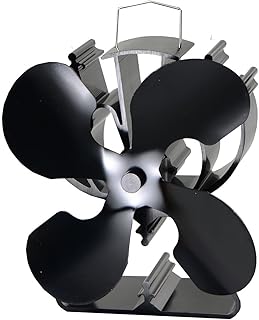
The VODA fan runs from heat on the stove top and does not require batteries or electricity. Its purpose is to move warm air away from the stove area and help distribute it through a room. The listing notes that operation can vary with stove temperature, so fan performance depends on the heat available at the placement point.
Best for: Buyers who want a direct, heat-driven circulation fan without a stated need for a bracket or a particular blade count. It is a straightforward option for redistributing heat from a wood-burning stove or fireplace.
Why it was selected: It matches the core requirement of operating without an electrical supply and addresses a common heating issue: warm areas near a stove and cooler spots farther away. The product listing claims it can reduce wood consumption by 28%; actual results will depend on the stove, room, fuel, and use.
Limitation: The supplied features do not state dimensions, a startup temperature, or an overheat-protection mechanism. Compare those details with your stove and installation needs before purchasing.
Buying Guide: How to Choose a Powerless Wood Stove Fan
How does a heat-powered stove fan work?
A heat-powered stove fan uses temperature differences to generate the electricity needed to turn its blades. It does not draw power from a wall outlet and typically does not need batteries. This makes it useful when a home has no convenient outlet near the stove or when the household wants air circulation during a power outage. The stove still needs to provide enough heat for the fan to operate.
These fans circulate room air; they do not create heat or replace the stove as a heating source. Their practical purpose is to move warm air away from the stove area. Room layout, stove placement, ceiling height, and temperature can all affect how noticeable that circulation is.
What temperature range should I check?
Look for the product’s startup temperature, preferred operating range, and maximum temperature. These figures are not interchangeable. A fan may begin turning at a lower temperature but perform best when the stove surface is hotter. For example, the dual-motor model lists a 130°F startup temperature and a 350–530°F preferred range. Tomersun lists an ideal range of 390–480°F and a 570°F maximum.
Use a suitable thermometer and follow the fan manufacturer’s instructions. Do not assume that all models tolerate the same heat. A stove that regularly runs outside a fan’s stated range may not be a good match.
How many blades or fan heads do I need?
Blade count alone does not tell you how much air a fan moves. The supplied products include six-, eight-, and 12-blade designs, but the listings do not provide a shared airflow measurement for comparing them directly. The dual-motor model has two fan heads and a 9-inch-wide body; the Tomersun includes a bracket. Compare the full design, listed dimensions, and available stove-top space rather than choosing by blade count alone.
Will it fit my stove?
Check the fan’s footprint and placement requirements against the flat, usable surface of your stove. Confirm that the location is not obstructed and that the fan can sit as directed by its manufacturer. The supplied product details specifically mention flat-top stove use for some models, while the Tomersun listing describes an included bracket for most flat-top stoves and fireplaces. Do not assume compatibility with a stove type that the product listing does not mention.
Are safety features and accessories important?
A magnetic thermometer can help monitor stove surface temperature, especially when a fan has a stated maximum. Some models also describe spring plates or a mechanism that lifts the base in excessive heat. These features do not replace safe stove operation or the product’s instructions. Check whether the thermometer is included, whether a bracket is supplied, and whether any other accessories shown or discussed are actually part of the package.
Noise can matter in a living room or home office. The Miaton listing gives a sound level below 25 decibels, while the supplied details for the other models do not provide a comparable noise figure. If quiet operation is a priority, compare stated measurements rather than relying on a general “quiet” description.
Frequently Asked Questions
Does a powerless wood stove fan need batteries?
No. The five fans listed here are described as heat-powered and do not require batteries or household electricity. They need heat from a suitable stove or heat source to operate.
Will a heat-powered fan work during a power outage?
It can operate without grid power if the stove is hot enough to activate it. A fan does not provide heat on its own, so it will not run usefully without a sufficiently hot heat source.
Does a stove fan heat a room by itself?
No. A stove fan moves warm air produced by the stove; it does not generate heat. Its intended role is to help circulate that air through the room.
Can I use any heat-powered fan on a pellet stove?
Not necessarily. Check the specific product listing and instructions for supported heat sources. The supplied details mention pellet stoves for the dual-motor and Miaton models, but compatibility should not be assumed for every fan.
Should the fan sit near the hottest part of the stove?
Follow the manufacturer’s placement instructions and temperature limits instead of automatically choosing the hottest spot. Excessive surface heat can exceed a fan’s stated maximum, while a cooler location may not provide enough heat for it to operate well.