A radiant solar heating system uses solar heat to warm water that circulates through floor tubing or another heat-distribution system. The products below are related hydronic components, not complete solar-thermal systems. The two-zone control panels are best for organizing hydronic heating circuits, while the oxygen-barrier PEX tubing is best for radiant floor loops. The heat exchanger may suit a pool-heating setup; the electric patio heater is a separate, non-solar option.
| Product | Best suited for | Role in a project |
|---|---|---|
| Warming Systems 2-Zone Panel | Hydronic zone control | Preassembled heating distribution |
| Floorheat 2-Zone Panel | Convenient hydronic distribution | Preassembled panel |
| VEVOR Oxygen-Barrier PEX | Radiant floor tubing | Water-carrying loops |
| AB Stainless Steel Heat Exchanger | Pool or spa heat transfer | Separates heating and pool water circuits |
| SereneLife Infrared Patio Heater | Localized electric outdoor heat | Standalone heater, not a solar hydronic part |
Warming Systems 2-Zone Hydronic Panel

This preassembled panel is best for buyers planning a hydronic radiant system who want key distribution components assembled in one layout. The listed features include a high-efficiency UPSe15-58 pump, expansion tank, air separator, and connections for supply and return manifolds. The seller describes the panel as usable with glycol systems and a water heater, and says it can control one to four hydronic zones.
Choose this panel if you want a ready-to-connect hydronic distribution assembly and value access to engineering support. Its stated connection sizes are 1-inch copper boiler connections and 3/4-inch copper manifold connections. The seller also notes that the panel is designed to be flushed and filled, with space for possible expansion.
Important limitation: The product description does not identify a solar collector, solar storage tank, or solar-specific controls. Confirm that the panel’s components and connection arrangement suit the planned solar heat source before purchase.
Floorheat Preassembled 2-Zone Panel
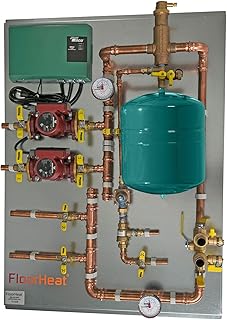
This Floorheat panel is best for buyers seeking a preassembled hydronic distribution system for underfloor, home, or space heating. Its listed features emphasize a professionally designed panel intended to simplify installation and provide radiant heat distribution. The seller also describes its layout as space-saving and suitable for home settings.
It may be a better choice when assembly convenience and a compact layout are priorities. For a solar-assisted project, it could be one part of a larger hydronic design, but the supplied product information does not specify solar collectors, storage, solar controls, or detailed component and connection specifications. Compare those details with the rest of the system before selecting it.
Important limitation: The listing states that a direct phone number is required for delivery. The available feature information is limited, so verify the panel’s included parts, zone capacity, and required connections with the seller before ordering.
VEVOR Oxygen-Barrier PEX-B Tubing

This 1/2-inch, 900-foot PEX-B pipe is best for buyers who need tubing for hydronic radiant floor loops. Its listed features include a flexible design, an EVOH oxygen-barrier layer, and compatibility with several connection approaches, including crimp, clamp, press, and compression fittings. The product description gives a minimum bending radius of 5 inches and pressure figures at three temperatures.
Choose this tubing if the project needs long runs of oxygen-barrier pipe and the installation uses a compatible fitting system. The oxygen barrier is intended to limit oxygen entry into the water circuit and help protect metal components. The listing says a cutter and clamps are included, but buyers should check whether their chosen connection system requires additional tools or fittings.
Important limitation: This product is tubing, not a complete radiant or solar heating system. Confirm the design temperature, pressure requirements, loop lengths, and local code requirements with a qualified installer before use.
AB 316L Pool Heat Exchanger
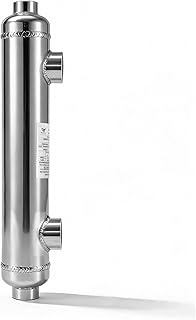
This stainless steel heat exchanger is best for a project that needs to transfer heat between a heating-water circuit and pool or spa water. The listing specifies 316L stainless steel, same-side ports, 1-inch and 3/4-inch FPT connections, and a stated capacity of up to 85 kBtu per hour under a 140°F temperature-difference condition. It also gives a pool capacity of up to 6,600 gallons.
For a solar-assisted pool project, an exchanger can be a component in a larger system, but its stated capacity depends on the conditions described in the listing. Match the exchanger to the actual water temperatures, flow rates, pool volume, and heating design rather than relying on the capacity figure alone.
Important limitation: This is not a solar collector or a complete pool-heating package. The listing describes it for chemically treated pools, spas, and hot tubs; confirm that its materials and connections suit the planned water chemistry and installation.
SereneLife Electric Infrared Patio Heater

This 1500-watt standing heater is best for buyers who want localized electric heat for a patio, deck, garage, or similar space—not for buyers assembling a solar hydronic heating system. The listed features include carbon-fiber infrared heating, low and high power settings, a remote control, and an IP44 designation. The seller also lists a tip-over switch, overheat protection, and a safety mesh guard.
Choose this product when the goal is direct electric infrared warmth in a specific area without adding water tubing or a boiler loop. It is a separate heating appliance, so it does not connect the solar collector, storage tank, or hydronic distribution components described elsewhere in this article.
Important limitation: The heater uses electricity and is not a solar-thermal or radiant-floor component. Its use depends on access to suitable electrical power and the intended indoor or outdoor location.
Buying Guide: How To Choose Components For A Solar Radiant System
What does a complete radiant solar heating system need?
A radiant solar heating system is more than a control panel or a roll of tubing. A typical design may include solar thermal collectors, a storage tank, circulation pumps, controls and sensors, heat-transfer fluid or water, heat exchangers where needed, and a heat-distribution system such as floor loops. The exact arrangement depends on the building, climate, heat demand, and whether the system serves space heating, domestic hot water, a pool, or multiple loads.
The products in this list cover only some hydronic or heating functions. None of the supplied descriptions identifies a complete solar collector-and-storage package. Treat each item as a possible component, and have the full system designed to work together.
Do you need a control panel or tubing first?
Start with the system layout and heat source, then confirm the required distribution equipment. A hydronic control panel organizes parts of the heating circuit and may simplify installation, but it does not replace a solar collector or storage tank. PEX tubing carries water through radiant loops; it must be selected according to the loop design, operating conditions, and compatible fittings.
Compare the panel’s zone capacity and connection sizes with the planned manifolds and heat source. For the tubing, verify the pipe diameter, length, oxygen-barrier construction, pressure and temperature requirements, bend radius, and fitting method. Do not assume components will connect simply because they are all described as hydronic products.
How should you compare the two control panels?
The Warming Systems panel has more listed component detail, including a pump, expansion tank, air separator, stated connection sizes, and a one-to-four-zone description. The Floorheat panel is described as a preassembled, space-saving two-zone distribution panel, but the supplied information does not give the same level of component or connection detail.
Choose based on documented specifications, not appearance or a general claim of easy installation. Ask for an included-parts list, dimensional details, connection information, and confirmation that the panel suits the intended heat source. The Floorheat listing also calls for a phone number for delivery.
When is a heat exchanger useful?
A heat exchanger transfers heat between two fluid circuits while keeping those fluids separate. It may be relevant when a solar-heated circuit needs to serve a pool or another load with different water chemistry. Check capacity under the temperatures and flow conditions the system will actually use, and verify that the exchanger materials suit the water treatment. The listed AB unit is a pool heat exchanger, not a general-purpose solar package.
What should you check before installation?
- System design: Confirm the required heat output, storage capacity, collector arrangement, control strategy, and backup heat source.
- Compatibility: Match pipe, fittings, pumps, panels, manifolds, and heat exchangers by size and operating requirements.
- Fluid and materials: Check whether the design uses water or glycol and whether every component is suitable for that fluid.
- Code and safety: Review local plumbing, mechanical, electrical, and building requirements with a qualified professional.
- Product documentation: Request missing specifications rather than inferring them from a product name or general description.
Frequently Asked Questions
Are these products complete radiant solar heating systems?
No. The listed products are hydronic panels, tubing, a pool heat exchanger, and an electric patio heater. The product information does not describe a complete solar collector and storage system.
Can a hydronic control panel be used with solar heat?
Possibly, as part of a properly designed system, but the supplied descriptions do not confirm solar-specific compatibility. Verify the panel’s components, fluid requirements, operating limits, and connection details with the manufacturer or a qualified system designer.
Is oxygen-barrier PEX necessary for radiant heating?
Oxygen-barrier tubing is designed to limit oxygen entering a hydronic circuit. Whether it is required depends on the system design and its components. Confirm the specification with the heating-system designer.
Can the AB heat exchanger heat a pool using solar energy?
It may serve as a heat-transfer component in a larger pool-heating design, but the listing does not include solar collectors or controls. Confirm capacity at the system’s actual temperatures and flow rates.
Is the SereneLife heater part of a hydronic floor system?
No. It is a standalone electric infrared patio heater. It does not circulate heated water through floor tubing or connect to the listed hydronic panels.