The best 24-volt thermostat for a heat-only system is one that matches the system’s control wiring and heating equipment, not simply one labeled “thermostat.” The Honeywell Home CT30A1005 is the clearest heat-only option in this group; the PRO1 T855iSH and Google Nest are better suited to buyers who want added scheduling or smart features, subject to compatibility checks. The other models are designed for heat-pump or multi-stage applications, so they may be more thermostat than a basic furnace needs.
| Thermostat | Best suited for | Key distinction |
|---|---|---|
| Honeywell Home CT30A1005 | Simple heat-only control | Manual operation and bimetal sensor |
| PRO1 T855iSH | Programmable, connected control | Wi-Fi, 7-day schedule, broad system modes |
| Google Nest Thermostat | Smart-control shoppers | Programmable Wi-Fi thermostat |
| LuxPro P621U | Buyers with a compatible multi-stage system | 5/1/1-day programming, 2 heat/1 cool |
| Mroinge non-programmable thermostat | Compatible heat-pump systems | Large temperature and humidity display |
Honeywell Home CT30A1005 Manual Thermostat

Best for: A buyer who wants straightforward manual control for a heat-only application. The listed product features identify it as a heat-only manual thermostat, with simple operation and a bimetal temperature sensor. That makes it the most directly aligned choice in this selection for someone who does not need Wi-Fi or a weekly schedule.
Why it was selected: Unlike the heat-pump and multi-stage models below, this product is explicitly described as heat only. Its basic operating approach can suit shoppers who want a simple thermostat rather than app-based controls or programming features.
Limitation: The supplied product details do not establish its voltage or provide a full wiring compatibility list. Confirm that it is suitable for the system’s control voltage and wiring before buying. Avoid assuming it will work with line-voltage heating based on the heat-only description alone.
PRO1 T855iSH Wi-Fi Thermostat

Best for: A buyer seeking Wi-Fi and a 7-day programmable schedule, provided the thermostat’s supported system configuration matches the home. The product name lists 24V power, a backlit 8-inch display, keypad lock, fan control, and filter alerts.
Why it was selected: It is the most feature-rich option in this group and explicitly identifies 24V power. Its listed system support includes 2H/2C conventional and 5H/3C heat-pump configurations, so it offers more control options than a basic heat-only thermostat. Buyers with heat-only equipment should verify that the needed heat-only wiring and setup are supported.
Limitation: The listed conventional and heat-pump stage counts may be unnecessary for a single-stage heating system. Do not choose it based on 24V power alone; confirm wiring, equipment type, and configuration requirements.
Google Nest Programmable Wi-Fi Thermostat

Best for: A buyer who wants a smart, programmable Wi-Fi thermostat rather than a basic manual control. The listed product name identifies it as a home thermostat with programmable and Wi-Fi functionality.
Why it was selected: The Nest is a recognizable smart-control option for shoppers considering remote or connected thermostat functions. It is a better fit for buyers who value those functions than for someone seeking the simplest heat-only control. Check the manufacturer’s system compatibility information against the specific heating equipment and existing wires before purchase.
Limitation: The supplied listing does not specify heat-only support, voltage requirements, wiring, or system-stage compatibility. Its name alone is not enough to confirm that it will operate a particular 24-volt heat-only system.
LuxPro P621U 5/1/1-Day Thermostat
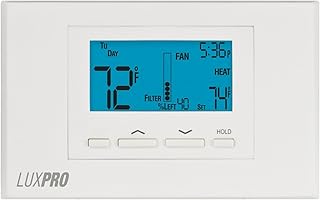
Best for: A buyer whose system needs a compatible thermostat with 5/1/1-day scheduling and support for up to 2 heat and 1 cool stages, as stated in the product name.
Why it was selected: The programmable schedule gives it a different use case from the manual Honeywell model. Its universal designation and listed staging make it a possible option for more complex equipment, but heat-only users should compare the system’s requirements with the full manufacturer specifications rather than assume every configuration is supported.
Limitation: The supplied details do not state voltage, wiring requirements, or an explicit heat-only mode. Choose it only after confirming those details for the particular system; its multi-stage capability may be unnecessary for basic heat-only control.
Mroinge Non-Programmable Heat-Pump Thermostat
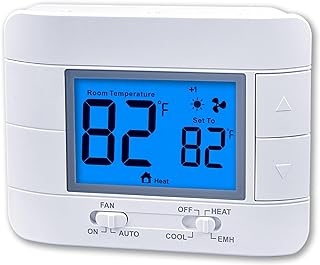
Best for: A buyer with a compatible heat-pump system who prefers non-programmable operation and a large display. The listed details specify support for up to 2 heat and 1 cool, plus large numbers and a display of room temperature and humidity.
Why it was selected: It is a clearly described non-programmable option with readable display information. It may suit a heat-pump owner who values simple settings and at-a-glance temperature and humidity readings more than schedules or Wi-Fi.
Limitation: This is identified as a heat-pump thermostat, not a general heat-only model. The listing says it does not work with 110–240V HVAC systems, 120/240V electric baseboard or other line-voltage systems, or RV thermostats. Confirm compatibility with the existing thermostat and equipment before buying.
Buying Guide: How to Choose a 24-Volt Heat-Only Thermostat
Does the system actually use 24-volt control wiring?
First identify the voltage and control type of the existing heating system. “24 volt” commonly describes a low-voltage control circuit, but a thermostat intended for low-voltage equipment is not automatically suitable for line-voltage electric baseboard heating. Check the current thermostat documentation, equipment manual, wiring labels, or a qualified HVAC professional if the system type is unclear. Never infer voltage from the thermostat’s appearance or from the number of wires alone.
The PRO1 listing explicitly states 24V power. The supplied information does not establish voltage for the other four models. Treat that missing information as a reason to verify, not as evidence that a product is incompatible or compatible.
Is the thermostat designed for heat only or a heat pump?
A heat-only furnace or boiler control and a heat pump do not necessarily use the same thermostat terminals or setup. Heat-pump models can require controls for compressor operation and auxiliary or additional heat stages. A thermostat that supports several heat-pump stages may be excessive for a simple heating system, while a heat-only thermostat may lack controls required by a heat pump.
For a straightforward manual heat-only application, the Honeywell CT30A1005 is the most directly described match among these products. For heat-pump equipment, compare the thermostat’s supported stages and wiring with the equipment documentation. Do not select a heat-pump model just because its name includes “heat.”
Do you need programming or connected features?
A manual thermostat is a practical choice when occupants prefer to adjust the temperature themselves and do not need schedules. A programmable model can be useful when different temperatures are wanted at regular times. Wi-Fi models add connected functionality, but they also make compatibility checking more important because equipment support, wiring, and setup vary by model.
- Choose manual control if simple operation is the main priority.
- Choose a programmable model if setting recurring temperature periods matters.
- Consider Wi-Fi if connected thermostat control is a priority and the exact system is supported.
How many heating stages does the equipment use?
Look up the heating system’s stage count before selecting a thermostat. A single-stage heat-only system has different control needs from multi-stage equipment. Product descriptions that mention 2 heat stages, 5 heat stages, or heat-pump configurations indicate capabilities, but those capabilities do not guarantee compatibility with every system. More stages are not automatically better for a basic installation.
Match the thermostat’s supported equipment type and staging to the system’s actual requirements. If the product information does not state that a configuration is supported, check the complete installation manual or ask an HVAC professional rather than relying on a broad word such as “universal.”
What should you check before installation?
- Record the existing thermostat model and the labels on its terminals before removing wires.
- Confirm whether the equipment is a furnace, boiler, heat pump, or line-voltage heater.
- Compare the current wiring and required terminals with the replacement’s installation instructions.
- Check whether the new thermostat requires a particular power connection or setup option.
- Verify whether the selected model supports heat-only operation and the system’s number of stages.
Thermostat wiring can be confusing because wire colors are not a reliable substitute for terminal labels. If the installation instructions do not clearly match the equipment, have a qualified technician confirm the wiring. Incorrect connections can prevent proper operation or damage equipment.
Frequently Asked Questions
Can I use a 24-volt thermostat on a heat-only furnace?
Yes, if the thermostat supports the furnace’s control voltage, wiring, and heating configuration. Confirm those details for the exact model and system; “24 volt” by itself does not establish heat-only compatibility.
Which product in this list is explicitly heat only?
The Honeywell Home CT30A1005 is identified in the supplied product information as a heat-only manual thermostat. Its voltage and wiring compatibility should still be checked against the heating system.
Is a heat-pump thermostat suitable for a heat-only system?
Not automatically. Heat-pump thermostats may be designed for different equipment and control wiring. Confirm that the exact model supports the system’s heat-only configuration before purchase.
Is the PRO1 T855iSH a 24-volt thermostat?
Its product name specifies 24V power. The listing also describes multiple conventional and heat-pump stages, so buyers with simple heat-only equipment should verify the required configuration and wiring.
Can a low-voltage thermostat control electric baseboard heat?
Do not assume it can. Electric baseboard heating is often line voltage, and the Mroinge listing specifically excludes 120/240V electric baseboard and line-voltage systems. Check the heating equipment and thermostat specifications before connecting them.
What is the safest way to choose a replacement?
Identify the heating equipment, control voltage, terminal wiring, and number of stages, then compare those requirements with the thermostat’s installation documentation. If any detail is uncertain, ask a qualified HVAC professional to verify compatibility.