The best high-output water heater depends on your home’s fuel source, incoming water temperature, and how many fixtures may run at once. For outdoor natural-gas installation, the Rheem 8.4 GPM model is a strong match; the Ranein offers a higher listed flow rate for indoor propane use, while the APUS 27 kW electric model suits homes prepared for a 240V system. These five picks focus on whole-home or substantial on-demand output—not small sink heaters or portable immersion heaters.
| Product | Fuel and installation | Best suited for | Listed output |
|---|---|---|---|
| Rheem RTG Series | Natural gas, outdoor | Large homes with outdoor installation space | 8.4 GPM; 180,000 BTU/hr |
| Ranein Tankless | Propane, indoor | Buyers seeking high listed flow | 8.5 GPM; 190,000 BTU |
| APUS 27 kW | Electric, 240V | Homes choosing electric whole-home heating | Up to 6.5 GPM |
| Baococo 14L | Propane, outdoor | Moderate-flow outdoor hot water | 3.66 GPM; 85,300 BTU/hr |
| LFEVTZ Mini | Electric, 110V | RV, camping, or one low-flow sink | Up to 0.5 GPM |
Rheem RTG Series 8.4 GPM Natural Gas Tankless

Best for: A large household that wants a high-output natural-gas unit installed outdoors. Rheem lists 8.4 gallons per minute at a 35°F temperature rise and 180,000 BTU per hour, with capacity described for three to four simultaneous showers. Outdoor placement eliminates the need for indoor venting, according to the product information.
This model is a strong choice when the home’s gas supply and hot-water demand align with its specifications. Its non-condensing design has a listed 0.82 Uniform Energy Factor, and the product description says on-demand heating can save energy compared with a 50-gallon electric tank. A qualified installer is recommended for wall mounting.
Limitation: It is specifically an outdoor natural-gas model. Choose another option if you need propane or an indoor installation. The 8.4 GPM figure is tied to a stated 35°F temperature rise; actual output depends on conditions and demand.
Ranein 8.5 GPM Indoor Propane Tankless

Best for: Buyers looking for a high listed flow rate in an indoor propane unit. The Ranein is rated at 8.5 GPM and 190,000 BTU. It heats water on demand rather than waiting for a storage tank to recover, and its compact listed dimensions are 24.25 by 15.08 by 8.07 inches.
The product description highlights a blower beneath the unit that adjusts its speed based on wind pressure and water temperature, helping supply oxygen for combustion. It also lists standard 3/4-inch NPT water inlet fittings. This makes it worth considering when propane is the preferred fuel and the installation plan suits an indoor model.
Limitation: Flow rate alone does not establish how many fixtures the heater can serve in every home. Incoming-water temperature and simultaneous use matter. The provided details do not state a temperature-rise basis for the 8.5 GPM rating, so compare the full manufacturer specifications before purchase.
APUS 27 kW Electric Tankless Water Heater
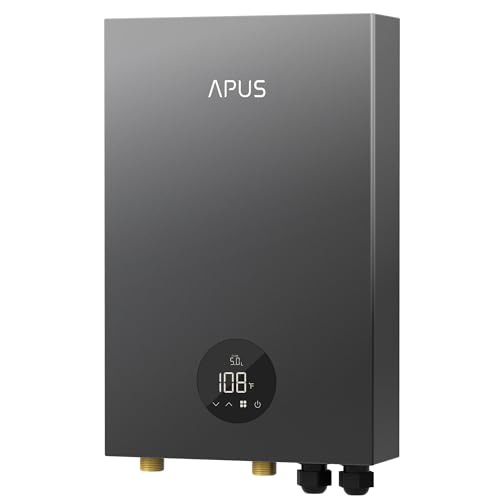
Best for: Households seeking an electric whole-home system with digital temperature control. The APUS uses a 27 kW heating system, operates on 240V, and lists flow up to 6.5 GPM. Its description positions it for three to four simultaneous uses, including showers, sinks, kitchen, and laundry.
The LED display adjusts the set temperature from 86°F to 140°F in 1°F increments. A memory function recalls the previous setting, while self-modulating technology adjusts heating output to water flow and temperature demand. Since it heats on demand rather than storing hot water, it avoids reheating a tank when no hot water is being used.
Limitation: The 6.5 GPM figure is a maximum, not a guarantee at every inlet temperature or household demand level. This unit requires a 240V supply. Confirm that the home’s electrical system and installation plan are appropriate before choosing it.
Baococo 14L Outdoor Propane Tankless Heater

Best for: Buyers who need a propane-powered outdoor heater with moderate rather than maximum whole-home flow. The Baococo lists 3.66 GPM and 85,300 BTU per hour. It uses advanced combustion technology and includes six stated protections: overheat, dry combustion, antifreeze, low flow, flame fault, and high water pressure.
The listed operating water-pressure range is 3.6 to 116 PSI, and the product description gives an adjustable temperature range of 17°F to 113°F. Its outdoor format may suit a location where an outdoor propane unit is preferred and the expected demand fits the stated flow rate.
Limitation: At 3.66 GPM, it is a lower-flow choice than the Rheem and Ranein models in this list. It may not suit a household expecting several high-flow fixtures to run together. Check the operating range and installation requirements against the planned water supply and local conditions.
LFEVTZ 110V Mini Tankless Water Heater

Best for: An RV, camping setup, or small sink where compact size and a standard 110V supply are priorities. This mini unit lists hot-water temperatures from 82°F at 0.3 GPM to 131°F at 0.5 GPM. Its wall-mounted format saves space, and the LCD display shows temperature information.
The product description lists IPX4 waterproofing, leakage protection, dry-burn protection, and automatic shut-off. It also explains that output temperature changes with flow: lower flow produces a higher temperature. That makes it more appropriate for low-flow tasks such as washing hands or dishes than for a multi-fixture whole-house system.
Limitation: Its maximum listed flow is only 0.5 GPM, far below the other choices here. Avoid it if the goal is high-output shower or whole-home service.
Buying Guide: How to Choose a High-Output Water Heater
What does “high output” mean for a water heater?
High output generally refers to how much hot water a unit can deliver over time, often stated in gallons per minute (GPM), alongside its heating capacity in BTU per hour or kilowatts. A higher GPM can support more simultaneous use, but the number is meaningful only in context. A heater’s output changes with the temperature of the incoming water and the desired hot-water temperature.
Compare products using the same operating conditions whenever possible. Rheem, for example, states 8.4 GPM at a 35°F temperature rise. The other listings do not all provide an equivalent temperature-rise basis. Their maximum flow figures should not be treated as directly comparable without checking their detailed specifications.
How many fixtures need hot water at the same time?
List the fixtures likely to run together, such as a shower and kitchen faucet or multiple showers. Estimate their combined hot-water demand and compare it with the heater’s output under your local inlet-water conditions. The product descriptions position the Rheem and APUS for several simultaneous uses, but actual performance will depend on household demand and incoming-water temperature.
If use is usually limited to one sink, a small point-of-use heater may be sufficient. The LFEVTZ is designed for low-flow tasks, not whole-home demand. For larger households, focus on the higher-output tankless choices and verify their performance with the manufacturer’s sizing information.
Should you choose gas or electric?
Start with the fuel and infrastructure available at the installation location. The Rheem is a natural-gas outdoor model. The Ranein and Baococo are propane models, with the Ranein described for indoor use and the Baococo for outdoor use. The APUS is a 240V electric whole-home model, while the LFEVTZ is a 110V mini unit with low listed flow.
Do not select a heater based on output alone. Confirm the required fuel, electrical supply, location, and installation conditions. If a home would need substantial utility or installation changes to support a particular model, that can affect whether it is a practical choice.
Is an indoor or outdoor installation better?
Choose an installation type that matches the product design and the home’s layout. The Rheem and Baococo are described as outdoor units; Rheem’s outdoor installation eliminates indoor venting. The Ranein is described as an indoor model. These are not interchangeable placement options, so check the product’s installation documentation before purchase.
For gas equipment, installation should account for the specified fuel and combustion setup. The Ranein listing describes an adjustable blower, while the Rheem product description recommends a qualified installer for wall mounting. Follow manufacturer instructions and applicable local requirements.
What should you know about tankless flow rates?
Tankless heaters do not store a reserve of hot water in a tank. They heat water as it moves through the unit, so delivered temperature and flow are linked. When a listing says “up to” a particular GPM, it does not mean the unit will deliver that maximum at every temperature setting or water condition.
Compare both GPM and heating capacity, then check the temperature-rise information. A product with a larger advertised flow may not be the better choice if its fuel, installation format, or performance conditions do not match the home.
Which controls and safety features are useful?
Digital controls can make it easier to set and monitor a target temperature. The APUS offers an LED display, 1°F adjustments, and a memory function. The LFEVTZ lists an LCD display and protections including leakage and dry-burn protection. The Baococo lists protections for conditions such as low flow and overheating.
These features do not replace correct installation or safe operation. Review the complete manufacturer instructions, especially for gas appliances and electrical equipment. Confirm the required connections and conditions before operating the unit.
Frequently Asked Questions
What is the highest-output water heater in this selection?
The Ranein has the highest listed flow rate at 8.5 GPM and a listed capacity of 190,000 BTU. Rheem lists 8.4 GPM at a 35°F temperature rise and 180,000 BTU per hour. Because the listings do not all state identical test conditions, compare their detailed specifications before deciding which delivers more usable hot water for your home.
Can an electric tankless heater serve a whole house?
Some are designed for whole-home use. The APUS 27 kW model is described for residential use at up to 6.5 GPM and uses a 240V supply. Whether that output is enough depends on incoming-water temperature, desired temperature, and simultaneous fixture demand.
Is a 3.66 GPM heater enough for a family?
It depends on how much hot water the household uses at once. The Baococo’s 3.66 GPM rating is lower than the higher-output models in this list, so it is a better fit when expected demand is moderate. Check the temperature rise and combined flow of the fixtures you plan to use.
Can the 110V LFEVTZ replace a whole-house heater?
No. Its listed maximum flow is 0.5 GPM, and its product information describes it for small spaces, RVs, camping setups, and tasks such as washing dishes or hands. That output is not intended to match a whole-home high-output system.
Why does incoming-water temperature affect performance?
The heater must raise incoming water to the selected outlet temperature. Colder inlet water requires a greater temperature increase, which can reduce the flow available at that target temperature. Use local seasonal inlet-water conditions when sizing a heater, and consult the manufacturer’s performance tables.