The best flue sealer for a fireplace depends on the material, joint, and temperature involved. The products below are high-temperature sealants or refractory cements described for fireplace, chimney, stove, or flue repairs. DAP is suited to small firebrick and mortar repairs; Furnace Cement and BONDIFY emphasize hard-setting repairs; Kraken Bond offers multi-surface use; and Threlaco comes in a four-pack for projects needing several tubes. Check your appliance instructions and the product label before applying any sealant.
| Product | Best suited for | Key distinction |
|---|---|---|
| DAP High Heat Fire Resistant Mortar | Small firebrick and mortar repairs | Silicate cement that sets hard when fired |
| Furnace Cement | High-heat patching and sealing | Listed heat resistance up to 2732°F |
| Kraken Bond Sealant | Sealing cracks and joints on listed surfaces | Describes use on brick, stone, concrete, and metal |
| Threlaco Four-Pack | Multiple heat-sealing tasks | Inorganic formula cures hard and rigid |
| BONDIFY Fire Cement | Hard-setting high-heat repairs | Two tubes and stated 2750°F resistance |
DAP High Heat Fire Resistant Mortar

DAP High Heat Fire Resistant Mortar is a silicate cement fireplace sealant intended for small repairs involving firebrick and mortar joints. Its listed uses include repairing small chips or cracks in firebrick, repointing joints between firebricks, and bonding firebricks in fireplaces and wood-burning stoves. It is also described as a draft, smoke, and fireblock sealant for certain wood-frame construction applications where a non-combustible sealant is required.
Best for: Homeowners addressing small, localized firebrick chips or mortar-joint damage who want a product specifically described for these tasks. It was selected because the listed features directly include fireplace masonry repairs rather than only general high-temperature sealing.
The product cleans up with water and sets rock hard once fired, according to its description. That hardening behavior suits rigid masonry repairs, but it is not a flexible sealant. Limitation: The product description focuses on small repairs; it does not establish that it is appropriate for extensive flue deterioration or a damaged chimney structure. Follow the package directions for preparation and firing.
Furnace Cement 2732°F Refractory Cement

This refractory cement is described for sealing and repairing high-heat areas in fireplaces, furnaces, wood stoves, flues, chimneys, grills, and boilers. Its stated maximum heat resistance is 2732°F. The product applies as a smooth paste and is described as curing to a rock-solid finish, with a fast-setting claim for high-temperature patch jobs.
Best for: Buyers seeking a hard-setting cement for a small high-heat repair and who value a clearly stated temperature figure. It is a relevant option for flue or chimney work because those uses are explicitly named in its product description. Compare it with DAP if the job is specifically a small firebrick chip or mortar-joint repair.
Limitation: A high temperature rating alone does not confirm suitability for every fireplace, flue material, or type of joint. The product is described as rigid after curing, so do not choose it where a flexible seal is required. Confirm surface preparation, curing, and first-use instructions on the package before putting the fireplace back into service.
Kraken Bond High Temperature Fireplace Sealant

Kraken Bond’s black sealant is described for high-temperature applications on brick, stone, concrete, and metal. Listed uses include fireplaces, ovens, stoves, chimneys, and HVAC systems. The product description says heating transforms it into a dark gray, exceptionally hard mass and gives a heat-resistance figure of up to 2700°F (1500°C). It also states that uncured sealant cleans up with water.
Best for: Buyers whose repair involves one of the listed surfaces and who need a sealant for cracks or joints in a high-temperature setting. It stands out for naming several surface materials, which can help buyers compare it with products described mainly as firebrick mortar or refractory cement.
The manufacturer description suggests smoothing it with a putty knife or rubber scraper. Limitation: This product hardens after heating; it should not be treated as a permanently elastic caulk. The listing’s general surface range does not replace checking whether the exact joint and appliance are suitable. Read the directions for application and heating before use.
Threlaco Four-Pack High-Temperature Sealant
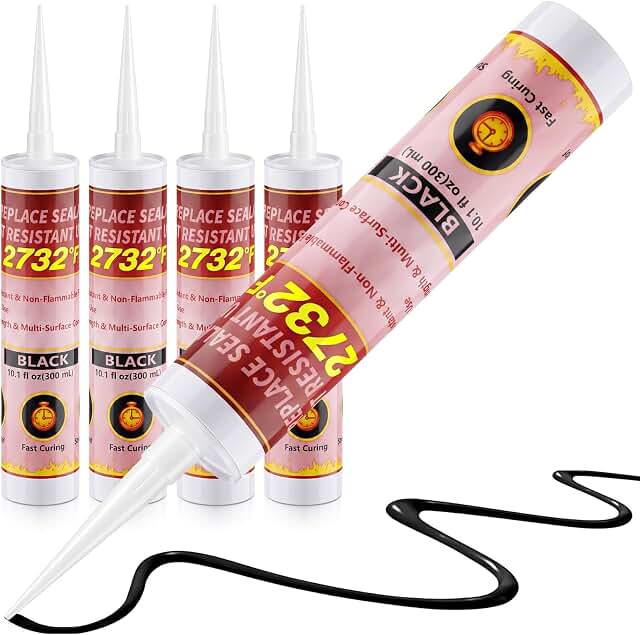
This four-pack contains 10-ounce tubes of black high-temperature sealant. The listed applications include fireplaces, stoves, ovens, grills, chimneys, and furnaces. Its inorganic formula is described as designed for heat resistance and rigid bonding, with a stated temperature capability up to 2700°F. After proper curing, it forms a hard, non-flexible bond rather than remaining soft or rubbery.
Best for: Buyers planning several small sealing tasks who prefer a multi-tube pack and understand that the cured material is rigid. It was selected because the listing names flues and chimneys among its applications and makes the non-flexible behavior explicit.
Choose this type of product when the repair calls for a hard bond, not when a joint needs to stretch or move. Limitation: The manufacturer specifically says not to expect a soft, elastic silicone-like result. The pack size may also be more than needed for one isolated repair. Verify the quantity required and the product’s exact curing directions before starting.
BONDIFY Black Fire Cement

BONDIFY is supplied as two 10.1-fluid-ounce tubes of black fire cement. Its listed applications include fireplaces, open fires, wood-burning stoves, ovens, chimneys, grills, furnaces, and boilers. The product description states heat resistance up to 2750°F and describes a hard-setting formula that cures into a rock-hard, crack-resistant seal for high-heat joints, flues, and firebrick repairs.
Best for: Buyers who want two tubes of a hard-setting product for listed high-temperature repairs and prefer a higher stated temperature figure among these options. Its described uses cover both sealing cracks and fixing firebricks, making it a broad-purpose choice within the listed applications.
Limitation: The product is described as hard-setting, so it is not the right choice for a joint that needs a flexible seal. Its temperature rating is a manufacturer claim, not a guarantee that every fireplace or flue repair is appropriate. Check the package directions and appliance requirements, and do not use sealant as a substitute for repairing significant structural damage.
Buying Guide: How to Choose a Flue Sealer
What are you repairing: masonry, a joint, or a crack?
Start by identifying the damaged material and the shape of the repair. Small chips in firebrick and joints between firebricks are specifically named uses for DAP High Heat Fire Resistant Mortar. Other products in this selection describe broader sealing or patching uses for fireplaces, flues, or chimneys. A product intended for rigid masonry repair may not suit a joint that shifts or needs to remain flexible.
Do not assume that every crack is a surface-sealing job. Widespread deterioration, loose masonry, a large opening, or damage inside a chimney may need assessment and repair beyond what a tube of sealant can address. If the damage could affect safe venting or the chimney structure, consult a qualified fireplace or chimney professional before using the appliance.
Does the temperature rating match your application?
Compare the temperature figure on the product with the requirements stated by the fireplace or stove manufacturer. The products here list ratings from 2700°F to 2750°F, while DAP’s supplied features describe fire-resistant mortar without a numerical temperature rating. These claims are not proof that a product is suitable for every surface or location in a flue. Application conditions, joint material, and installation instructions matter too.
A higher number should not be the only reason to choose a sealer. Check whether the product names your specific use, such as firebrick repair, chimney joints, or flue sealing, and follow all instructions for curing and heating. If the appliance manual specifies a particular repair material, prioritize that guidance.
Do you need a flexible or hard-setting product?
Several products in this group cure hard or rigid. DAP says its sealant sets rock hard once fired; the Furnace Cement, Kraken Bond, Threlaco, and BONDIFY descriptions also emphasize a hard finish. This behavior can be suitable for rigid masonry repairs, but it is a poor match for a joint that requires movement or an elastic bead.
Do not interpret terms such as “caulk” or “sealant” as proof that a product remains flexible. Read the product description and label for the cured properties. Threlaco explicitly states that its material is not intended to remain soft, rubbery, or elastic.
How much product do you need?
Most options listed here are single tubes, while Threlaco is a four-pack and BONDIFY includes two tubes. Estimate the repair area and review the package directions rather than buying by the number of tubes alone. A multi-pack may be practical for several small tasks, but it does not make the material suitable for a repair outside its stated uses.
Also check cleanup and application details. DAP and Kraken Bond describe water cleanup while uncured. That detail does not mean cured material can be removed with water, so clean tools and surfaces promptly as directed by the manufacturer.
What should you check before applying it?
- Confirm the product names the surface and repair type you have.
- Read instructions for surface preparation, application thickness, and curing.
- Follow the fireplace or stove manufacturer’s guidance for repair materials.
- Keep the appliance out of service until the sealant is fully cured as directed.
- Do not use a sealant to conceal extensive damage or replace a required professional repair.
Frequently Asked Questions
Can I use fireplace sealant on a flue?
Some products in this selection list flues or chimneys among their intended uses. Check the exact label for the flue material, joint type, and application location. A general fireplace-use claim does not automatically cover every part of a chimney system.
Is high-temperature fireplace sealant flexible after it cures?
Not necessarily. The products described here generally cure hard or rigid. Threlaco explicitly says its cured material is non-flexible, so check the label if the joint needs to accommodate movement.
Can fireplace mortar repair cracked firebrick?
DAP’s listed uses include repairing small chips or cracked firebrick and repointing mortar joints. Its description does not establish suitability for extensive damage. Have serious or widespread deterioration assessed before using the fireplace.
Should I use the product with the highest temperature rating?
Not automatically. Match the product to the repair, surface, appliance instructions, and required curing process. A temperature rating alone does not confirm that a sealant is appropriate for a particular flue joint.
When can I use the fireplace after applying sealant?
Use the fireplace only after the product has cured according to its package directions. Curing steps can vary by product, so do not rely on a generic waiting time or put the appliance into service early.