The best rheostat for a fireplace blower depends on how it connects, the blower’s electrical requirements, and whether you want manual or temperature-activated operation. The Midwest Hearth control is a strong fit for a standard panel-mount replacement; Criditpid and Adviace offer manual controls with included connectors; Hiorucet adds automatic temperature switching; and Total Hearth is designed as a plug-in wall control.
| Product | Best For | Key Difference |
|---|---|---|
| Midwest Hearth | Panel-mount replacement | 115V AC, 3.0A, click-off |
| Criditpid | Manual speed adjustment | 120V, 300W maximum, tape included |
| Hiorucet Thermostat & Rheostat | Automatic temperature switching | Activates around 120°F |
| Adviace | Basic manual speed control | Kit includes connectors and mounting supplies |
| Total Hearth 4RWM | Plug-in installation | Connects to blower motor and wall outlet |
Midwest Hearth Panel-Mount Rheostat

This Midwest Hearth variable-speed switch is designed for fireplace and stove blower applications. The package includes the rheostat, knob, and mounting nut, and the control is intended to fit pre-drilled OEM rheostat holes found on many fireplace inserts, wood stoves, and pellet stoves.
Best for: Someone replacing a panel-mounted control or adding manual speed control to a compatible 115V AC blower. Its stated electrical rating is 115V AC and 3.0A, so checking the blower’s nameplate and the existing control is important before purchase.
A useful distinction is its definitive click-off position. Turning the knob to off is intended to cut power to the blower, rather than simply reducing fan speed. That makes it a better choice for buyers who want a physical off setting along with speed adjustment.
Limitation: The stated 115V AC and 3.0A rating makes it unsuitable for a setup whose electrical requirements exceed those limits. Confirm panel fit and wiring before installation.
Criditpid Manual Rheostat Control

Criditpid’s manual control comes with a rheostat, locking nut, knob, male fast-on connectors, and double-sided tape. The tape offers an alternative way to position the control where convenient, while the nut supports a mounting approach that uses a panel opening.
Best for: Buyers who want a kit with common installation pieces and a stated adjustment range. The product is listed for 120V, 60Hz, and a maximum consumption of 300W; its speed adjustment range is 65% to 100%.
Choose this if the blower’s electrical requirements fall within the listed limits and you want to adjust speed manually. The included connectors may be useful when they match the existing connection arrangement, but they do not remove the need to verify wiring and fit.
Limitation: The listed adjustment range starts at 65%, so it does not describe adjustment all the way down to zero speed. The product name identifies on/off control, but buyers should confirm that the switch behavior meets their needs.
Hiorucet Thermostat and Rheostat

This Hiorucet unit combines a manual rheostat with a thermostat switch. Its listed thermostat activates the fan at approximately 120°F and shuts it off at approximately 90°F, with a stated tolerance of plus or minus 5°F. The product description identifies use with wood stoves, fireplace blower kits, and gas-log fireplaces.
Best for: Buyers who want the blower to start and stop based on temperature rather than relying only on manual switching. The thermostat feature is the main reason to choose this model over a basic rheostat.
The control is listed at 120V, 60Hz, and a maximum consumption of 300W. Its rheostat adjustment range is 65% to 100%. It has two male connectors, wires measuring 8 inches that can be cut and peeled, and a 1/4-inch D-shaped stem.
Limitation: This is not simply a manual speed knob: automatic operation depends on the thermostat’s stated temperature thresholds. Verify the electrical rating, connector style, stem dimensions, and installation arrangement for the specific blower.
Adviace Variable Speed Control Kit

Adviace supplies a rheostat, locking nut, knob, double-sided tape, and male fast-on connectors. The product is described for use with various fireplace blower kits, wood stoves, fans, and blowers. Speed is adjusted by rotating the knob.
Best for: A buyer looking for a manual control kit with more than one stated mounting option. The locking nut supports panel installation, while the included tape can provide another way to position the control.
The description says the first setting is low and that turning the knob clockwise increases the setting toward high. That straightforward manual operation suits someone who wants to choose a blower speed directly instead of using a thermostat to trigger fan operation.
Limitation: The supplied product details do not state a voltage, maximum wattage, or adjustment percentage. Check those requirements with the seller or product documentation and compare them with the blower before choosing this control.
Total Hearth Plug-In Wall Rheostat
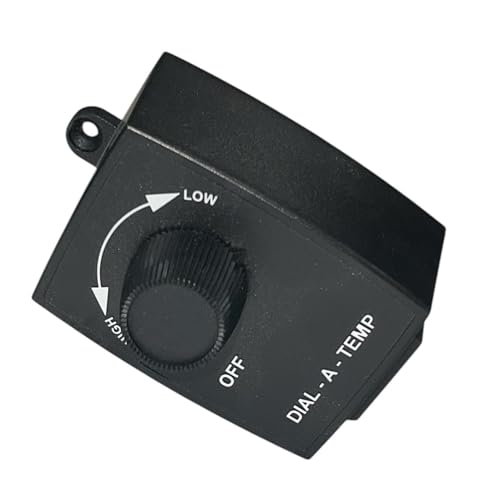
The Total Hearth 4RWM is a wall-mounted variable-speed control described for wood stove blowers. Its plug-in design connects to the stove’s motor and a standard wall outlet, distinguishing it from controls intended to mount in an appliance’s existing panel.
Best for: Buyers whose blower arrangement is suited to a plug-in wall control and who want speed adjustment from low to full power. The listing also identifies an off position, which is useful for shoppers comparing controls that only reduce speed.
Choose this if the intended connection path—blower motor to control to wall outlet—matches the existing setup. It may be a more convenient layout when a panel-mounted knob is not the preferred approach, but the connection details still need to match the blower and outlet arrangement.
Limitation: The available product details do not give a voltage or maximum wattage rating. Confirm the control’s electrical limits and the blower’s connection type before installing it.
Buying Guide: How to Choose a Fireplace Blower Rheostat
Does the control match the blower’s electrical rating?
Start with the blower’s label or documentation, then compare its voltage and electrical load with the rheostat’s stated limits. The products listed here do not all provide the same specifications. Midwest Hearth specifies 115V AC and 3.0A. Criditpid and the Hiorucet thermostat model list 120V, 60Hz, and a 300W maximum. Adviace and Total Hearth do not include those ratings in the supplied details, so do not assume they match another model’s limits.
Do you need a manual control or a thermostat?
A manual rheostat lets the user adjust fan speed with a knob. A thermostat-equipped control adds temperature-based switching. The Hiorucet thermostat model is listed to activate around 120°F and shut off around 90°F, with a stated tolerance. Choose that type if automatic fan operation is the priority. Choose a basic manual control if direct, on-demand speed adjustment is more important.
How will the control mount?
Check whether the existing installation uses a panel opening, a separate wall control, or another arrangement. A panel-mount model needs a compatible opening and stem or mounting dimensions. Some kits include a nut and knob; Criditpid and Adviace also list double-sided tape. Total Hearth uses a plug-in design, so its connection arrangement is different from a standard panel control.
What does the speed range tell you?
A listed range of 65% to 100% describes adjustment within that range; it does not mean the fan can be set to zero speed. If you need a clear off position, look for a control that explicitly identifies one. Midwest Hearth specifies a click-off position, and Total Hearth lists an off position. Confirm the switch behavior in the product details when off functionality is essential.
Which wiring and connection details should you check?
Compare the control’s connectors, wire length, and stem shape with the existing setup. The Hiorucet thermostat model lists two male connectors, 8-inch wires, and a 1/4-inch D-shaped stem. Criditpid includes male fast-on connectors. These details can help with comparison, but they do not establish that a control is compatible with every fireplace or blower. Follow the appliance maker’s instructions and consult a qualified technician if the wiring is unclear.
When should you replace only the rheostat?
A replacement control may be appropriate when the blower itself operates and the failed component is the speed switch. If the fan does not run, the cause could be elsewhere in the system; the provided product information does not diagnose blower or fireplace faults. Identify the failed part before buying a control, and avoid selecting a rheostat solely because its appearance resembles the old switch.
Frequently Asked Questions
What does a fireplace blower rheostat do?
A rheostat controls the speed of a compatible blower by adjusting its electrical input. The exact speed range and electrical limits depend on the specific control model.
Can a rheostat turn a fireplace blower completely off?
Some controls specify an off position and others may only describe speed adjustment. Midwest Hearth lists a definitive click-off position, while Total Hearth lists an off position. Check the product details rather than assuming every rheostat has a true off setting.
Is a thermostat switch the same as a rheostat?
No. A rheostat adjusts fan speed manually, while a thermostat switch responds to temperature. A combined product, such as the Hiorucet thermostat and rheostat, provides both functions as described in its listing.
How do I know whether a replacement rheostat will fit?
Compare voltage, maximum load, mounting style, stem dimensions, connectors, and wiring with the existing control and blower documentation. A general statement of universal use does not confirm fit for every installation.
Can I install a fireplace blower rheostat myself?
Installation depends on the wiring and mounting arrangement. Turn off power before working on electrical components and follow the appliance and control instructions. If you cannot verify the wiring or ratings, have a qualified technician handle the installation.
Why does a rheostat’s adjustment range matter?
The range indicates how much speed adjustment the control is specified to provide. For example, a 65%–100% range does not by itself indicate that the fan can be set to zero or fully switched off.