No product information provided here confirms that any of these five tankless water heaters is approved for installation in a mobile home. Treat them as options to investigate, not as preapproved choices: check the exact model’s installation manual, mobile-home requirements, and local code before buying. The Rheem electric model may suit buyers evaluating an electric unit, while the gas options offer different stated flow capacities and features.
| Model | Fuel | Stated capacity or notable feature | Buyer to check |
|---|---|---|---|
| Rheem RTEX-24 | Electric | 24 kW; up to 5.9 GPM | Electrical service and installation requirements |
| Rheem RTG Series | Natural gas | 7.0 GPM at a 35°F rise | Indoor venting and gas requirements |
| Rinnai V53DeN | Natural gas | 5.3 GPM; stated to serve up to four appliances | Actual demand and installation conditions |
| Westinghouse 7.9 GPM | Natural gas | Up to 7.9 GPM; Wi-Fi controls | Approval, venting, and gas supply |
| Westinghouse 14kW | Electric | 14 kW; stated 3.4 GPM under specified conditions | Dedicated circuit and available electrical capacity |
Rheem RTEX-24 Electric Tankless Water Heater

Best for: Buyers comparing a higher-capacity electric tankless unit who can verify that their home’s electrical service can support it. The listed features identify a 24 kW, 240-volt model with up to 5.9 GPM and use across multiple fixtures.
The manufacturer’s product information emphasizes selecting the correct size and verifying electrical requirements before installation. That makes this a useful candidate for a buyer whose priorities include on-demand hot water and a wall-mounted, space-saving format, subject to a qualified assessment of the home’s wiring and service capacity.
Why it was selected: It is one of the two electric models in this group and has the higher stated power rating and flow capacity. That provides a clear comparison point for households considering electric rather than gas.
Limitation: The listing does not state mobile-home approval. Its 24 kW electrical demand makes checking the electrical system especially important; do not assume an existing circuit or service is adequate.
Rheem RTG Series Indoor Natural Gas Heater

Best for: Buyers seeking an indoor natural-gas model with a stated 7.0 GPM capacity and who need to investigate whole-house hot-water use. The listing gives an output of 160,000 BTU per hour and rates flow at 7.0 GPM with a 35°F temperature rise.
The product description says it is intended for indoor installation with a direct vent system. It also describes the unit as non-condensing and reports a 0.82 Uniform Energy Factor. Those details can help buyers compare fuel type, venting approach, and efficiency information, but they do not establish that the model is allowed in a particular mobile home.
Why it was selected: Its stated capacity makes it a gas option to compare for homes where multiple hot-water uses may overlap. The listing specifically describes use for two to three simultaneous showers, but actual performance depends on inlet-water temperature and installation conditions.
Limitation: Indoor direct venting and an adequate natural-gas supply must be verified. The supplied product details do not confirm mobile-home approval or compatibility with any specific installation.
Rinnai V53DeN Natural Gas Tankless Heater
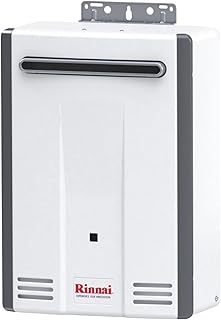
Best for: Buyers comparing a natural-gas unit with a stated 5.3 GPM flow rate. The supplied description says the heater can serve up to four appliances, making it worth considering when comparing expected fixture demand with a midrange stated flow capacity.
The listing describes on-demand heating, which heats water when needed rather than maintaining a tank of stored hot water. It also states a 10-year warranty on the heat exchanger. Check the full warranty terms and installation conditions directly before purchase; the supplied feature summary alone does not define all coverage details.
Why it was selected: It adds a lower stated flow-rate gas comparison to the two higher-capacity gas models in this list. Buyers can use that figure to begin matching a heater to their likely simultaneous hot-water use, while accounting for incoming water temperature.
Limitation: The product information provided does not specify mobile-home approval, venting details, or a complete installation specification. Confirm those points in the manufacturer’s current documentation before choosing it.
Westinghouse 7.9 GPM Gas Tankless Heater

Best for: Buyers who want to compare a higher stated gas flow rate and remote controls. The listing specifies up to 7.9 GPM and 180,000 BTU, and describes the unit as an indoor natural-gas heater for whole-home use.
Its listed features include Wi-Fi app and voice control, operating-status monitoring, fault alerts, and a stated temperature stability of ±1°F. The described temperature setting range is 95°F to 149°F. These controls may be relevant to buyers who value remote adjustments, but they do not replace confirming safe, code-compliant installation.
Why it was selected: It offers the highest stated flow rate among the gas models listed here and includes connectivity features that distinguish it from the other gas choices. The listing says it can supply three showers at once; verify whether the flow rating matches local water conditions and household demand.
Limitation: Although the listing identifies CSA certification, that detail does not by itself confirm mobile-home approval or compliance with the rules that apply at a specific address. Verify the exact model and installation requirements.
Westinghouse 14kW Electric Tankless Heater

Best for: Buyers comparing a lower-rated electric model with smart controls and a compact wall-mounted design. The listing states 14 kW at 240 volts and gives a flow rate of 3.4 GPM when inlet water is 62°F and the outlet is set to 105°F.
The product details specify a dedicated 60-amp double-pole breaker and 6 AWG wire. They also state a minimum startup flow of 0.53 GPM, 1/2-inch NPT connections, and app and voice control compatibility with Alexa and Google Home. The stated flow conditions matter: the 3.4 GPM figure should not be treated as a guaranteed rate under every incoming-water temperature or operating condition.
Why it was selected: It offers a direct electric comparison with a lower stated power rating than the Rheem RTEX-24, plus listed Wi-Fi functions. Its specific circuit requirements make it easier to identify a key electrical question to resolve before purchase.
Limitation: The required dedicated circuit may not match the existing electrical setup. The supplied information does not confirm mobile-home approval, so check the manual and local requirements.
Buying Guide: How To Choose A Mobile-Home Tankless Water Heater
Is the model approved for your mobile home?
Start with approval, not flow rate or smart features. The provided product descriptions do not establish that any of these models is approved for mobile-home installation. Ask the manufacturer or an authorized professional for documentation covering the exact model and intended location. Also check applicable state and local codes, the home’s documentation, and any installation rules that apply to the property.
Do not interpret a general residential-use description, a certification reference, or an online seller’s product title as proof of mobile-home approval. Confirm the model number, fuel type, installation location, venting method, and any restrictions in the official instructions. If documentation is unclear, pause and get qualified guidance before ordering.
Should you choose gas or electric?
Choose based on what the home can safely and legally support. Electric models avoid gas combustion at the unit, but they can require substantial electrical capacity. The Rheem is rated at 24 kW and the Westinghouse at 14 kW; the latter listing specifies a dedicated 60-amp, 240-volt circuit and 6 AWG wire. Have an electrician assess the existing service, panel, wiring, and required circuit before treating either unit as a fit.
Gas models require a suitable fuel supply and an approved venting arrangement. The two Rheem and Westinghouse gas products described here are indoor units, and the Rheem RTG listing specifies a direct vent system. Confirm gas type, capacity, vent route, clearances, and installation location using the exact product manual and local requirements.
How much hot-water flow do you need?
List the fixtures likely to run at the same time, such as a shower, kitchen faucet, or laundry appliance. Compare that combined demand with the heater’s flow rate at the temperature rise your home requires. A published maximum or a figure measured at a particular temperature rise is not a universal output guarantee.
Incoming water temperature affects how much a tankless heater must raise the water temperature. A colder inlet can reduce the hot-water flow available at the desired outlet temperature. Use the manufacturer’s sizing information for your local conditions and simultaneous-use needs rather than comparing GPM numbers alone.
What should you verify before installation?
- Confirm written approval and installation instructions for the exact model and mobile-home application.
- Check local permits, code requirements, and any restrictions that apply to the home or site.
- Have a qualified professional evaluate electrical service or gas supply, as applicable.
- Verify venting, clearances, mounting location, water connections, and service access in the manual.
- Ask whether the proposed installation requires changes to existing utilities or structural components.
- Keep the manufacturer’s documentation and installation records for future service and reference.
Which features matter most?
Prioritize documented approval, correct fuel supply, safe installation, and adequately sized output. After those essentials, compare features such as Wi-Fi controls, temperature adjustment, compact wall mounting, or stated efficiency information. Smart controls can add convenience, but they do not make an otherwise unsuitable installation appropriate.
Compare warranty details only after reviewing the full terms for the exact model. One product description mentions a 10-year heat-exchanger warranty, but buyers should verify coverage, exclusions, and any installation conditions directly with the manufacturer.
Frequently Asked Questions
Are any of these tankless water heaters confirmed as mobile-home approved?
No. The supplied product information does not confirm mobile-home approval for any of the five models. Obtain model-specific documentation and check applicable local requirements before purchase.
Can I install a regular residential tankless heater in a mobile home?
Do not assume that a residential-use label means a unit is permitted in a mobile home. Approval depends on the exact product documentation and the requirements that apply to the home and location. Confirm both before installation.
Is electric or gas better for a mobile home?
Neither fuel type is automatically better. Electric models require sufficient electrical capacity; gas models require a suitable fuel supply and compliant venting. Select only after the exact model is confirmed as appropriate and a qualified professional checks the home’s utilities.
Does a higher GPM rating guarantee enough hot water?
No. Flow depends on factors such as inlet-water temperature, desired outlet temperature, and simultaneous fixture use. Compare manufacturer sizing data at the temperature rise expected in your location.
What is the first step before buying?
Identify the exact model and obtain its current installation manual and approval information. Then ask a qualified installer or local authority to confirm that the model, fuel, venting, and proposed location meet applicable requirements.