The best heating system leak sealer depends on what is leaking: a boiler or hot-water heating loop, an HVAC refrigerant circuit, or a vehicle’s engine coolant system. ComStar Liquid Plug is the closest match for boiler and hot-water systems. Leak Saver is designed for small refrigerant leaks in HVAC equipment and heat pumps, while K-Seal products target water-cooled vehicle engines and their heater circuits. These products are not interchangeable, so identify the system before choosing a sealant.
| Product | Best suited for | System type |
|---|---|---|
| ComStar Liquid Plug | Small seeps in boilers and hot-water systems | Steam and hydronic heating |
| Leak Saver Direct Inject | Small refrigerant leaks | HVAC and heat pumps |
| K-Seal ST5501 | Leaks in cars and light trucks | Engine coolant and heater matrix |
| K-Seal ST5516 | Leaks in larger vehicle engines | Heavy-duty engine coolant |
ComStar Liquid Plug Boiler Leak Sealant

Best for: Small, hard-to-locate seeps in steam boilers and hot-water heating systems. This is the most directly relevant option in this list for residential or commercial boiler leak sealing.
ComStar describes Liquid Plug as a fast-acting sealant for small and hidden leaks. The listed features say it can be used in new or existing installations and is formulated without petroleum. The product is also described as non-freezing for year-round performance. Those details make it a more suitable category match for a boiler or hot-water system than an automotive coolant or refrigerant sealant.
Why it was selected: Its stated application is specifically steam boilers and hot-water systems, which are common components of building heating systems. It is intended to address small leaks or seeps, rather than replace diagnosis and repair of a major failure.
Limitation: The listing focuses on small leaks. It does not establish that the product can repair large leaks, damaged components, or every type of heating-system material. Check the product directions and system requirements before adding it.
Leak Saver Direct Inject AC Leak Sealer
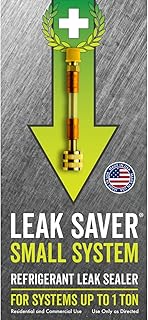
Best for: Small refrigerant leaks in compatible HVAC systems, including heat pumps, when the refrigerant charge has not been completely lost. This product addresses the refrigerant circuit, not a water leak in a boiler or heating pipe.
The listed features say the sealant reacts with air and moisture at a leak site and is intended to seal small leaks. The manufacturer describes use with many refrigerants and systems, including central air conditioners, ductless mini-splits, heat pumps, and refrigeration equipment. The listing excludes ammonia. It also states that installation requires a manifold gauge set or a compatible injection kit.
Why it was selected: Heat pumps can provide heating, and their refrigerant circuits are a distinct potential leak source. This makes the product relevant when the issue is refrigerant loss rather than a leaking hydronic loop.
Limitation: The product is intended for small leaks, and the listing says it may seal leaks when the full refrigerant charge is not lost within seven days. Installation may require adapters or injection equipment; refrigerant work should be handled by a qualified professional where required.
K-Seal ST5501 Coolant Leak Repair

Best for: Owners of cars and light trucks with a leak in a water-cooled engine, including a possible heater-matrix leak. It is an automotive coolant product, not a general-purpose sealant for a home boiler or building heating pipes.
K-Seal lists radiator, head-gasket, freeze-plug, engine-block, heater-matrix, and water-pump leaks among the intended applications. The one-step formula is described as a pour-and-go product that works with all types of antifreeze coolant, with no flushing required. The listing says it is suitable for vehicles with up to 12 cylinders.
Why it was selected: A vehicle’s cabin heater uses engine coolant, so a leak in the heater matrix or related engine cooling system can affect vehicle heating. ST5501 is the smaller listed option and is specifically described for cars and light trucks.
Limitation: Its stated use is limited to water-cooled engines in cars and light trucks. Do not choose it for a household boiler, radiator loop, or HVAC refrigerant circuit.
K-Seal ST5516 Heavy-Duty Coolant Leak Repair

Best for: Larger vehicle engines, including commercial or agricultural vehicles, when the leak is in a water-cooled engine system. It may be relevant to a vehicle heating problem if the source is in the engine coolant circuit.
The product is described as a heavy-duty, one-step coolant leak repair for radiator, head-gasket, freeze-plug, block, heater-matrix, and water-pump leaks. K-Seal says it is designed for large engines and industrial use and is compatible with all types of antifreeze coolant. The listed directions describe a pour-and-go application with no flushing required.
Why it was selected: Compared with the ST5501, ST5516 is the listed K-Seal option specifically positioned for heavy-duty vehicles and larger engines. Choose it when the vehicle application, rather than a building heating system, is the deciding factor.
Limitation: This is still an engine-coolant product. Its heavy-duty positioning does not make it suitable for residential boilers, hot-water pipes, or refrigerant systems.
Buying Guide: How to Choose a Heating System Leak Sealer
What type of system is leaking?
Start by identifying the fluid or circuit involved. A boiler or hydronic system circulates heating water; an HVAC system may use refrigerant; a vehicle heater generally depends on engine coolant. A sealant made for one circuit may not work in another and could be inappropriate for the system materials or operating conditions.
For a boiler or hot-water heating loop, ComStar Liquid Plug is the product in this selection explicitly described for steam boilers and hot-water systems. For a heat pump refrigerant circuit, Leak Saver is the HVAC-oriented option. For a car or truck, the K-Seal products are intended for engine coolant systems.
Is the leak small enough for a sealant?
These products are described as solutions for small leaks, seeps, or holes and cracks. They should not be treated as a guaranteed repair for a burst pipe, extensive corrosion, a failed heat exchanger, or a component that is physically damaged. A rapidly worsening leak or significant water loss needs prompt diagnosis by a qualified technician.
Before using a sealant, look for the source if it is safe to do so. A visible leak at a fitting may call for a mechanical repair, while an internal or hard-to-find leak may be a better match for a product designed to circulate through the relevant system. Follow the product’s instructions rather than increasing the amount or combining sealants.
Does the product match the system fluid?
Check whether the system contains water, antifreeze coolant, or refrigerant. K-Seal ST5501 and ST5516 are listed for antifreeze coolant in water-cooled engines. Liquid Plug is listed for steam boilers and hot-water systems. Leak Saver is intended for refrigerant circuits and its listing excludes ammonia.
Do not assume that “heating system” means every heating appliance uses the same fluid. A home furnace, boiler, heat pump, and vehicle heater have different operating systems. Match the sealant to the exact equipment and leak location, and consult the equipment documentation if the system type is uncertain.
What application equipment or preparation is required?
The K-Seal listings describe a pour-and-go approach and say no flushing is required. Liquid Plug is marketed for use in new and existing installations, but buyers should follow its package directions for the correct application. Leak Saver uses an injection method and may require a manifold gauge set, an injection kit, or an adapter depending on the system.
Application requirements matter because an unsuitable connection or incorrect procedure can create safety and equipment risks. Refrigerant systems, in particular, can require specialized tools and professional handling. Do not open or service a pressurized circuit unless qualified to do so.
When should a technician handle the repair?
Get professional help if the leak is large, the system repeatedly loses fluid, heating performance drops substantially, or the source is near electrical components or a hot surface. A sealant may temporarily address a small leak, but it does not identify why the leak occurred. A technician can check for corrosion, pressure problems, a failed component, or a need for a permanent repair.
For HVAC refrigerant leaks, use a qualified HVAC professional when you do not have the required tools or training. For boilers and hot-water systems, professional diagnosis is appropriate when the leak is difficult to reach, the system pressure changes unexpectedly, or the leak continues after treatment.
Frequently Asked Questions
What is the best leak sealer for a boiler?
ComStar Liquid Plug is the closest match among these products because its listing specifically describes use in steam boilers and hot-water systems. It is intended for small or hidden leaks, so a major leak still needs repair.
Can automotive coolant leak sealer be used in a home heating system?
No. K-Seal ST5501 and ST5516 are listed for water-cooled vehicle engines and antifreeze coolant. They are not presented as sealants for household boilers or hydronic heating loops.
Can a refrigerant leak sealer fix a boiler water leak?
No. Leak Saver is designed for refrigerant circuits, while a boiler water leak involves a different system and fluid. Choose a product based on the actual leak location and system type.
Can a leak sealer permanently repair a large leak?
These listings describe sealing small leaks or seeps, not repairing every failure. A large, active, or recurring leak should be inspected and repaired by a qualified technician.
Is Leak Saver suitable for every heat pump?
The listing describes compatibility with many systems and refrigerants but excludes ammonia. Confirm the refrigerant and equipment requirements before use, and consult an HVAC professional if you are unsure.
Should I use more than one leak sealer in the same system?
Do not combine products unless their instructions specifically allow it. The products listed here are designed for different system types, and using a sealant that does not match the system can be inappropriate.