Modern wall hung radiators can provide hydronic heat while keeping floor space open. The AB Store 10-panel radiator is best for buyers prioritizing a listed output of up to 5,768 BTUs, while the Q-Hillstar 10-section copper-aluminum model suits shoppers seeking a slim profile with listed output of about 3,002 BTU per hour. For smaller areas, the EMKE vertical steel radiator is rated at 210 watts for rooms up to approximately 3 square meters. Compare heat output, size, and connection requirements before choosing.
| Radiator | Best For | Listed Heat Output | Construction |
|---|---|---|---|
| AB Store 10-panel | Higher stated output | Up to 5,768 BTUs | Aluminum |
| Q-Hillstar 10-section | Slim, space-saving fit | Approximately 3,002 BTU/hr | Copper tubing and aluminum fins |
| Q-Hillstar 8-panel | Quiet hydronic heating | Up to 4,700 BTUs | Aluminum |
| WiseWater 4-panel | Small, steady-heating setup | Output varies by temperature differential | Copper-aluminum |
| EMKE vertical | Compact modern rooms | 210 watts | Steel |
AB Store 10-Panel Aluminum Radiator
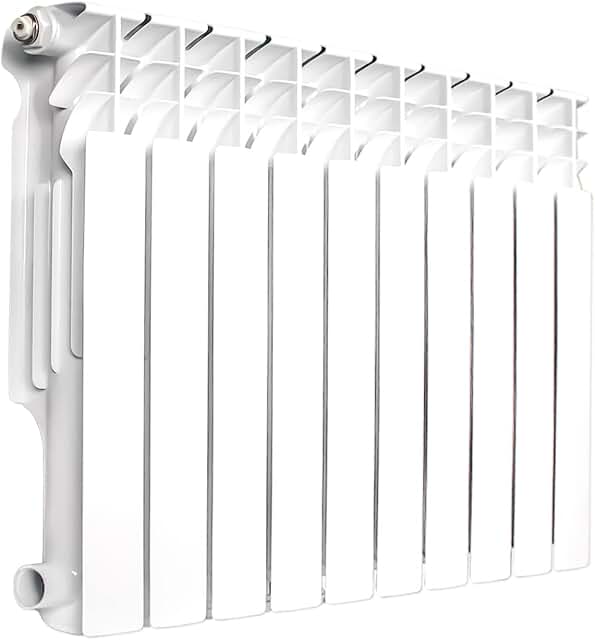
Best for: Buyers who want a 10-panel aluminum hydronic radiator with a relatively high stated heat output. The product listing gives a maximum output of up to 5,768 BTUs and dimensions of 28.54 by 3.66 by 22.36 inches.
The radiator is made from aluminum, which the listing describes as highly conductive, and has a baked-paint surface intended to resist peeling and corrosion. Side air vents are designed to support circulation and heat radiation. Its hot-water plumbing operation is described as quiet and steady, without a fan blowing air into the room.
Why it was selected: Its stated output, 10-panel construction, and wall-mounted format make it a useful comparison point for buyers balancing heating capacity with floor-space savings. The manufacturer lists a 24-hour pressure test, a maximum pressure of 2.0 MPa, and recommended working pressure of 1.2–1.8 MPa.
Limitation: It requires connection to a compatible hot-water heating system; it is not presented as a standalone electric heater. Confirm system pressure and installation requirements with a qualified heating professional.
Q-Hillstar Slim Copper-Aluminum Radiator

Best for: Buyers who want a slim-profile radiator for a compact room or a wall beneath a window. The listed dimensions are 31.69 inches long, 21.85 inches high, and 2.95 inches deep. Its stated heat output is approximately 3,002 BTU per hour.
This 10-section model combines copper tubing with aluminum fins. According to the product information, copper carries heat from the hot water and the fins provide additional heat-dissipating surface area. The radiator weighs 17.85 pounds and has a white finish intended to work with varied interior styles.
Why it was selected: Its shallow depth and wall-mounted design are relevant for shoppers who want to preserve room for furniture. The listing includes four mounting brackets and a bubble level. It also recommends 3.94–4.73 inches of clearance between the radiator bottom and the floor.
Limitation: Its listed output is lower than the maximum figures stated for some other options here, so compare the required room heat load with the product’s rating rather than choosing by appearance alone. Check the installation instructions and wall support before mounting.
Q-Hillstar 8-Panel Quiet Radiator

Best for: Buyers looking for a quiet, wall-mounted hydronic radiator for a kitchen, bathroom, or bedroom. The 8-panel model measures 22.84 by 3.66 by 22.36 inches and is listed as producing up to 4,700 BTUs.
The radiator circulates hot water from a boiler or central heating system. Its listing says it does not require gas or electricity at the radiator itself and can be combined with renewable energy, depending on the connected heating system. Side baffles are intended to help distribute airflow, and the product is described as operating without fan noise.
The body is aluminum with a baked-paint finish. The listed water flow rate is up to 8.77 gallons per hour, and the stated working-pressure range is 174–261 PSI. These specifications should be checked against the requirements of the home’s hydronic system before purchase.
Why it was selected: It offers a middle ground between the 10-panel models and the smaller four-panel option, with a relatively high stated maximum output and a compact footprint.
Limitation: The “up to” heat figure is not a guarantee of output in every installation. Actual performance depends on the heating system and operating conditions.
WiseWater 4-Panel Copper-Aluminum Radiator
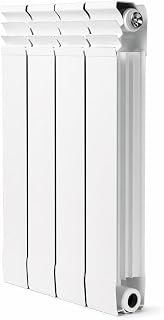
Best for: Buyers who need a smaller four-panel radiator and want output specifications tied to stated temperature differences. The product lists output per section as 180 BTU per hour at a 30°C differential, 300 BTU per hour at 44.5°C, and 349 BTU per hour at 50°C.
This radiator has a white finish described as suitable for a range of home decor styles. Its hydronic design is intended to deliver steady warmth quietly. The listing also describes its structure as energy-saving, but the actual energy use depends on the boiler or other connected heat source and system controls.
Why it was selected: Its per-section ratings make it possible to compare stated output at different operating conditions. It is a useful option to investigate for a smaller area or as part of a heating plan that does not call for a large multi-panel unit.
Limitation: The listing does not provide the radiator’s dimensions or a complete assembled output figure in the supplied information. Field performance can vary with system flow, insulation, and installation conditions, so request the full specifications before sizing a room around it.
EMKE Compact Vertical Steel Radiator

Best for: Buyers who prefer a compact vertical panel radiator with a modern anthracite finish. It measures 600 by 304 by 52 millimeters, has a single-layer, four-panel design, and is rated at 210 watts for rooms up to approximately 3 square meters.
The radiator is made from steel and weighs 5.3 kilograms. The listing describes its compact form as suitable for small spaces and says it provides even heat. It has a G1/2-inch connection thread and a 50-millimeter center distance. The stated distance from the wall is 85 millimeters.
Why it was selected: Its vertical format and small stated room range distinguish it from the larger aluminum models. It may suit a buyer comparing design-forward options for a limited wall area, provided the heat output and plumbing connections meet the project requirements.
Limitation: The listed 210-watt output and approximate room size are specific to the product information; they do not establish suitability for every climate or building. Confirm the required heat output and connection layout before ordering.
Buying Guide: How to Choose a Modern Wall Hung Radiator
What type of heating system does the radiator need?
These products are described as hydronic radiators, which transfer heat from circulating hot water. They are not interchangeable with plug-in electric heaters. Before buying, confirm that the home has a compatible boiler or central heating system and that the radiator’s connections and operating pressure can be matched to it.
Ask an installer to verify the system’s water temperature, flow, pressure, pipe layout, and connection position. A mismatch can affect installation and heat output. Do not treat a pressure rating as proof that a product is appropriate for every plumbing system.
How much heat output does the room require?
Compare a radiator’s stated output with the room’s calculated heat loss. Room size alone is not enough: climate, insulation, windows, ceiling height, and air leakage can all change heating demand. A qualified heating professional can calculate the appropriate output for the space.
Read the units and conditions carefully. The products here list BTUs, BTU per hour, or watts, and not all listings give output at the same operating conditions. Figures described as “up to” may not represent typical output in every installation. Ask for a consistent rating basis when comparing models.
Will the radiator fit the wall and leave enough clearance?
Measure the available wall width, height, and depth, then account for pipes, valves, trim, furniture, and recommended floor clearance. A slim model such as the Q-Hillstar 10-section radiator has a listed depth of 2.95 inches, while the EMKE is a narrow vertical option with a listed 85-millimeter wall distance.
Check the manufacturer’s mounting instructions before drilling. Wall construction and the radiator’s filled operating weight matter when selecting fasteners and supports. Use a professional installer if the wall structure, plumbing, or mounting method is uncertain.
Which material and finish suit the room?
Aluminum models are described in these listings as highly conductive and lightweight. The Q-Hillstar 10-section radiator combines copper tubing and aluminum fins, while the EMKE model uses steel. Construction, size, and heat-output ratings vary, so material alone should not determine the choice.
White finishes can blend into light-colored walls, while anthracite can provide a stronger visual contrast. Consider the radiator’s location and how its finish fits the room, but prioritize output, system fit, dimensions, and safe mounting.
What should you verify before purchase?
- Heat rating: Confirm the output and the conditions used to rate it.
- Connections: Check thread size, connection position, and center distance where provided.
- System limits: Compare the radiator’s pressure and flow specifications with the heating system.
- Installation details: Verify mounting hardware, wall support, clearance, and any required valves or fittings.
- Room suitability: Use a heat-loss calculation rather than relying only on a room-size estimate.
- Maintenance: Follow the manufacturer’s instructions for cleaning and hydronic-system care.
Frequently Asked Questions
Are wall hung radiators electric?
Not necessarily. The five products listed here are described as hot-water or hydronic radiators. They need connection to a suitable circulating hot-water heating system and are not presented as standalone electric heaters.
Can a wall mounted radiator heat a whole room?
It can contribute room heat when its output is properly matched to the room’s heat loss. Confirm the required capacity with a heating professional, especially for rooms with poor insulation, large windows, or high ceilings.
Is a higher BTU figure always the better choice?
No. A higher output may be useful when the room needs more heat, but the radiator must also fit the wall and operate within the heating system’s specifications. Compare ratings under equivalent conditions and size the unit for the room.
Which option is best for a small room?
The EMKE listing gives a 210-watt rating for rooms up to approximately 3 square meters, while the WiseWater is a four-panel model with output figures per section. Confirm the actual room heat requirement and the full installation specifications before choosing.
Can these radiators be installed beneath a window?
The Q-Hillstar 10-section model is described as suitable for installation beneath windows. Measure the opening and check clearance, pipe position, mounting support, and installation instructions before deciding where to place any radiator.
Do wall hung radiators need professional installation?
Installation may involve plumbing, system pressure, wall supports, and secure mounting. A qualified heating professional can confirm compatibility, install the unit safely, and check for leaks and correct operation.