The best 80,000 BTU torpedo heater depends on fuel preference, controls, and the size of the space. The Reddy Heater is a strong fit for buyers who want a 5-gallon tank and multi-fuel options; the CRAFTSMAN and Mr. Heater models offer thermostat features; and the DEWALT is another multi-fuel option for demanding work areas. BILT HARD provides slightly more output at 85,000 BTU. These forced-air heaters burn fuel, so follow the manufacturer’s ventilation and operating instructions.
| Heater | Output | Standout feature | Best for |
|---|---|---|---|
| Reddy Heater RFA80T-V3 | 80,000 BTU | 5-gallon tank; multi-fuel use | Buyers prioritizing fuel flexibility |
| CRAFTSMAN | 80,000 BTU | Digital LED thermostat | Buyers who want digital temperature control |
| Mr. Heater | 80,000 BTU | Safety shut-off and diagnostics | Buyers focused on monitoring and shut-off features |
| DEWALT | 80,000 BTU | Multiple approved fuel types | Jobsite users seeking fuel options |
| BILT HARD | 85,000 BTU | Thermostat and self-diagnostics | Buyers who want a little more output |
Reddy Heater RFA80T-V3

The Reddy Heater RFA80T-V3 is an 80,000 BTU forced-air heater listed for spaces up to 2,000 square feet. Its stated applications include large spaces, workshops, and outdoor construction sites. The product name also specifies a 5-gallon tank, an 8.5-hour run time, thermostat, and LED diagnostics.
Best for: Buyers who need a jobsite-oriented heater and value fuel flexibility. The listed fuel options include K-1 kerosene, #1 and #2 fuel oil, diesel, JP8, and jet fuel. Its high-performance motor and fan are intended to distribute heat across a large area.
Why it stands out: The combination of 80,000 BTU output, a listed 2,000-square-foot coverage area, and several fuel choices makes it a versatile option among the heaters compared here.
Consideration: The listed run time is 8.5 hours, so buyers planning extended operation should account for refueling. Confirm approved fuel and operating requirements in the product instructions.
CRAFTSMAN 80,000 BTU Heater

This CRAFTSMAN forced-air heater delivers 80,000 BTU per hour and is listed to heat areas up to 2,000 square feet. It has a digital LED thermostat control, which gives buyers a displayed temperature-control feature rather than relying only on a basic manual setting.
Best for: Buyers who want digital thermostat control and a heater with several listed fuel choices. The product information names kerosene, diesel #1 and #2, fuel oil #1 and #2, Jet-A, and JP-8, with no conversion required.
Why it stands out: Its stated output and coverage match the core requirements of an 80,000 BTU torpedo heater, while the digital LED thermostat provides a useful control feature for workspaces where temperature monitoring matters.
Consideration: The supplied product details do not specify tank capacity or run time. Buyers who need to plan long heating sessions should verify those details before choosing this model.
Mr. Heater 80,000 BTU Forced Air Heater

The Mr. Heater model provides 80,000 BTU and is listed to heat up to 2,000 square feet. Its product information highlights a built-in thermostat, LED troubleshooting diagnostics, a high-temperature safety shut-off switch, and a photo cad cell flame sensor.
Best for: Buyers who prioritize built-in monitoring and safety-related controls. The thermostat supports temperature control, while the LED diagnostics are intended to help identify operating issues. The listed shut-off switch and flame sensor add specific features to compare against simpler models.
Why it stands out: It combines the requested 80,000 BTU output and 2,000-square-foot stated coverage with several named monitoring and shut-off components.
Consideration: The supplied details do not identify the supported fuel types, tank size, or run time. Check the product documentation for those specifications and follow its operating and ventilation guidance.
DEWALT 80,000 BTU Portable Heater
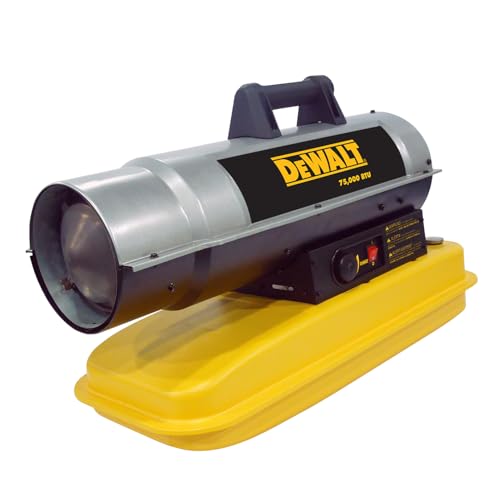
The DEWALT portable forced-air heater produces 80,000 BTU per hour and is listed for areas up to 2,000 square feet. The described applications include garages, barns, workshops, warehouses, and other work areas.
Best for: Jobsite users who need fuel flexibility. The listed approved fuel options include diesel, kerosene, JP8, fuel oil, and biodiesel. This range may suit buyers whose available fuel varies by location or work setting.
Why it stands out: It matches the target output and coverage while offering multiple named fuel options. Buyers comparing it with the Reddy model should check each manufacturer’s specific fuel instructions rather than assuming the lists are interchangeable.
Consideration: The supplied information does not state a tank capacity, run time, or thermostat details. Choose another model if those specifications are essential and cannot be confirmed in the product documentation.
BILT HARD 85,000 BTU Heater

The BILT HARD heater produces 85,000 BTU, slightly above the 80,000 BTU target, and is listed to heat 2,200 square feet for up to nine hours. It has a 5-gallon fuel capacity, thermostat, self-diagnostics, indicator lamp, and cord wrap.
Best for: Buyers who can use a model with somewhat higher output and want listed coverage above 2,000 square feet. Its stated uses include construction, industrial, commercial, and other work settings.
Why it stands out: The extra stated output and coverage distinguish it from the 80,000 BTU choices. Its product information lists kerosene, filtered diesel #1 and #2, fuel oil #1 and #2, and Jet A/JP8. K-1 kerosene is identified as the manufacturer’s recommended fuel for cleaner burns and product life.
Consideration: It is rated at 85,000 BTU rather than exactly 80,000 BTU. The manufacturer also recommends K-1 kerosene, so buyers planning to use another listed fuel should follow the product instructions.
Buying Guide: How To Choose An 80,000 BTU Torpedo Heater
How much space do you need to heat?
Start with the area you plan to warm, then compare it with the manufacturer’s stated coverage. Four selected models are listed for up to 2,000 square feet, while the BILT HARD model is listed for up to 2,200 square feet. Coverage figures are product specifications, not a guarantee of the same results in every building. Ceiling height, drafts, insulation, outdoor exposure, and the starting temperature can affect heating needs.
For a large garage or workshop, compare the space with the heater’s stated coverage and consider whether doors will open frequently. For a smaller space, an 80,000 BTU unit may offer more capacity than needed; review the product guidance and operating requirements before buying.
Which fuel types does the heater accept?
Fuel options differ by model. The Reddy listing names K-1 kerosene, fuel oil, diesel, JP8, and jet fuel. CRAFTSMAN lists kerosene, diesel, fuel oil, Jet-A, and JP-8. DEWALT lists diesel, kerosene, JP8, fuel oil, and biodiesel. BILT HARD lists kerosene, filtered diesel, fuel oil, and Jet A/JP8, and identifies K-1 kerosene as its recommended fuel.
Do not assume that a fuel supported by one heater is approved for another. Check the specific manual for fuel grades, restrictions, and any required handling steps. If you already have fuel on hand, make the product’s approved-fuel list a central buying criterion.
Do you need a thermostat or diagnostics?
A thermostat can help regulate operation around a selected temperature. The CRAFTSMAN listing specifies a digital LED thermostat, while the Reddy, Mr. Heater, and BILT HARD listings also include thermostat features. The Mr. Heater and BILT HARD descriptions mention diagnostics; Reddy specifies LED diagnostics. These features can help with control or troubleshooting, but the listed details do not establish that all control systems work the same way.
Choose the control layout that fits how the heater will be used. If digital display or troubleshooting indicators matter, verify how they function in the product documentation.
How important are tank size and run time?
Tank capacity and run time affect how often a heater needs refueling. Reddy’s product name lists a 5-gallon tank and 8.5-hour run time. BILT HARD lists a 5-gallon capacity and up to nine hours of operation. The supplied details for CRAFTSMAN, Mr. Heater, and DEWALT do not provide those figures.
Run time can vary with operating conditions and settings, so treat listed figures as manufacturer specifications rather than guaranteed results. If you need continuous heat for a long shift, compare tank size and expected run time before deciding.
What safety and ventilation details should you check?
These are fuel-burning forced-air heaters. Follow the manufacturer’s instructions for ventilation, placement, fuel handling, operation, and shutdown. Do not infer that a heater is safe for an enclosed or unventilated room simply because a listing mentions a garage or indoor application. Confirm the intended setting and required ventilation in the manual before use.
Compare stated safety features, such as the Mr. Heater’s high-temperature shut-off switch and flame sensor or BILT HARD’s self-diagnostics. A listed safety feature is not a substitute for correct setup, supervision, and compliance with the manufacturer’s directions.
Should you choose exactly 80,000 BTU or a nearby output?
If matching an 80,000 BTU specification is important, compare the Reddy, CRAFTSMAN, Mr. Heater, and DEWALT models. BILT HARD is a nearby alternative at 85,000 BTU, with a listed 2,200-square-foot coverage area. Consider whether the slightly higher output and coverage align with your space and requirements rather than choosing by BTU number alone.
Frequently Asked Questions
What is an 80,000 BTU torpedo heater used for?
An 80,000 BTU forced-air heater is intended to deliver high-output heat to work areas such as garages, workshops, and jobsites, subject to the manufacturer’s approved applications and operating instructions.
How many square feet can an 80,000 BTU heater warm?
The selected 80,000 BTU models are listed for up to 2,000 square feet. Actual performance can vary with building conditions, drafts, ceiling height, and outdoor exposure.
Can I use diesel in every kerosene torpedo heater?
No. Fuel approval varies by model. Check the exact heater’s product instructions and use only the fuel types and grades the manufacturer specifies.
Is a torpedo heater safe to use indoors?
Use it only in settings and conditions permitted by the manufacturer. Follow the required ventilation and placement directions; do not operate it in an enclosed or unventilated space unless the product instructions explicitly allow that use.
Which selected heater has a stated 5-gallon tank?
The Reddy Heater RFA80T-V3 and BILT HARD 85,000 BTU heater are both listed with 5-gallon fuel capacity. Check each product’s documentation for operating details and expected run time.
What is the difference between the 80,000 and 85,000 BTU options?
The BILT HARD model is rated at 85,000 BTU and listed for up to 2,200 square feet; the selected 80,000 BTU models are generally listed for up to 2,000 square feet. Compare coverage, fuel, controls, and operating instructions as well as output.