The best quiet personal space heater depends on whether you prioritize low noise, a compact desk footprint, adjustable heat, or wider coverage. The TABYIK is the quietest option by its listed noise claim, while the Amazon Basics model is a lightweight 500-watt choice for close-range desk warmth. The DREO models offer more heating control or circulation features, and the compact ceramic heater is listed with tilt and overheat shutoff protections.
| Product | Best For | Listed Noise | Standout Feature |
|---|---|---|---|
| Portable Small Heater | Small rooms and simple operation | 40 dB | Tilt and overheat shutoff |
| DREO Thermostat Heater | Buyers seeking adjustable heating | Not specified | Thermostat in product name |
| Amazon Basics Ceramic Heater | Close-range desk warmth | 48 dB | 500 watts; 1.4 pounds |
| TABYIK Desktop Heater | Quiet personal use | Less than 35 dB | 45-degree oscillation |
| DREO 1500W Heater | More heat and temperature control | Not specified | 41–95°F thermostat range |
Portable Small Heater For Quiet Room Use
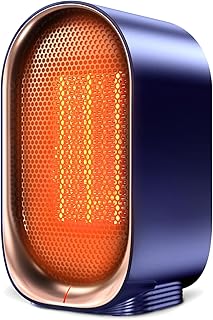
This compact ceramic heater is best for buyers who want a quiet personal heater with listed safety shutoff features. Its product details claim near-silent operation at 40 dB and rapid PTC ceramic heating. The listing says it can warm personal spaces up to 200 square feet, although performance can depend on room conditions and placement.
Choose this model if you want a portable heater for an office, bedroom, or living area and value automatic shutoff features. The listed protections include a safety switch, shutoff if the unit tilts 45 degrees, and overheat shutoff. The listing also describes a fire-resistant casing and says the unit is UL-certified.
- Best for: Buyers seeking low listed noise and basic safety protections.
- Why it stands out: The product combines a 40 dB claim with tilt and overheating shutoff.
- Limitation: The listed 200-square-foot coverage is not a guarantee of uniform room heating.
Compared with the smaller 500-watt Amazon Basics heater, this is a better fit when the buyer prioritizes stated room coverage and automatic shutoff features over a specified low wattage.
DREO Portable Heater With Thermostat

This DREO product is a candidate for buyers who want a portable indoor heater with a thermostat. The supplied product information includes the name “DREO Space Heater” and identifies a thermostat, but it does not provide detailed operating specifications or a noise rating for this particular listing.
Choose it if thermostat control is central to your search and you are prepared to confirm the exact controls, safety features, and noise information on the current product page before purchasing. A thermostat can be useful for managing a preferred temperature, but the supplied details do not establish its temperature range or adjustment increments.
- Best for: Buyers comparing thermostat-equipped portable heaters.
- Why it was selected: It directly matches the indoor portable heater and thermostat search intent.
- Limitation: The provided feature data does not specify decibel level, wattage, or safety functions.
Compared with the other DREO listing in this guide, this product has less documented detail here. Buyers who need known wattage, a stated thermostat range, or listed safety construction should compare those specifications carefully before choosing.
Amazon Basics 500W Ceramic Desk Heater

The Amazon Basics ceramic heater is best for someone who wants a small, lightweight heater for close-range desk or tabletop use. Its listed dimensions are 5.9 by 3.2 by 6 inches, and it weighs 1.4 pounds. The product uses ceramic coils and has a listed 500-watt output.
The listing reports 48 dB of noise and describes the heater as quiet. That makes it a practical compact option, but buyers who are especially sensitive to fan noise may prefer a model with a lower listed decibel figure, such as the TABYIK heater.
- Best for: A small desk, table, or other limited-space setup.
- Why it stands out: Its dimensions, 1.4-pound weight, and 500-watt output are clearly specified.
- Limitation: Its listed 48 dB is higher than the noise claims supplied for the TABYIK and compact 40 dB heaters.
Choose this if portability and a small footprint matter more than broad room coverage. The listing describes it as a heater for small spaces, so it is not the clearest choice for buyers looking to warm a large area.
TABYIK Quiet Oscillating Desktop Heater

The TABYIK is best for buyers who put quiet operation first. Its product details claim noise below 35 dB and describe a PTC ceramic element with a high-speed fan. The heater is rated at 600 watts and includes 45-degree oscillation, which moves the airflow across a wider area around the unit.
This model also offers a natural-wind mode, according to the listing. That is a useful distinction for shoppers who want a fan-only mode as well as heat. The product details describe a dustproof foam grid behind the heater, but buyers should still follow the manufacturer’s cleaning and use instructions.
- Best for: Quiet personal heating at a desk or in a bedroom.
- Why it stands out: It has the lowest supplied noise claim and includes oscillation.
- Limitation: Its 600-watt rating is lower than the 1500-watt DREO model, so it is more clearly suited to personal-range warmth.
Choose this over the Amazon Basics heater if the listed noise level and moving airflow matter more than the smallest documented dimensions. As with any noise claim, actual perception can vary with room acoustics and distance from the heater.
DREO 1500W Heater With Precise Thermostat

This DREO model is best for buyers who want more heating output and fine thermostat adjustments. The listing describes a 1500-watt PTC system and heat-funnel design intended to circulate warm air farther than traditional heaters. It also gives a thermostat range of 41 to 95°F with one-degree increments.
Its listed safety features include a tilt-detection sensor, overheat protection, V0 flame-retardant materials, and a safety plug. The product information says it is ETL-certified. These features make it a better-documented choice for shoppers comparing thermostat precision and protections, though the supplied information does not state a decibel rating.
- Best for: Buyers who want higher stated wattage and adjustable temperature settings.
- Why it stands out: Its listed thermostat range and one-degree increments make its control specifications clear.
- Limitation: No noise figure is supplied, so quietness cannot be compared directly with models that list decibel levels.
Choose this model if temperature control and heat output are higher priorities than a verified low-noise claim. For a bedroom or quiet work area, check current product information for operating-noise details before deciding.
Buying Guide: How To Choose A Quiet Personal Heater
How quiet should a personal space heater be?
Compare stated decibel levels when a listing provides them, but treat them as product claims rather than a guarantee of how the heater will sound in your room. In this group, TABYIK lists less than 35 dB, the compact portable heater lists 40 dB, and the Amazon Basics model lists 48 dB. The supplied DREO details do not include a noise measurement.
Noise can be important during sleep, calls, or focused work. Consider whether the heater uses a fan, how close it will sit to you, and whether a constant airflow sound is acceptable. A low listed noise level is useful for comparison, but product descriptions do not establish that every person will perceive a unit as silent.
What wattage is suitable for personal heating?
Wattage is one factor in a heater’s electrical demand and heating output, not a standalone measure of how evenly it will warm a room. The Amazon Basics model is listed at 500 watts, TABYIK at 600 watts, and the DREO thermostat model at 1500 watts. Choose based on the space, desired warmth, and the electrical guidance provided with the heater.
Lower-wattage units can make sense for close personal use, while higher listed wattage may suit buyers seeking more heat. Do not assume that a small portable heater will replace a home’s main heating system or heat a large room evenly.
Do you need oscillation or a thermostat?
Oscillation moves airflow across a broader nearby area. TABYIK lists 45-degree oscillation, which may suit a person who does not want airflow aimed in only one direction. A thermostat lets users set a target temperature; the 1500-watt DREO listing specifies a range of 41 to 95°F in one-degree increments.
If you want straightforward warmth directed toward one seat, oscillation may be less important. If you want to manage a preferred temperature, verify the thermostat range and controls in the product details. The first DREO listing supplied for this guide identifies a thermostat but does not state its range.
Which safety details should you compare?
Look for specific protections rather than relying on a broad “safe” label. The compact portable heater lists tilt shutoff at 45 degrees and overheat shutoff. The 1500-watt DREO model lists tilt detection, overheat protection, flame-retardant materials, and a safety plug. The Amazon Basics product name mentions tip-over protection, while its supplied features emphasize compact size and heating performance.
Follow the product manual, keep heaters away from materials that can burn, and place them on a stable surface. Do not cover a heater or use it in a way the manufacturer prohibits. Check the current product documentation for safety instructions and required clearances.
How much room coverage do you need?
Think about whether you want warmth around one chair, a desk, or a whole room. A small desktop unit is designed for a limited footprint and close-range use. The first compact heater claims coverage up to 200 square feet, and the DREO 1500-watt listing describes farther warm-air circulation. These figures and descriptions do not ensure consistent temperatures throughout every room.
Room insulation, ceiling height, drafts, and heater placement can affect results. For a personal heater, placing it near the occupied area may matter more than selecting a product based on a broad coverage claim alone.
What size and portability features matter?
Check dimensions and weight if you plan to move a heater between a home office and bedroom. The Amazon Basics model provides both: 5.9 by 3.2 by 6 inches and 1.4 pounds. The other supplied listings describe their heaters as portable or compact but do not provide dimensions in the information available for this article.
Also consider whether the heater needs to sit on a desk or floor, where its controls are located, and whether the cord can reach an appropriate outlet. Do not use an extension arrangement unless the manufacturer permits it.
Frequently Asked Questions
Which listed heater has the lowest noise claim?
The TABYIK heater has the lowest supplied noise claim at less than 35 dB. The compact portable heater lists 40 dB, and the Amazon Basics model lists 48 dB.
Which option is best for a small desk?
The Amazon Basics heater is a clear compact desk option because its listed dimensions are 5.9 by 3.2 by 6 inches and its weight is 1.4 pounds. TABYIK is another desktop choice if a lower stated noise level and oscillation are priorities.
Which product lists a precise thermostat range?
The DREO 1500-watt heater lists a thermostat range of 41 to 95°F with one-degree increments. The other DREO listing names a thermostat but does not include a range in the supplied details.
Can a personal space heater warm an entire room?
It depends on the heater, room conditions, and placement. Some listings provide coverage or circulation claims, but those claims do not guarantee even warmth throughout a room. Personal heaters are generally best compared according to the area and person they are intended to warm.
Is a lower decibel number always better?
A lower listed decibel number can help identify products marketed for quieter operation, but it does not guarantee that a heater will be inaudible. Fan sound, distance, room acoustics, and individual sensitivity affect perceived noise.
What should I check before using a heater overnight?
Review the manufacturer’s instructions for permitted use, clearances, placement, and safety features. Do not leave a heater operating overnight unless its instructions allow that use, and keep it away from bedding, curtains, and other combustible materials.