The right seal for a fireplace door depends on whether you are sealing a hot stove or insert door, or a cooler building door exposed to smoke. For wood-stove and fireplace-insert doors, high-temperature fiberglass rope or flat gasket tape is the relevant category. The Protalwell 7/8-inch rope is best for a larger gasket channel, while the Stanbroil kit includes cement for installation. The silicone smoke seal is intended for gaps within its stated temperature range, not as a substitute for a firebox gasket.
| Product | Best suited for | Seal type |
|---|---|---|
| Protalwell 7/8-inch Gasket | Larger rope-gasket channels | Fiberglass rope |
| Self-Adhesive Flat Gasket Tape | Flat sealing surfaces | Fiberglass tape |
| Stanbroil Gasket Kit | Rope replacement with cement | Fiberglass rope and cement |
| Innconee Silicone Smoke Seal | Cooler door and window gaps | Silicone rubber strip |
| Protalwell 1/2-inch Gasket | Narrower rope-gasket channels | Fiberglass rope |
Protalwell 7/8-Inch Fiberglass Gasket

This 72-inch gasket rope is made from graphite-impregnated fiberglass. The listed heat tolerance is up to 1,100°F. Its full core is described as less prone to deformation than a hollow gasket, and its tightly woven construction is intended to resist abrasion.
Best for: A wood-stove or fireplace-insert door with a rope-gasket channel that calls for a 7/8-inch diameter. It is a practical choice when the existing gasket’s thickness matches that specification. The package also includes high-temperature acetate cloth tape, rated to 500°F, for joining rope ends and containing loose fibers.
Limitation: The 7/8-inch diameter may be too large for narrower channels. Measure the channel and check the appliance instructions before replacing the seal; the product listing does not establish compatibility with every fireplace door.
Self-Adhesive Flat Fiberglass Gasket Tape

This flat gasket tape measures 5/8 inch wide, 1/8 inch thick, and 72 inches long. Its tightly woven fiberglass construction is intended to help seal a door and limit dust or smoke escaping. The back has adhesive, so installation involves removing the protective film and pressing the tape onto the target surface.
Best for: Buyers whose appliance uses a flat gasket rather than round rope, and whose old seal dimensions match this tape. The self-adhesive backing makes it a simpler option when the product and stove instructions call for an adhesive-backed gasket.
Limitation: The listed features do not provide a specific temperature rating. Do not assume that the adhesive is suitable for a particular firebox or door location without checking the manufacturer’s instructions and the stove’s requirements.
Stanbroil 3/4-Inch Gasket Kit

This kit includes a 3/4-inch rope gasket measuring 84 inches and a 79 ml bottle of gasket cement. The listing says the gasket withstands temperatures up to 1,000°F and that the cement withstands up to 2,000°F. It identifies wood stoves, fireplace inserts, and coal or pellet stoves as intended applications.
Best for: A buyer replacing a rope seal who needs cement included and has confirmed that a 3/4-inch gasket fits the appliance. The combination of rope and cement makes it a more complete replacement option than a rope-only package.
Limitation: The rope’s stated temperature tolerance is lower than the 1,100°F rating listed for the two Protalwell ropes. Choose based on the appliance’s required gasket size and specifications, not on the cement rating alone.
Innconee Silicone Smoke Door Seal

This product is a flexible silicone rubber seal supplied as eight rolls. Each roll is listed as 0.5 inch wide, 0.25 inch high, and 20 feet long. The drop-shaped profile is designed for door and window seams, and the listed operating range is -58°F to 450°F. The seller says the seal can accommodate gaps up to 1/16 inch.
Best for: Building doors or windows where a flexible smoke seal is appropriate and the gap is within the stated size and temperature limits. Its long rolls can be cut to the required length.
Limitation: This is not the same product type as a fiberglass stove-door gasket. Its maximum stated temperature is 450°F, so avoid using it at a hot firebox or stove-door opening unless the fireplace manufacturer specifically approves it for that location.
Protalwell 1/2-Inch Fiberglass Gasket
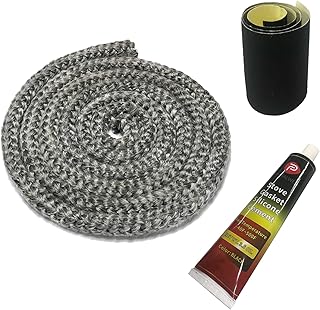
This 72-inch rope gasket uses graphite-impregnated fiberglass and has a listed heat tolerance of 1,100°F. It has a full core and tight-knit weave, features the seller describes as supporting sealing performance and resistance to deformation and abrasion. High-temperature acetate cloth tape rated to 500°F is included for the rope ends.
Best for: A fireplace insert or stove door with a narrow gasket channel that specifies a 1/2-inch rope. It offers the same stated material and temperature characteristics as the Protalwell 7/8-inch option, but in a smaller diameter.
Limitation: The thinner rope may not fill a channel designed for a thicker gasket. Match the replacement size to the appliance instructions or the original seal rather than choosing by appearance alone.
Buying Guide: How To Choose A Fireplace Door Seal
Is the door part of the firebox or a room door?
First identify what the door does. A stove or fireplace-insert door closes around a combustion chamber and typically needs the gasket type specified by the appliance manufacturer. A room door or window may need a smoke seal instead. These products are not interchangeable just because both are described as seals.
For hot stove and insert doors, the listed products here are fiberglass gasket rope or fiberglass tape. The silicone product is a different category, with a stated maximum temperature of 450°F. Do not use it in a hotter location unless the fireplace manufacturer confirms that it is suitable.
Should you choose rope or flat gasket tape?
Rope gaskets are round and fit a channel designed to hold a cord-like seal. The Protalwell options are 1/2 inch and 7/8 inch in diameter, while the Stanbroil rope is 3/4 inch. Flat gasket tape has a rectangular profile; the self-adhesive option listed here is 5/8 inch wide and 1/8 inch thick.
Check the original gasket shape and the appliance manual. A rope that is too thick may not seat correctly, while one that is too thin may not close the gap. Flat tape is not a substitute for rope if the door is designed with a rope channel.
How do you match gasket size and length?
Measure the existing gasket or consult the stove’s parts documentation before ordering. Compare rope diameter or tape width and thickness, then estimate the length needed to follow the full sealing path. The products listed range from 72 to 84 inches for fiberglass rope or tape. The silicone smoke-seal product comes in eight 20-foot rolls.
Do not rely on a visual estimate of the channel. A seal that is compressed incorrectly may not perform as intended, and the correct size depends on the appliance design.
When do you need cement or adhesive?
The Stanbroil kit includes gasket cement, while the flat fiberglass tape has adhesive backing. The two Protalwell rope kits include high-temperature tape for connecting the rope ends and containing loose fibers; that tape is not described as gasket cement. Follow the product and appliance instructions for the appropriate attachment method.
Before replacing a gasket, check whether the old seal is secured with cement, adhesive, or another method. Do not add an attachment material that the appliance manufacturer does not recommend.
What temperature rating matters?
Compare the rating for the material that will be exposed to heat at the seal’s location. The two Protalwell rope products list a maximum of 1,100°F, and the Stanbroil rope lists 1,000°F. Stanbroil’s cement is listed for 2,000°F, but that does not raise the stated temperature rating of the rope itself. The flat tape’s provided features do not give a temperature rating.
Use the appliance manual as the deciding reference. Product temperature claims alone do not confirm that a gasket is suitable for every model or position.
What should you check before buying?
- Confirm whether the seal is for a stove or insert door, or for a cooler room door or window.
- Match the gasket profile and dimensions to the original seal and appliance requirements.
- Check the listed temperature limit for the gasket and any included adhesive, tape, or cement.
- Review the package length and whether the kit includes the installation material you need.
- Follow the appliance manufacturer’s replacement and installation instructions.
Frequently Asked Questions
Can I use silicone weather stripping around a fireplace door?
Only if the door location and temperature are within the product’s stated limits and the fireplace manufacturer approves it. The silicone seal listed here is rated from -58°F to 450°F, so it should not be assumed suitable for a hot stove or firebox door.
What is the difference between a rope gasket and flat gasket tape?
A rope gasket is round and intended for a rope-gasket channel. Flat gasket tape has a flat profile and suits a surface designed for that shape. Match the replacement to the original gasket and appliance instructions.
How do I know what gasket diameter to buy?
Check the appliance manual or measure the original rope gasket and channel. The products listed include 1/2-inch, 3/4-inch, and 7/8-inch options. Select the diameter specified for your appliance rather than guessing.
Does every fireplace gasket need cement?
No single attachment method applies to every appliance. The Stanbroil kit includes gasket cement, and the flat tape has self-adhesive backing. Follow the stove manufacturer’s instructions for the correct material and method.
Can I choose a gasket based only on its heat rating?
No. The gasket must also have the correct shape, size, length, and attachment method for the fireplace or stove. Confirm these details with the appliance documentation before purchasing.