The most economical water heater depends on how much hot water you need, where you need it, and whether you value lower standby use or a simpler installation. For a small household, the VEVOR 12-gallon tank is sized for one or two outlets; the GE 10-gallon model suits compact point-of-use installations; and the GE 18-gallon model offers more stored water. The Jflapil tankless unit heats on demand at a limited flow rate, while the Coituer Koire immersion heater is for warming water in a container rather than supplying household plumbing.
| Product | Best suited for | Type |
|---|---|---|
| VEVOR 12-Gallon | One or two outlets in a small home | Storage tank |
| GE 10-Gallon | Compact point-of-use installation | Storage tank |
| GE 18-Gallon | Higher hot-water demand than a small point-of-use setup | Storage tank |
| Jflapil 3000W | Low-flow, on-demand use at a sink | Tankless electric |
| Coituer Koire 2000W | Warming water in buckets or tubs | Portable immersion heater |
VEVOR 12-Gallon Electric Tank Water Heater

Best for: Singles or couples who need hot water at one or two outlets in a small apartment, studio, or remote water point. Its 12-gallon capacity is intended for showers, handwashing, and dishwashing in smaller settings.
This 120-volt storage heater has a digital display, knob control, and a side outlet. The listed features include an extended immersion heating tube, 20 mm foam insulation, an enamel interior, and protections for dry heating, overheating, and overpressure. The insulation is a practical feature for buyers comparing tanks because it is designed to reduce heat loss while stored water waits to be used.
Why it was selected: It pairs a defined small-household capacity with insulation and built-in protections, making it a relevant option for buyers who want a compact tank rather than a full-size system.
Limitation: A 12-gallon tank is not a large supply. It may not suit multiple simultaneous outlets or households with high hot-water demand.
GE 10-Gallon Plug-and-Play Water Heater
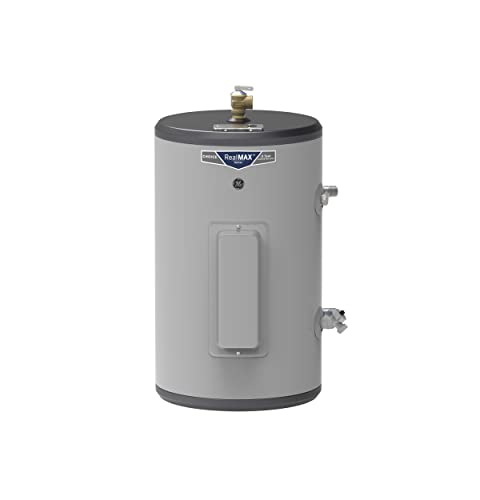
Best for: Buyers who need a compact tank for a kitchen, bathroom, laundry area, RV, cabin, barn, or garage. Its 10-gallon capacity and 120-volt connection are suited to smaller installations where a larger tank may be unnecessary.
GE describes this model as easy to install with existing plumbing. It uses standard 3/4-inch NPT-compatible water connections and includes an adjustable thermostat. The product listing also states an eight-year limited replacement or eight-year tank-and-parts warranty and one-year labor warranty. Confirm the warranty terms and installation requirements for the specific product before purchasing.
Why it was selected: It offers a smaller capacity than the other listed GE tank, so it may be a more fitting choice when the goal is to serve a limited point of use without choosing a larger storage volume.
Limitation: Ten gallons provides less stored hot water than the GE 18-gallon model. Choose it only if the expected demand fits its smaller capacity.
GE 18-Gallon Versatile Electric Water Heater

Best for: A small house, condo, apartment, or single hookup that needs more stored hot water than a compact 10-gallon unit provides. The 18-gallon capacity makes it the largest storage tank among the selected products.
This GE model connects to a 120-volt supply and uses standard 3/4-inch NPT-compatible water connections, according to the listing. Its compact design is described for limited spaces such as kitchens, bathrooms, laundry rooms, cabins, RVs, garages, and sheds. It has an adjustable thermostat and is presented as suitable for a single hookup or a small dwelling.
Why it was selected: It gives buyers a straightforward way to compare capacity within the same brand’s compact tank options. It is better for users who need more stored water than a 10-gallon tank can offer.
Limitation: The listing does not provide a household-wide recovery rate or a specific energy-use figure. Check the full specifications and local installation requirements before treating it as a whole-home solution.
Jflapil 3000W Tankless Under-Sink Heater

Best for: Buyers seeking on-demand hot water at a sink where the listed low flow rates meet the task. This 110-volt, 3000-watt unit has a digital display and is designed for wall mounting in compact spaces.
The listing specifies temperature adjustment from 82°F at 0.3 gallons per minute to 131°F at 0.5 gallons per minute. It also describes instant heating, an LED temperature display with Celsius and Fahrenheit switching, and protections for dry burn, overheating, leakage, and idle status. The manufacturer states 98% thermal efficiency; that figure is a listed product claim, not a guarantee of lower household bills.
Why it was selected: A tankless design avoids keeping a storage tank of water hot, which may be appealing for intermittent, low-volume use. It can be compared with tank models by considering use pattern and actual flow needs.
Limitation: The listed flow range is low. It is not a suitable choice if the application requires a higher flow than 0.5 gallons per minute.
Coituer Koire 2000W Portable Immersion Heater

Best for: People who need to warm water in a bucket, tub, or inflatable pool instead of supplying hot water through household plumbing. Its 2000-watt element is described for portable use at home, in an RV, or outdoors.
The product includes a stainless steel protective guard and a digital temperature sensor. The listing says it automatically stops when the water reaches peak temperature or the water level becomes too low. The guard is designed to keep heat away from the container’s edges, including plastic, wood, or rubber tubs.
Why it was selected: It addresses occasional container-heating needs without requiring a permanently installed tank. For those limited tasks, it is a different and potentially more focused option than buying a plumbed water heater.
Limitation: This is not a replacement for a household water heater or a plumbed supply. Use it only as directed for suitable containers and water levels.
Buying Guide: How to Choose an Economical Water Heater
What does “economical” mean for your situation?
Economical can refer to purchase cost, installation effort, electricity use, or the cost of heating water that is never used. These factors can point to different products. A compact tank may be economical when a household needs a reliable reserve at one outlet, while a tankless unit may suit occasional low-flow use. A portable immersion heater may make more sense for warming water in a bucket than installing plumbing equipment for that purpose.
Compare the complete ownership picture rather than relying on one feature or efficiency claim. Consider the unit, installation, electrical work, maintenance, and how much hot water your household actually uses. The product details provided here do not include enough information to calculate lifetime operating costs for every model.
How much hot water do you need at once?
Storage heaters hold a set volume of heated water. In this group, the VEVOR tank holds 12 gallons, the GE compact model holds 10 gallons, and the larger GE model holds 18 gallons. A larger capacity can provide more stored water, but it does not automatically make a unit the least costly choice. Match the tank size to the number of users and the tasks performed before the water reheats.
A tankless heater does not store a stated volume in the same way, but its flow rate matters. The Jflapil listing gives a range of 0.3 to 0.5 gallons per minute, depending on the temperature setting. That specification makes it important to check whether the water flow suits the fixture and task.
Should you choose a tank or tankless model?
Choose a tank if you want stored hot water and the stated capacity fits your demand. Tank models can be easier to compare by gallon capacity, but they keep water in reserve. The VEVOR listing specifically notes 20 mm insulation intended to minimize heat loss. The GE listings emphasize compact size and 120-volt supply, but do not give a comparable insulation or energy-use figure.
Choose tankless only when its flow and electrical requirements match the installation. On-demand heating can avoid storing a tank of hot water, but a small tankless unit may not deliver enough flow for a shower or several outlets. Verify the product’s full electrical, plumbing, and installation specifications before buying.
When is a portable heater the economical choice?
A portable immersion heater is for warming water directly in a suitable container. It may be a practical match for occasional foot baths, cleaning, or small pools when a permanent hot-water connection is not needed. It does not deliver hot water to faucets and should not be compared with a conventional household heater as though the products perform the same job.
Read the operating instructions and follow the specified water-level and container requirements. Although the Coituer Koire listing describes automatic shutoff and a protective guard, those features do not remove the need to use the heater as directed.
Which specifications should you verify before purchasing?
- Capacity or flow: Match gallons for a tank or gallons per minute for a tankless unit to the actual task.
- Voltage and electrical supply: The selected tank models list 120-volt connections, and the Jflapil model lists 110 volts. Confirm the requirements and circuit suitability for your home.
- Connection and installation: Check water connections, mounting location, plumbing access, and any local requirements. A product described as easy to install may still need professional work.
- Temperature control: Compare adjustable thermostats, temperature displays, and listed operating ranges where available.
- Protection features: Review listed safeguards, but do not treat them as substitutes for correct installation and use.
- Efficiency evidence: Compare standardized energy information when available. A feature such as insulation or a manufacturer efficiency claim alone does not calculate your bill savings.
How can you compare total cost fairly?
Estimate hot-water demand and compare products that can meet it. A smaller unit that cannot keep up may be a poor value, while a larger tank may be unnecessary for a single low-use outlet. Ask an installer to identify any electrical or plumbing changes required and include those in the comparison. If energy-use labels or annual consumption estimates are available for the model, use those figures alongside your local utility rates.
Frequently Asked Questions
What is the most economical type of water heater?
There is no single type that is most economical for every home. A small tank, low-flow tankless unit, or portable immersion heater may be appropriate depending on hot-water volume, usage frequency, and installation needs.
Is a tankless water heater always cheaper to operate?
No. Operating cost depends on the unit’s energy use, how much hot water is used, local utility rates, and installation. A tankless design avoids storing water, but the Jflapil model’s listed flow is limited to 0.3–0.5 gallons per minute.
Is a 10-gallon water heater enough for a household?
It may suit a limited point of use or low-demand setup, but the right capacity depends on the number of users and their hot-water needs. Compare the 10-gallon capacity with the larger 12- and 18-gallon options before choosing.
Can a portable immersion heater replace a water heater?
No. The Coituer Koire heater warms water in a container. It does not supply hot water through household plumbing or serve as a conventional tank or tankless system.
What should I check before installing a 120-volt water heater?
Confirm that the product’s electrical requirements, plumbing connections, installation location, and local code requirements fit your home. A listed 120-volt connection does not by itself confirm that an existing circuit or plumbing setup is suitable.