The best point-of-use water heater for a bathtub depends on how quickly you need to fill it and how much hot water the heater can deliver at your local incoming-water temperature. The 27 kW APUS is the highest-capacity option listed, while the smaller 110–120V models are better suited to low-flow fixtures than filling a tub. Compare electrical requirements and flow before buying: a heater that works well at a sink may not deliver enough hot water for a comfortable bath.
| Product | Best suited for | Key detail |
|---|---|---|
| APUS 27 kW Electric Tankless | Buyers considering higher-capacity, multi-fixture supply | 240V; listed up to 6.5 GPM |
| 4500W Instant Electric Heater | A nearby bathroom shower or low-flow use | 110V; adjustable 86–131°F |
| EcoSmart POU 4T | Point-of-use or low-flow applications | 3.5 kW, 120V |
| CAMPLUX 4.5 kW | A nearby sink or other compact fixture | 120V; 50°F rise at 1.0 GPM |
| 110V 3000W Tankless Heater | Small fixtures and limited-space installations | Temperature-rise figures given at 0.3–0.5 GPM |
APUS 27 kW Electric Tankless Water Heater

Best for: Buyers seeking the highest stated capacity in this selection, especially where multiple fixtures may draw hot water. The product is listed as a 240V, 27 kW whole-home unit with up to 6.5 GPM, a slim wall-mounted design, LED display, self-modulating operation, and an adjustable 86–140°F range.
Those specifications make it the strongest candidate here to investigate for a bathtub supply. However, the listing’s flow figure alone does not confirm how much hot water it can provide at a particular temperature rise. Check the manufacturer’s flow-versus-temperature data and have an electrician confirm that the home can support its electrical requirements. Choose this if you need substantially more capacity than a small under-sink heater; avoid assuming it is a simple plug-in point-of-use appliance.
4500W Instant Electric Bathroom Heater

Best for: Buyers looking for an instant heater for a bathroom shower or another lower-flow use near the fixture. The listing describes a 110V, 4500W wall-mounted unit with a shower head, LED display, and adjustable temperature from 86–131°F. It also states that the heater has a thermostat, power-off memory, tempered-glass panels, and stainless-steel heating materials.
The adjustable temperature and bathroom-oriented setup make this more relevant to bathing than a basic under-sink model. Still, the product information does not give a flow rate or temperature-rise measurement, so it is not possible to confirm that it can fill a bathtub at a useful rate. Check its installation instructions and performance data before choosing it for a tub. It may be better suited to a shower than to a high-flow bathtub faucet.
EcoSmart POU 4T 3.5 kW Heater

Best for: Point-of-use and low-flow applications where a compact tankless heater can serve a nearby fixture. This model is listed as a 3.5 kW, 120V thermostatic heater. Its product information says it heats water on demand rather than keeping a tank hot and is intended for point-of-use or low-flow applications.
The low-flow description is important for bathtub shoppers. A tub faucet usually needs a stronger flow than a small point-of-use fixture, and the supplied details do not state a bathtub-capable flow rate or temperature rise. That means this model is a more defensible choice for a nearby low-flow outlet than as the sole heater for filling a bath. Choose it if the planned use matches its stated application; verify its performance before connecting it to a bathtub faucet.
CAMPLUX 4.5 kW 120V Point-of-Use Heater

Best for: A compact installation serving a sink, wet bar, or other nearby fixture, rather than a bathtub with an unverified high-flow demand. The listing gives a 4.5 kW, 120V rating and a compact size of 10.95 by 2.52 by 7.4 inches. It also describes wall mounting, a digital LED display, and self-modulating power adjustment.
The clearest performance detail is a 50°F temperature rise at 1.0 GPM. That gives buyers a more useful comparison point than a general “instant hot water” claim, but it does not establish the temperature rise at a bathtub’s actual flow rate. The listed 1.0 GPM figure should be compared with the flow required by the tub faucet. Choose this for limited space and lower-flow use; do not assume it will supply bath-temperature water quickly at higher flow.
110V 3000W Digital Tankless Water Heater
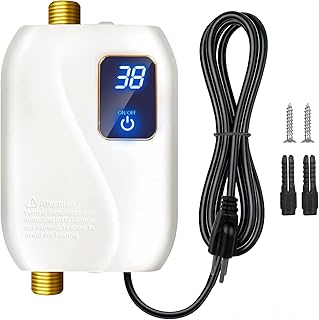
Best for: Small fixtures and installations where compact, wall-mounted equipment and a digital temperature display are priorities. The listed features include 110V operation, 3000W power, selectable Fahrenheit or Celsius display, and claimed temperature increases of 82°F at 0.3 GPM and 131°F at 0.5 GPM. It also lists dry-boil, leakage, overheating, and inactivity protections.
The flow-specific figures show why this model is better matched to a low-flow outlet than filling a tub: its stated temperature increases are measured at just 0.3–0.5 GPM. A bathtub faucet may need a greater flow, which can reduce the temperature rise from an electric tankless heater. The listing also describes IPX4 water resistance and an ETL standard, but buyers should confirm exact installation requirements and applicable documentation. Avoid selecting it for a tub without suitable flow data.
Buying Guide: How to Choose a Point-of-Use Heater for a Bathtub
Can a small point-of-use heater fill a bathtub?
Sometimes a point-of-use heater can support a tub, but the label “tankless” or “instant” does not establish that it can. The key question is whether the heater can deliver enough hot water at the tub faucet’s flow rate while raising incoming water to a suitable temperature. A unit designed for a sink or low-flow outlet may produce less heat per gallon when asked to serve a faster flow.
Before buying, find the bathtub faucet’s expected flow rate and compare it with the heater’s published flow and temperature-rise chart. If the product data only provides results at a small flow, do not assume those results apply to a tub. A heater may still contribute preheated water or serve another nearby fixture, but its suitability needs to be confirmed from its specifications.
How much power and what voltage should you compare?
Electrical ratings are central to choosing an electric tankless heater. The products in this selection range from 3.5 kW at 120V to 27 kW at 240V. Higher wattage generally indicates greater heating capacity, but the actual temperature rise also depends on water flow and incoming-water temperature. A higher-capacity model may require electrical service and wiring that a small 120V unit does not.
Check the product’s installation requirements, circuit needs, and wiring specifications before purchase. Ask a qualified electrician to confirm that the home’s electrical panel and circuit can support the heater. Do not choose based on voltage alone, and do not assume that two heaters with different wattage will provide the same temperature at the same flow.
What does temperature rise tell you?
Temperature rise is the difference between the incoming water temperature and the heated outlet temperature. As the flow rate increases, an electric tankless heater has less time and capacity to heat each gallon, so its temperature rise can decrease. This is why a figure such as the CAMPLUX listing’s 50°F rise at 1.0 GPM is more informative than a general claim of instant hot water, while still not answering what happens at higher bathtub flow.
Consider seasonal changes, too. Incoming water is often colder in winter, so the heater may need a larger temperature rise to reach the same outlet temperature. Look for manufacturer data covering the flow rate and temperature conditions you expect, rather than relying only on a maximum temperature setting.
Should you choose a tankless heater or a small storage tank?
A tankless point-of-use unit heats water as it passes through the heater. This can reduce the wait caused by long plumbing runs and avoids storing a tank of hot water. Its output, however, is constrained by its power and the desired flow and temperature rise.
A small storage heater holds a limited volume of hot water, which can be useful when a fixture needs a stronger short-term flow than a compact tankless unit can deliver. Its stored supply is finite and must recover after use. Compare the tub’s fill volume and use pattern with the storage capacity and recovery information before deciding between these approaches.
Where should the heater be installed?
A point-of-use heater is generally placed near the fixture it serves, which can shorten the distance hot water travels through the plumbing. Check whether the selected model is designed for the intended location, such as under a sink or on a bathroom wall. Confirm its water connections, mounting needs, required clearances, and electrical safety instructions in the product documentation.
Bathrooms require particular attention to safe electrical installation. Follow the manufacturer’s instructions and local code requirements, and use a qualified professional where required. A product’s stated protection features do not replace correct wiring, plumbing, grounding, or installation practices.
Which listed heater is the most plausible bathtub candidate?
The APUS 27 kW model has the highest stated power and lists up to 6.5 GPM, so it is the strongest candidate in this selection to investigate for a bathtub. It is also described as a whole-home unit, not simply a small under-sink heater. Its listing does not provide enough detail here to guarantee a specific bathtub temperature at a particular flow rate, so confirm the manufacturer’s performance chart and electrical requirements.
The smaller 120V and 110V choices are described for point-of-use, low-flow, sink, or bathroom applications. They may suit a nearby fixture, but the available specifications do not establish that they can fill a bathtub efficiently. Compare intended use and performance, not just product titles or claims of instant heating.
Frequently Asked Questions
What size point-of-use heater do I need for a bathtub?
There is no reliable answer based on wattage alone. Match the heater’s documented flow and temperature rise to the bathtub faucet’s flow and your incoming-water temperature. If the manufacturer does not publish those figures for the needed flow, ask the manufacturer before buying.
Is a 120V tankless heater suitable for filling a tub?
Not necessarily. The listed 120V models here are small point-of-use units, and one is explicitly described for low-flow applications. Check the unit’s output at the tub’s flow rate; do not infer bathtub capacity from its voltage or an “instant” label.
Does a higher flow-rate claim guarantee a hot bath?
No. Flow rate needs to be considered alongside temperature rise. A heater may move water at a stated rate but may not raise it enough to reach the desired temperature under the conditions in your home.
Can a point-of-use heater serve a shower and bathtub at once?
Only if the unit is designed for the combined demand and its documented capacity supports both fixtures at the required temperature. Simultaneous use increases total flow, which can reduce outlet temperature. Review the manufacturer’s multi-fixture guidance.
Do I need an electrician to install an electric tankless heater?
Installation depends on the heater’s electrical requirements and local rules. Higher-wattage models can require substantial electrical capacity. Have a qualified electrician assess the circuit, panel, wiring, and installation conditions before purchase or installation.