For a large, well-ventilated work area, a kerosene forced-air heater can deliver fast, high-output heat. The VEVOR 215,000-BTU model is best for very large workspaces with thermostat control; the Reddy 80,000-BTU model offers a lower-output multi-fuel option; and the Reddy 50,000-BTU model suits smaller areas. These are combustion heaters, not automatically safe for occupied indoor rooms. Follow the product manual and local safety rules, and never use a heater where its instructions prohibit use.
| Product | Listed heat output | Best suited for |
|---|---|---|
| VEVOR 215,000 BTU | 215,000 BTU | Very large workspaces needing thermostat control |
| Reddy RFA80T-V3 | 80,000 BTU | Large areas and users needing fuel flexibility |
| Reddy RFA50-V3 | 50,000 BTU | Workspaces listed up to 1,200 square feet |
| VEVOR 175,000 BTU | 175,000 BTU | Large workspaces needing thermostat control |
| Windpost 9,000 BTU wick heater | 9,000 BTU | Portable, non-electric use where permitted |
VEVOR 215,000-BTU Forced-Air Heater
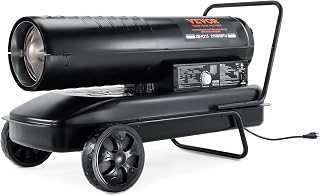
Best for: Very large workshops, barns, farms, or similar work areas where a high heat output is appropriate. The listed capacity is 215,000 BTU, and the product description gives a maximum space figure of 44,496.6 cubic feet. Actual heating performance depends on conditions such as insulation, air leakage, and outdoor temperature.
This model is better for buyers who want thermostat-based operation and fuel-status information. Its thermostat display is adjustable from 40°F to 110°F, and the heater is described as stopping when the set room temperature is exceeded. Listed features also include overheat protection, a low-fuel shutoff, a fuel gauge, a pressure gauge, and dual fuel filters.
It supports kerosene or diesel, but the listing says to use only one fuel type at a time and recommends 1-K kerosene. Limitation: Its high output and combustion exhaust make it unsuitable for treating as a plug-in room heater. Verify ventilation and use restrictions in the manual before operation.
Reddy Heater RFA80T-V3

Best for: Buyers who need a midrange forced-air output for a large workshop or worksite. The manufacturer listing specifies 80,000 BTU and says it can heat areas up to 2,000 square feet. That area figure is a product claim, not a guarantee for every building or climate.
The RFA80T-V3 is a better fit than the 175,000- or 215,000-BTU models when the intended space does not call for their listed output. Its high-performance motor and fan are described as providing rapid whole-area heating. Fuel options listed include K-1 kerosene, #1 and #2 fuel oil, diesel, JP8, and jet fuel.
Limitation: The supplied features do not specify a thermostat, fuel gauge, or overheat protection, so do not assume those controls are included. Because it burns fuel, use it only in locations and conditions allowed by its manual, with the required ventilation and carbon-monoxide precautions.
Reddy Heater RFA50-V3

Best for: Buyers looking for less output than the larger forced-air options. This model is rated at 50,000 BTU, has listed airflow of 175 CFM, and is described as heating up to 1,200 square feet. It may be a more appropriate size for a smaller workshop, depending on the building and conditions.
Choose this model if its one-touch electronic start and stated safety features match your priorities. The listing identifies flame-out shutoff and overheat protection. Fuel options named include kerosene, #1 and #2 fuel oil, JP8, and jet fuel.
Limitation: The product details do not state a thermostat or room-temperature display. Buyers who need automatic temperature adjustment should confirm the unit’s controls before choosing it. Its combustion operation also means the word “indoor” should not be treated as permission to use it in an enclosed occupied room; follow the manual’s ventilation and location requirements.
VEVOR 175,000-BTU Forced-Air Heater

Best for: Large workspaces where the 215,000-BTU model may be more output than needed. VEVOR lists 175,000 BTU and a maximum space figure of 36,021 cubic feet. These figures can help compare models, but they cannot account for a specific building’s insulation, ceiling height, or ventilation.
Like the larger VEVOR option, this model has a thermostat knob and room-temperature display adjustable from 40°F to 110°F. Listed controls include overheat protection that shuts off at 176°F, low-fuel shutoff, a fuel gauge, and a pressure gauge. Dual fuel filters are described as reducing smoke and odor.
The heater accepts kerosene or diesel, with only one fuel type to be used at a time; the listing recommends 1-K kerosene. Limitation: It remains a high-output combustion heater. Do not use it in a space unless the manual expressly permits the location and the required ventilation can be provided.
Windpost 9,000-BTU Wick Heater

Best for: Buyers seeking a small, non-electric kerosene heater rather than a forced-air torpedo-style unit. The listing describes a 9,000-BTU portable heater with three wicks, a carrying handle, a metal protective grill, and dimensions of 13 by 13 by 14 inches. It is presented for camping, cooking, garage heating, and other uses.
Its main difference from the forced-air models is that it does not require electricity to operate. That may matter during an outage or in another setting where electrical power is unavailable. It is not a direct substitute for a high-output heater intended to warm a large work area.
Limitation: The listing’s indoor-use language does not establish that the heater is safe for every indoor room or occupancy situation. A wick heater burns fuel and can create carbon monoxide and fire risks. Check its manual, maintain required ventilation, and never leave a burning heater unattended.
Buying Guide: Choosing a Kerosene Heater for Indoor-Adjacent Workspaces
Can a kerosene forced-air heater be used indoors?
“Indoor use” in a product listing is not enough to establish that a heater is safe in an enclosed room. Forced-air kerosene heaters burn fuel, and combustion can produce carbon monoxide, an odorless, potentially deadly gas. Use a model only in the locations and conditions allowed by its manufacturer’s instructions and applicable local requirements. Do not use one in a home, garage, or other enclosed area unless the instructions explicitly permit that use and specify how to provide safe ventilation.
Keep a working carbon-monoxide alarm in areas where fuel-burning equipment is used, while recognizing that an alarm does not make an otherwise prohibited use safe. Keep the heater clear of combustible materials, and follow the manual’s clearance, fueling, startup, shutdown, and storage directions. If anyone develops symptoms that could indicate carbon-monoxide exposure, leave the area and contact emergency services.
How much heat output do you need?
Compare the heater’s BTU rating with the space you need to heat, but do not rely on a listed square-foot or cubic-foot figure alone. Insulation, drafts, ceiling height, outside temperature, and open doors can all change heating needs. The supplied listings range from 9,000 BTU for the portable wick heater to 215,000 BTU for the largest forced-air model.
A larger rating is not automatically the better choice. Consider the size and conditions of the work area, and avoid selecting a high-output unit simply because its capacity sounds impressive. For a space with unusual heating demands, consult a qualified HVAC or heating professional.
Which fuel and controls should you compare?
Check the exact fuel types listed for the specific model. The VEVOR heaters accept kerosene or diesel and specify that only one type should be used at a time; their listings recommend 1-K kerosene. The Reddy models list several fuel options. Never use a fuel that the unit’s manual does not approve, and do not mix fuels unless the manufacturer explicitly directs you to do so.
Controls vary. The VEVOR models list a thermostat and temperature display, fuel gauge, low-fuel shutoff, pressure gauge, and overheat protection. The RFA50-V3 lists electronic start, flame-out shutoff, and overheat protection. The RFA80T-V3 product details supplied here emphasize its motor, fan, and fuel choices. Confirm features in the current manual and product documentation before buying.
Do you need forced air or a non-electric wick design?
Forced-air models use a fan to distribute heat and are the more relevant choice for large work areas when their installation and ventilation requirements can be met. They require electricity for the fan and operating components. The Windpost wick heater is listed as non-electric and portable, but it has much lower stated output and operates differently. Neither design should be used in a setting that its instructions prohibit.
What safety details should you verify before purchase?
- Read the complete manual, including permitted locations, ventilation, clearances, and fueling instructions.
- Confirm which fuel the specific model accepts and how fuel should be stored and handled.
- Check the listed safety shutoffs and determine whether the controls you need are actually included.
- Plan for carbon-monoxide detection and keep alarms maintained according to their instructions.
- Consider whether an electric heater or a professionally installed, vented heating system is more suitable for an occupied indoor room.
Frequently Asked Questions
Are kerosene forced-air heaters safe for a bedroom or living room?
Do not assume they are. Use one in an occupied indoor room only if its manufacturer’s instructions explicitly allow that use and all stated ventilation and safety requirements can be met. If the manual prohibits it, do not use it there.
Which listed model has the highest heat output?
The VEVOR forced-air model in this list is rated at 215,000 BTU, the highest stated output among these five products.
Which product is listed as requiring no electricity?
The Windpost 9,000-BTU wick heater is described as non-electric. It is not a forced-air heater and has a much lower listed output than the other models.
Can I use diesel in any kerosene heater?
No. Use only fuel types approved for the specific heater in its manual. The VEVOR listings allow kerosene or diesel, while the Reddy listings specify their own fuel options. Follow each model’s directions.
Does a larger BTU rating guarantee that a heater will warm a particular building?
No. BTU output is one comparison point. Building size, insulation, air leakage, ceiling height, outdoor conditions, and ventilation affect heating performance.