The Honeywell Home X2P and LUX PSP511LC are the programmable options in this selection; the other three are non-programmable alternatives for certain oil-heating systems. Before choosing, confirm that your oil furnace or boiler uses a compatible low-voltage control system and check the thermostat’s wiring requirements. The Honeywell is best for buyers who want a large display and weekday-weekend scheduling, while the LUX offers up to four daily periods. The Suuwer, Miuputake, and Riseem models may suit buyers who prefer simple manual temperature control and whose system matches the listed compatibility limits.
| Thermostat | Best for | Programming | Oil heat notes |
|---|---|---|---|
| Honeywell Home X2P | Clear display and weekday-weekend schedules | 5-2 schedule or non-programmable option | Verify system and wiring compatibility |
| LUX PSP511LC | Separate weekday and weekend routines | 5-2 schedule; up to four periods daily | Confirm compatibility with the specific oil system |
| Suuwer | Manual control for qualifying conventional systems | Non-programmable | Lists gas/oil single-stage heating |
| Miuputake | Manual control with broad stated system types | Non-programmable | Lists oil forced-air heat; check wiring |
| Riseem | Basic control for qualifying single-stage heat | Non-programmable | Lists gas/oil heat-only systems; exclusions apply |
Honeywell Home X2P Programmable Thermostat
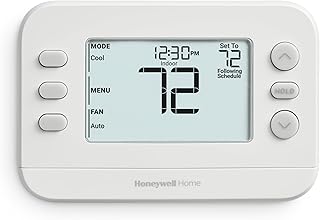
The Honeywell Home X2P is best for buyers seeking a programmable thermostat with a large screen and a straightforward weekday-weekend schedule. Its listed 5-2 programming separates weekdays from weekends, and it also offers a non-programmable option. The product details identify it as a replacement for the RTH2300 and RTH221, but that does not establish compatibility with every oil furnace or boiler.
Display settings can be customized, and the thermostat can provide change-air-filter reminders. These features may be useful for households that want routine prompts and an easier-to-read interface. Choose this model if a 5-2 schedule fits your household’s routine and your existing system’s wiring and control type are confirmed compatible.
Limitation: The supplied product details do not specifically confirm oil-heat compatibility. Verify the installation instructions and system requirements before buying, especially for a boiler or a system with multiple heating stages.
LUX PSP511LC Programmable Thermostat

The LUX PSP511LC is best for buyers who want to set different heating and cooling routines for weekdays and weekends. Its 5-2-day programming allows those two schedule groups to be customized separately. The product also lists up to four periods per day and separate programs for heating and cooling, offering more schedule detail than a basic manual thermostat.
An exclusive speed dial is designed to make programming quicker. This model is a relevant programmable option to compare when a household wants multiple daily temperature periods rather than only a single weekday and weekend setting. It was selected for its schedule flexibility, but the provided features do not specify oil-system compatibility or wiring details.
Limitation: Do not assume that a programmable thermostat’s scheduling features mean it works with an oil boiler or furnace. Check the product’s installation documentation against the existing system before purchasing.
Suuwer Single-Stage Manual Thermostat

The Suuwer is best for buyers who do not need automatic schedules and have a compatible conventional, single-stage system. Its listed applications include gas, oil, or electric furnace heating, ventilation, and air conditioning, up to one heat and one cool stage. The blue-backlit display is another listed feature.
This is not a programmable thermostat. It belongs in this comparison as a manual-control alternative for oil-heat owners who prioritize simple operation over scheduled temperature changes. The product information says the base is intended for two to five wires, so checking existing wiring is an important first step.
Limitation: The listed exclusions include multistage systems, heat pumps, dual-fuel systems, and three-wire hydronic hot-water systems. Avoid this model if your system falls into one of those categories, and read the wiring directions before buying.
Miuputake Digital Manual Thermostat
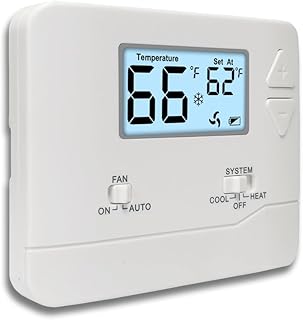
The Miuputake is best for buyers who want manual temperature control and whose oil-heating setup matches its stated system list. Listed applications include forced-air gas, oil, or electric heat; heat-only systems; hot-water steam or gravity radiant heat; and several other system types. It has a backlit LCD display, front-load battery compartment, and large terminal blocks.
Its control features include an adjustable temperature differential, temperature display calibration, Celsius or Fahrenheit selection, and selectable compressor-delay protection. Those options are separate from scheduling: this model is non-programmable, so it does not provide automatic weekday or daily temperature periods.
Limitation: The product information advises checking compatibility before purchase. The listed range of applications does not replace confirming the exact wiring and control requirements of an individual oil furnace or boiler.
Riseem Single-Stage Manual Thermostat
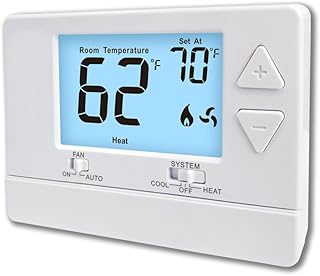
The Riseem is best for buyers who need basic control for a compatible single-stage, heat-only system and do not require a schedule. Its listed compatible applications include gas, oil, or electric furnace heat, boiler radiant heat only, forced-air heat only, and 24-volt gas fireplaces. It also lists single-stage heating and cooling and cooling-only use.
This model was included as a manual alternative for oil-heat systems, not as a substitute for a programmable thermostat. Its product information specifies a maximum of two to five wires at the base, making a wiring check especially important before purchase.
Limitation: The stated exclusions include multistage systems, heat pumps, three-wire hydronic systems, mini-splits, radiant ceiling heat, and 120- to 240-volt electric baseboard heat. Do not choose it for one of those systems.
Buying Guide: How To Choose A Thermostat For Oil Heat
Does the thermostat need to be programmable?
A programmable thermostat lets you set temperature changes in advance, which can suit households with predictable weekday and weekend routines. The Honeywell Home X2P offers a 5-2 schedule, while the LUX PSP511LC supports weekday-weekend programming with up to four periods per day. The Suuwer, Miuputake, and Riseem models are non-programmable options. Choose a manual model only if you are comfortable changing the temperature yourself.
Is your oil system a furnace or a boiler?
Oil heat can be delivered through different equipment and control arrangements. A forced-air oil furnace and a hot-water boiler may not use the same thermostat wiring or switching setup. Product listings may describe compatibility with oil heat broadly, but that does not guarantee compatibility with every oil-fired system. Identify whether the equipment is a furnace, boiler, or another configuration before comparing models.
How can you check wiring and stages?
Turn off power to the heating system before inspecting or handling thermostat wiring. Compare the existing thermostat’s wire connections with the new thermostat’s wiring instructions; wire colors alone should not be treated as proof of function. Count the connected wires and identify whether the system is single-stage or multistage. The Suuwer and Riseem listings specifically describe two-to-five-wire limits and exclusions. If the wiring or system type is unclear, consult a qualified HVAC professional.
What does single-stage compatibility mean?
A single-stage system generally has one level of heating operation controlled by the thermostat. A multistage system can use more than one heating stage. A thermostat listed for single-stage equipment may not control multistage heating correctly. The Suuwer and Riseem product details exclude multistage systems, while the supplied features for the Honeywell and LUX do not fully establish stage compatibility. Confirm this detail in the installation documentation.
Which features matter for everyday use?
For scheduled control, compare the number and type of schedule periods. A 5-2 schedule separates weekdays from weekends; multiple daily periods provide more opportunities to set different temperatures during the day. For manual control, look at display readability, backlighting, and whether the controls are easy to understand. The Miuputake additionally lists an adjustable temperature differential and display calibration, while the Honeywell lists a large screen, clear font, and filter reminders.
When should you seek installation help?
Seek professional help when you cannot identify the system type, the existing wiring does not match the new thermostat’s diagram, or the system uses a boiler, heat pump, multistage controls, or unfamiliar terminals. A thermostat that appears to fit the wall may still be electrically or functionally incompatible. Confirm the manufacturer’s wiring guidance before installation rather than relying only on a product’s general oil-heat description.
Frequently Asked Questions
Which listed thermostats are programmable?
The Honeywell Home X2P and LUX PSP511LC are the programmable options in this selection. The Suuwer, Miuputake, and Riseem are non-programmable thermostats.
Which thermostat explicitly lists oil heat?
The Suuwer and Riseem listings explicitly include gas/oil furnace or heat-only applications. The Miuputake lists forced-air gas, oil, or electric heat. Compatibility still depends on the specific equipment and wiring.
Can I use any thermostat labeled for oil heat with an oil boiler?
No. A general oil-heat description does not confirm compatibility with every boiler, wiring arrangement, or control system. Check the model’s installation requirements against the boiler and existing thermostat.
Can a non-programmable thermostat provide a schedule?
No. A non-programmable thermostat provides manual temperature control rather than automatic scheduled changes. Choose a programmable model if automatic temperature periods are required.
Should I match wire colors when installing a thermostat?
No. Identify the function of each wire using the existing system and the new thermostat’s wiring instructions. If the connections are uncertain, have a qualified professional verify them.