The best electric water heater system depends on how much hot water you need and whether you have the electrical capacity for the unit. The Rheem 18kW is best for buyers seeking self-modulating control, while the 14kW Orbek is aimed at homes with two or three points of use. Smaller 110V and 14kW options suit localized or limited demand; the APUS listing is a higher-output option, but its supplied product details are limited.
| Product | Best suited for | Key listed detail |
|---|---|---|
| Rheem 18kW | Demand-responsive whole-home or multi-use planning | Up to 4.4 GPM; self-modulating power |
| 110V 3000W Tankless | Localized sink hot water | 110V; compact wall-mounted design |
| Orbek 14kW | Two or three points of use | 240V; up to 3.38 GPM |
| APUS 27kW | Buyers comparing a higher-output model | Listing title states up to 6.5 GPM |
| 14kW Sink and Shower | One or two simultaneous uses | 240V; requires a 60-amp breaker |
Rheem 18kW Tankless Electric Water Heater

Best for: Buyers who want an electric tankless unit with adjustable digital temperature control and power that responds to hot-water demand. The listed flow rate is up to 4.4 gallons per minute, which gives buyers a useful starting point for comparing it with smaller models.
The unit has an external digital thermostatic control with an LED display and stated temperature accuracy of plus or minus one degree. Its self-modulating feature adjusts power to meet demand. The listed construction includes two durable copper immersion heating elements, described as field serviceable.
Why it was selected: The combination of 18kW output, stated flow rate, control features, and serviceable elements makes it a clearly specified option for comparison. Check expected simultaneous hot-water use and incoming water temperature before deciding whether its capacity is sufficient.
Limitation: The product information does not specify the breaker or wire requirements. Confirm electrical requirements and installation instructions before purchase.
110V 3000W Compact Tankless Heater
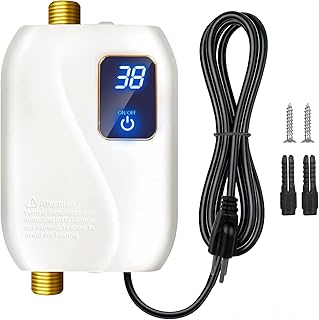
Best for: Buyers considering point-of-use hot water for a sink or another limited-demand location. The listing describes a compact wall-mounted design for kitchens, apartments, bathrooms, RVs, and camping, but buyers should confirm that the intended site and use suit the installation requirements.
This 110V unit is rated at 3000W and has a digital display. The listing gives temperature-rise figures of 82°F at 0.3 GPM and 131°F at 0.5 GPM. It also says the display can switch between Fahrenheit and Celsius by holding the power button for six seconds.
Listed safety features include water-and-electricity isolation, leakage protection, dry-boil protection, IPX4 waterproofing, and automatic power-off under overheating and inactivity conditions. The product description also states that it needs no preheating and describes its thermal efficiency as up to 98%.
Why it was selected: Its 110V supply and compact format distinguish it from the larger 240V units in this guide. Limitation: The listed flow and temperature-rise figures indicate that output depends on flow; this is not a direct substitute for a higher-capacity whole-home system.
Orbek 14kW 240V Tankless Heater

Best for: Buyers who want a 240V tankless system described for two or three points of use, such as a bathroom and kitchen. The listing states a maximum flow rate of 3.38 GPM and describes on-demand hot water.
Electrical planning is a key consideration for this model. The manufacturer information calls for a 240V, 60-amp, two-pole breaker, one set of 6 AWG wires, and 1/2-inch NPT water connections. It also says the household breaker panel should have a total current capacity of at least 150 amps.
Why it was selected: The stated flow rate and explicit electrical and plumbing requirements make it easier to assess against household demand and installation constraints. The listing describes water-electricity separation intended to minimize scale and corrosion, and claims up to 60% less electricity use than traditional tank heaters.
Limitation: These savings and performance statements are manufacturer claims, not a guarantee for every home. Verify panel capacity, wiring, local requirements, and expected flow with a qualified professional before buying.
APUS 27kW Electric Tankless Heater

Best for: Buyers comparing a higher-rated tankless electric model. The supplied product name identifies it as a 27kW, 240V unit and states a maximum flow rate of up to 6.5 GPM, with “3s instant” in the title.
Why it was selected: Its stated power and flow rate make it a useful point of comparison for shoppers evaluating larger-output electric systems alongside 14kW and 18kW options.
Limitation: No detailed feature list was provided for this product. The supplied information does not establish its breaker, wiring, connection, controls, safety features, or conditions for achieving the stated flow. Review the complete manufacturer specifications and have electrical capacity assessed before choosing it.
14kW Tankless Heater for Sink and Shower
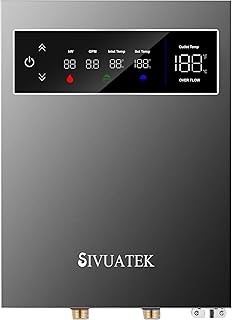
Best for: Buyers planning hot water for one or two simultaneous points, such as a sink and shower. The listing specifies a 14kW, 240V unit and says it requires one 60-amp circuit breaker.
The stated dimensions are 15.87 by 11.14 by 2.87 inches, with a standard 1/2-inch NPT water connection. The listing says it can be installed under a sink or on a wall and that the housing does not need to be disassembled for wiring.
The product description emphasizes no preheating and no idle power use, and claims up to 99.8% thermal efficiency and up to 50% lower water-heating costs than traditional models. Those are listing claims and should not be treated as guaranteed household savings.
Why it was selected: It provides installation dimensions, electrical requirements, and a stated use range, which help buyers compare it with the Orbek 14kW model. Limitation: The listed information does not provide a flow-rate figure, so confirm the expected hot-water output for your climate and use before purchase.
Buying Guide: How to Choose an Electric Water Heater System
Electric water heater systems generally include storage-tank models and tankless models. The five products above are tankless electric heaters. A tankless unit heats water on demand rather than storing a tank of hot water, but its ability to serve multiple fixtures depends on its heating capacity, incoming water temperature, flow rate, and electrical installation.
How much hot water will the system need to supply?
Start by listing the fixtures likely to run at the same time. A single sink has a different demand profile from a shower running while someone uses a kitchen faucet. Compare that expected simultaneous use with the product’s stated flow rate and the conditions attached to it. A maximum GPM figure alone does not guarantee that every home will receive that flow at its desired temperature.
For a small, localized need, the 110V 3000W model is the most distinct option in this group. The Orbek and the other 14kW model are described for limited multi-point use. Rheem lists up to 4.4 GPM, while the APUS title lists up to 6.5 GPM; these figures should be checked against complete manufacturer documentation before use in a system plan.
What electrical supply and panel capacity are required?
Electrical requirements can determine whether a model is practical. The listed units include both 110V and 240V products, and their power ratings vary considerably. The Orbek listing specifies a 240V, 60-amp, two-pole breaker, 6 AWG wiring, and a panel capacity of at least 150 amps. The sink-and-shower 14kW model calls for one 60-amp breaker.
Do not assume that a free breaker space means the household panel has enough capacity. Have a qualified electrician assess the service, circuit, wire sizing, and installation location. For products without detailed electrical information, obtain the full installation manual before purchase.
How should you compare flow rate and temperature rise?
Flow rate describes how much water can pass through a heater in a given period, while temperature rise describes how much the unit can heat that water. In general, a greater temperature rise at a particular flow requires more heating capacity. The 110V unit lists temperature-rise examples at 0.3 and 0.5 GPM, which makes clear that its stated heating performance is tied to flow.
Compare products using the same assumptions: incoming water temperature, desired output temperature, and number of fixtures in use. If a listing provides only a maximum flow rate without conditions, treat it as a comparison figure rather than a promise of performance in every household.
Should you choose point-of-use or a larger central unit?
A point-of-use heater sits near the fixture it serves and can be useful when the need is limited to a sink or a small area. A higher-output tankless model may be considered when hot water needs to serve several locations, but its suitability depends on its rated capacity and the home’s wiring and service. Confirm installation location, water connections, and electrical needs before deciding.
The compact 110V model is the clearest point-of-use candidate in this list. The 14kW models are described for one or two or two to three points of use, depending on the listing. The Rheem and APUS offer higher stated output figures, but the available information does not by itself prove that either will meet a particular home’s simultaneous demand.
Which features matter for day-to-day use?
Consider controls, display readability, temperature adjustment, and service access. Rheem lists an external digital thermostat, LED display, and self-modulating power. The 110V model lists an LCD display and Fahrenheit or Celsius selection. These details may help shoppers compare how directly a unit communicates operating information.
Safety and maintenance details are also worth checking. The 110V listing names several protective functions, and Rheem describes its copper heating elements as field serviceable. For any model, review the actual installation and maintenance instructions rather than assuming that a feature or service procedure is shared across products.
How should you evaluate efficiency and savings claims?
Product descriptions may state thermal efficiency or estimated energy savings. The figures supplied here include claims of up to 98% or 99.8% thermal efficiency and comparisons with traditional tank heaters. Actual energy use and cost depend on usage, local utility rates, incoming water temperature, set temperature, and installation. Treat advertised savings as claims to verify, not guaranteed results.
Tankless units do not maintain a stored tank of hot water, but the overall value of a system depends on more than that distinction. Compare the unit’s capacity and installation requirements with your household’s actual pattern of hot-water use.
What should you confirm before ordering?
- Check the complete voltage, power, breaker, wire, and panel requirements.
- Confirm that your expected simultaneous flow and temperature rise match the unit’s specifications.
- Verify water connection size, mounting method, dimensions, and installation location.
- Review local plumbing and electrical requirements with qualified professionals.
- For the APUS model, obtain detailed specifications because the supplied listing information is limited.
- Read the manufacturer’s instructions for operation, maintenance, and any required installation clearances.
Frequently Asked Questions
Are electric tankless water heaters suitable for a whole house?
They can be suitable when the model’s capacity and electrical requirements match the home’s demand. Check simultaneous flow, desired temperature rise, voltage, breaker, wiring, and panel capacity rather than relying on the phrase “whole house” alone.
Does a higher GPM rating always mean more hot water?
No. A maximum GPM figure should be considered alongside incoming water temperature and temperature rise. Ask what conditions apply to the rating and compare products using the same assumptions.
Can a 110V tankless heater serve a shower?
The supplied 110V product information lists temperature-rise examples at 0.3 and 0.5 GPM and describes compact, localized uses. It does not establish that the heater can meet a particular shower’s flow and temperature needs; check the full specifications before using it that way.
Is a 14kW electric tankless heater enough for two fixtures?
It depends on the fixtures’ combined flow, incoming water temperature, and the heater’s output under those conditions. One listing describes its 14kW unit for one or two points of use, while Orbek describes two or three. Verify the actual performance requirements for your home.
What is the most important installation check?
Confirm electrical service and circuit requirements before buying. A qualified electrician can assess whether the home’s panel, circuit, and wiring can support the selected model and whether the proposed installation meets local requirements.