Stove polish is generally the better choice for refreshing the appearance of compatible cast-iron or steel surfaces, while high-temperature paint is better for covering faded or worn areas with a coating designed for heat. For black metal, Furniture Clinic Stove Restorer is best for a quick color refresh; Rutland and Meeco’s are paste-polish options. Stove Bright is the paint choice for a satin-black finish. The stainless-steel cleaner is for cleaning and shining suitable household surfaces, not a substitute for stove polish or high-temperature paint.
| Product | Type | Best suited for |
|---|---|---|
| Furniture Clinic Stove Restorer | High-heat restorer | Refreshing faded black metal |
| Rutland Stove Polish Paste | Wax-and-pigment polish | Polishing cast iron or steel |
| Meeco’s Red Devil Raven Black | Water-based polish paste | Adding a polished black finish |
| Stainless Steel Cleaner & Polish | Cleaning paste | Removing grime from compatible hard surfaces |
| Stove Bright Satin Black Paint | High-temperature spray paint | Repainting heat-exposed surfaces |
Furniture Clinic Stove Restorer

Best for: People who want to restore faded or worn black metal without using a spray-paint format. This product is described as a high-heat paint and restorer, so it sits between a traditional polish paste and a repainting project.
The listed application uses a sponge: rub the restorer into the metal, polish off the excess, and light the stove to cure it. The manufacturer says it produces a natural finish and can restore color in one application. It is described as non-toxic, non-flammable, very low odor, and dry after 10 minutes. The listing also says the dried finish withstands extremely high temperatures and will not flake or peel.
Why it was selected: It directly addresses the comparison between stove polish and paint because it is marketed as high-heat paint while being applied and polished into the surface. Choose it if you want an application method closer to rubbing on a restorer than spraying on a new coat.
Limitation: The listing’s application calls for curing by lighting the stove. Follow the product directions and do not assume the 10-minute drying time means the curing process is complete.
Rutland Stove Polish Paste

Best for: Owners of cast-iron or steel stoves who want a traditional paste polish rather than a spray paint. Rutland’s listed formula combines three waxes with deep-black pigments, and the product is described as suitable for restoring wood stoves and helping prevent rust.
Polish and paint serve different purposes. This paste is intended to refresh the appearance of compatible metal with pigment and wax, while a paint product forms a coating. That makes Rutland a practical option when the goal is a polished black look, rather than changing the surface with a spray-painted finish.
Why it was selected: The product is specifically identified for cast iron and steel, the common stove materials named in its listing. It is also described as non-toxic, non-flammable, and virtually odorless.
Limitation: The supplied product details do not specify application or curing instructions. Check the package directions, and confirm that the stove surface is an approved material before use.
Meeco’s Red Devil Raven Black Polish
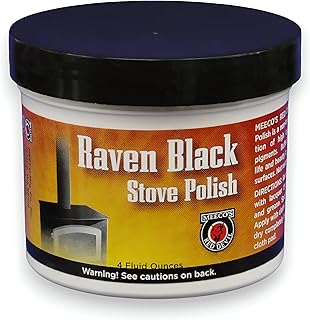
Best for: Buyers who prefer a brush-on paste and want a rich, polished black appearance on cast iron or black steel. The product’s water-based combination of wax and black pigment is designed to enhance the finish and shine of those surfaces.
The stated application is to brush the paste on evenly, allow it to dry, and buff lightly. Unlike spray paint, this product is presented as a polish paste. That application can suit a maintenance task where the objective is to improve the appearance of existing black metal, rather than apply a spray coating.
Why it was selected: Its listed materials and finish are directly relevant to stove polishing, and its directions provide a simple brush-and-buff process. The formula is described as non-toxic and free of harsh chemicals or solvents.
Limitation: The supplied details do not state a temperature rating or provide a heat-curing procedure. Do not treat the product as interchangeable with high-temperature paint; check its label for stove-use and curing directions.
Stainless Steel Cleaner and Polish

Best for: People cleaning stainless-steel kitchen surfaces, cookware, sinks, range hoods, or other listed hard surfaces—not people restoring a black cast-iron stove finish. The product is a cleaning paste intended to tackle grease, stains, burnt-on food, and rust on compatible surfaces.
The listing also names glass-ceramic cooktops, grills, and outdoor barbecue grates. It describes the formula as non-abrasive and intended to remove residue without scratching or dulling suitable surfaces. Two sponges are included according to the product name.
Why it was selected: It addresses a different but related buyer need: cleaning rather than coating. If the problem is grime on a stainless-steel appliance, cleaning paste may be more appropriate than stove polish or paint.
Limitation: It is not listed as stove polish for cast iron or as high-temperature paint. Check the surface-care instructions before using any cleaner on a stove, especially on delicate finishes or areas exposed to heat.
Stove Bright Satin Black Paint

Best for: Buyers who want to apply a new satin-black paint finish to a heat-exposed surface. This spray paint is specified for temperatures up to 1,200 degrees Fahrenheit and is described for wood, pellet, and gas stoves, fireplaces, grills, and other high-heat surfaces.
The listing says the paint dries quickly and retains its color under extreme heat. Its spray format makes it a different choice from a paste polish: paint is intended to coat the surface, while polish is generally chosen to refresh the look of compatible existing metal.
Why it was selected: It has a stated maximum temperature and a clear satin-black finish, making it the most direct option in this selection for buyers seeking high-temperature spray paint rather than polish.
Limitation: The supplied information does not provide complete surface-preparation, application, ventilation, or curing directions. Read the product label before application and follow its instructions closely.
Stove Polish vs. Paint: What Is the Difference?
Stove polish is a maintenance product used to refresh the appearance of compatible metal surfaces. The options here include pastes made with wax and black pigment, as well as a restorer applied with a sponge. Their purpose is to revive or enhance the existing finish, not to provide the same kind of new coating as spray paint.
High-temperature paint is intended to coat surfaces exposed to heat. The Stove Bright paint in this selection specifies resistance up to 1,200 degrees Fahrenheit and a satin-black finish. A paint project may be a better fit when the current coating is worn enough that a new surface layer is desired.
Neither category is automatically right for every stove. The stove material, existing finish, location of the surface, desired appearance, and product directions all matter. A cleaner is a separate category: it removes soil from suitable surfaces but should not be assumed to restore black metal or withstand stove temperatures.
Buying Guide
Should you choose polish or paint?
Choose polish when the aim is to refresh black cast iron or steel with a paste or rub-on treatment and the product label identifies the surface as suitable. Rutland and Meeco’s are paste options; Furniture Clinic is a high-heat restorer applied with a sponge. Choose paint when the aim is to apply a new coating, and select a product specifically labeled for the stove’s heat exposure.
What surface are you treating?
Match the product to the material. Rutland names cast iron and steel; Meeco’s names cast iron and black steel. The stainless-steel cleaner is for compatible stainless steel and other surfaces listed by its manufacturer. Do not infer that a product suitable for one material is suitable for every stove component. Check the label if you are unsure about a panel, trim piece, or existing coating.
How important is the finish?
Compare the finish descriptions before buying. Furniture Clinic describes a natural finish, Meeco’s describes a rich polished black finish, and Stove Bright specifies satin black. A polish may add shine, while paint can provide the stated satin finish. Consider whether you are trying to match an existing surface or change its appearance.
Do you need cleaning, restoration, or a new coating?
Identify the problem first. Grease and food residue call for a suitable cleaner. Faded black metal may call for a compatible polish or restorer. A surface that needs a fresh coating may call for high-temperature paint. Using a cleaner when the finish is worn will not necessarily restore its color, and using paint when only cleaning is needed may create unnecessary work.
What should you check before applying a product?
Read the full product label for approved surfaces, preparation, application, drying, and curing instructions. Work only when the stove is in the state required by the product directions. If instructions call for curing with heat, follow the stated procedure rather than substituting a drying-time estimate. Use appropriate ventilation and take precautions against contact with surrounding surfaces.
How should you compare product claims?
Use specific, stated details rather than assuming all stove products perform alike. Stove Bright gives a temperature limit of up to 1,200 degrees Fahrenheit. Furniture Clinic describes a 10-minute drying time and a heat-curing step. The supplied details for Rutland and Meeco’s do not give a temperature rating, so check their packaging for the intended use and heat-related directions.
Frequently Asked Questions
Is stove polish the same as stove paint?
No. Polish products such as wax-and-pigment pastes are intended to refresh the appearance of compatible metal. High-temperature paint is intended to form a coating. Check each product label for the materials and uses it supports.
Is stove polish or paint better for faded black metal?
Either may be suitable depending on the surface condition and desired finish. A polish or restorer is a better match for refreshing compatible existing metal; paint is a better match when a new coating is wanted. Follow the product’s material and heat instructions.
Can stainless-steel cleaner replace stove polish?
No. The stainless-steel cleaner listed here is designed to clean suitable hard surfaces. It is not presented as a black-metal stove polish or high-temperature paint.
Does high-temperature paint need to be cured?
Follow the paint manufacturer’s directions. The supplied Stove Bright details state its temperature resistance and drying characteristics but do not provide a complete curing procedure.
Can any polish be used on a cast-iron stove?
No. Choose a product that identifies cast iron as a suitable surface and check its instructions. Rutland and Meeco’s both list cast iron among their intended materials; that does not establish suitability for every stove finish or component.