The best thermostat-controlled baseboard option depends on whether you need a smart wall thermostat, a simple manual control, or a thermostat built into a compatible heater. The meross Matter model is best for smart-home users who want broad platform support; Mysa Lite is a strong choice for scheduling and app control; YeloDeer suits a 240V manual replacement; and Cadet offers separate built-in and wall-mounted controls for specific installation needs. Check voltage, heater compatibility, wiring, and load before choosing.
| Product | Best For | Control Type |
|---|---|---|
| meross Matter Smart Thermostat | Smart-home integration | Wi-Fi and schedule |
| Mysa Smart Thermostat LITE | App control and weekly scheduling | Wi-Fi and schedule |
| YeloDeer 240V Thermostat | Manual 240V temperature control | Wall-mounted dial |
| Cadet Built-in Thermostat | Compatible Cadet baseboard heaters | Heater-mounted dial |
| Cadet Line Voltage Thermostat | Wall-mounted line-voltage control | Wall-mounted dial |
meross Matter Smart Thermostat
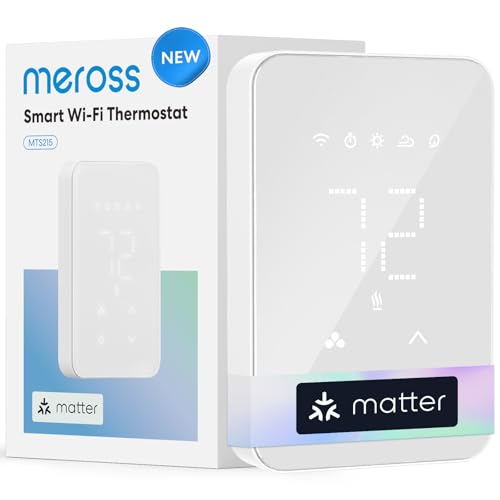
This meross thermostat is best for households that want to control compatible electric baseboard, convector, or fan-forced heating through a smart-home platform. It is designed for 120–240V high-line-voltage systems, rather than standard 24V HVAC equipment.
- Smart-home support: The listed features name Matter compatibility with Apple Home, Alexa, Google Home, and SmartThings.
- Remote and voice control: The Meross app provides Wi-Fi control, and compatible platforms can support voice commands.
- Scheduling: A visual 24/7 schedule lets users set heating periods for different times of day.
Choose this model if you want remote temperature adjustments and scheduled heating across a supported smart-home ecosystem. Its broad platform support is the reason it stands out among the listed options. Avoid it if your system is a 24V heat pump or conventional air-conditioning setup; the product listing says it is not compatible with those systems. Confirm the electrical system and installation requirements before buying.
Mysa Smart Thermostat LITE
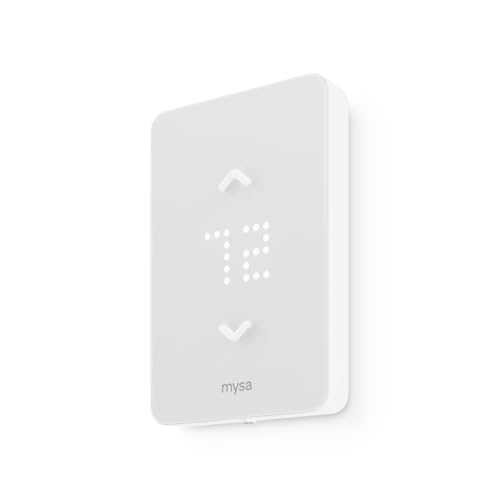
Mysa Smart Thermostat LITE is best for buyers who want app-based control and a seven-day schedule for supported electric heating. The listed compatible systems include 120V or 240V electric baseboard, fan-forced, wall, and convector heaters, as well as radiant ceiling heat.
- Weekly scheduling: Set heating times across a seven-day schedule.
- Connected controls: The listed features include Wi-Fi, remote control, voice control, and geofencing through the free Mysa app.
- Electrical limits: The listing specifies up to 1,900W at 120V or 3,800W at 240V.
Choose Mysa if regular scheduling and app access matter more than a basic manual dial. The listed single-pole design replaces many single-pole and double-pole thermostats, but that does not mean it fits every installation. Check heater load, wiring, and local requirements first. The product listing also states that the five-year limited warranty applies only to products sold by “Mysa – Smart Thermostats.”
YeloDeer 240V Manual Thermostat

The YeloDeer thermostat is best for someone seeking a straightforward manual dial for a 240V baseboard heating system. The product is described as a single-pole, four-wire wall-mounted controller with a temperature range from 40°F to 80°F.
- Manual adjustment: A large knob provides direct temperature adjustment without app-based controls.
- Listed system limit: The product description specifies 240V and a maximum 4,800W heating system.
- Temperature range: The stated range is 40°F to 80°F.
Choose this model if you want a dial control and your system matches its stated 240V requirements. The listing describes its electronic control as more accurate than traditional mechanical thermostats, but provides no specific accuracy figure. A key limitation is its voltage restriction: avoid it for 120V equipment or systems that require a different thermostat configuration. Confirm the wiring and load before installation.
Cadet Built-In Baseboard Thermostat

This Cadet thermostat is best for owners of compatible Cadet electric baseboard heaters who want the control attached directly to the heater. It replaces a detachable end plate and can mount on either end of the heater, according to the listing.
- Built-in location: The thermostat puts the control at the heater rather than at a separate wall location.
- Dial operation: The large, non-programmable knob covers a stated range of 40°F to 85°F.
- Positive off: The double-pole design includes an off position.
Choose this product when the heater is a compatible Cadet model and a heater-mounted dial is preferable to a wall thermostat. The listing says it fits Cadet baseboard heaters only, which is an important limitation. It is not a universal control for other brands or heater types. Check the heater’s model and installation instructions before selecting this accessory.
Cadet Double-Pole Line-Voltage Thermostat

This Cadet wall thermostat is best for buyers who need a manual, wall-mounted controller for compatible line-voltage electric heating. The listing specifies 120V, 208V, and 240V electric baseboard, fan-forced wall, and convector heaters.
- Double-pole switching: Its four-wire design switches both legs of the circuit.
- Stated capacity: The listing specifies up to 5,280W at 240V or 2,640W at 120V.
- Temperature control: The twist dial covers a stated range of 40°F to 80°F and has a positive off position.
Choose this model if you want a wall-mounted dial and the heater’s voltage and load fall within the listed specifications. It is a better fit for a manually controlled setup than for buyers seeking app access, remote control, or programmed schedules. The product listing describes color-coded wires, but electrical work still requires following the product instructions and applicable local codes.
Buying Guide: How To Choose A Baseboard Heater Thermostat
A thermostat-controlled baseboard heater cycles heating on and off to help maintain a selected room temperature. The right thermostat depends on the heater’s electrical system, the control location you want, and whether you need smart features. Begin with the heater label and existing thermostat documentation rather than choosing by appearance alone.
Is Your Heater Line Voltage Or 24V?
Electric baseboard heaters commonly use line-voltage controls, and the products in this guide specify different line-voltage ranges. The meross and Mysa models list 120V or 240V support, while the YeloDeer model is listed for 240V only. The Cadet wall thermostat lists 120V, 208V, and 240V support. These products are not interchangeable with every heating system.
Do not use a line-voltage baseboard thermostat for a 24V HVAC system unless the product specifically supports that system. The meross listing explicitly excludes 24V heat pumps and conventional air-conditioning systems. If you cannot identify the system voltage, ask a qualified electrician or heating professional before purchasing.
How Much Heater Load Must The Thermostat Handle?
Compare the thermostat’s rated capacity with the connected heater load. The listed figures differ: Mysa specifies up to 1,900W at 120V or 3,800W at 240V; YeloDeer specifies a maximum 4,800W at 240V; and the Cadet wall model specifies up to 2,640W at 120V or 5,280W at 240V. Do not assume that a thermostat is suitable merely because its voltage matches.
For a multi-heater circuit or an unclear installation, have the load and wiring checked before selecting or installing a replacement. Follow the manufacturer’s instructions and local electrical requirements.
Do You Want Smart Scheduling Or A Manual Dial?
Smart thermostats can suit households that want to change settings remotely or plan heating around daily routines. The meross model lists Matter support, app access, voice control, and a 24/7 schedule. Mysa lists Wi-Fi, app and voice control, geofencing, and seven-day scheduling. These functions are useful only if the system and network setup meet the product requirements.
A manual thermostat is a simpler choice when you prefer direct adjustment at the wall or heater. YeloDeer offers a manual dial for a specified 240V system. Cadet’s wall model uses a twist dial, while the Cadet built-in option places the dial on a compatible heater. Neither Cadet control is listed as programmable.
Should The Thermostat Mount On The Wall Or Heater?
A wall-mounted thermostat can put the control at a convenient location away from the heater. The Cadet line-voltage model is intended for wall installation, while the smart meross and Mysa models provide thermostat controls for compatible electric heating systems. Check the required mounting arrangement and wiring for each product.
A built-in control can avoid a separate wall location, but the Cadet built-in thermostat is specifically described as compatible with Cadet baseboard heaters only. Confirm the heater model before choosing it. Do not treat a built-in heater accessory as a universal replacement thermostat.
What Should You Check Before Installation?
- Confirm the heater type and supply voltage from its label or documentation.
- Check the thermostat’s pole configuration, wiring, and maximum load against the installation.
- Verify that the selected control is listed for the heater brand or type, especially for built-in models.
- Review local electrical codes and follow the manufacturer’s installation instructions.
- Use a qualified professional if the wiring or circuit rating is uncertain.
Frequently Asked Questions
Can I use a smart thermostat with an electric baseboard heater?
Yes, if the smart thermostat is designed for the heater’s line voltage, wiring, and electrical load. The meross and Mysa models in this guide list support for specified electric heating systems. Confirm the exact system requirements before buying.
Are baseboard heater thermostats interchangeable?
No. Thermostats can differ in voltage, pole configuration, load capacity, wiring, and mounting style. A control that matches one of these specifications may still be unsuitable for a particular heater.
What is the difference between a built-in and wall-mounted thermostat?
A built-in thermostat attaches to the heater, while a wall-mounted thermostat is installed separately. The Cadet built-in model is listed for Cadet baseboard heaters only; the Cadet line-voltage model is a separate wall-mounted control.
Can a 240V thermostat control a 120V baseboard heater?
Only if the thermostat is specifically rated for the heater’s voltage and installation. The YeloDeer listing states 240V only, so it should not be selected for a 120V heater. Other models list broader voltage support, but their other electrical limits still apply.
Do smart baseboard thermostats require a subscription?
The Mysa listing says scheduling, remote control, voice control, geofencing, and its monthly runtime email are included without a subscription. Check the current product and app information for any changes to service terms.