Looking for an efficient wall mounted panel heater with a thermostat? This guide highlights five reliable options that balance energy savings, quiet operation, and easy installation. Each pick targets common needs: small rooms or bathrooms, mid-size living areas, or homes prioritizing low-wattage operation or smart controls. The top picks cater to buyers seeking safe, space-saving heating with adjustable thermostats and straightforward mounting.
| Product | Power | Best For | Notes |
|---|---|---|---|
| EconoHome Convection Wall Heater 250W | 250 W | Small rooms and bathrooms up to about 100 sq ft | Triple insulation; hard-wired option; 3-year warranty |
| EconoHome Convection Wall Heater 400W | 400 W | Rooms up to 120 sq ft; energy savings | Heat reflector included; overheat protection |
| EconoHome Convection Wall Heater 600W | 600 W | Larger living spaces up to ~300 sq ft | Adjustable thermostat; heat reflector; triple reinforced design |
| Envi 220V Hardwired Panel Heater | Low wattage, varies by model | Energetic, quiet, kid/pet-safe spaces | Fan-less design; wall-sense safety sensor; 24/7 use |
| SENMIY Wall Convection Space Heater Panel | 400 W | Smart controlled heating; connected homes | WiFi/APP control; Alexa/Google Home compatible |
EconoHome 250W Convection Wall Heater
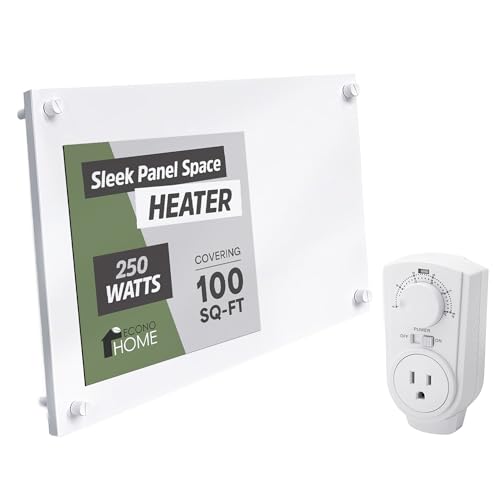
Best for small rooms or bathrooms, this 250-watt panel is designed to heat up to about 100 square feet. It uses convection currents to circulate warm air and features a triple reinforced, calcium silicate construction for safety. The unit is cETL approved and UL-2021 & RoHS compliant, with a temperature range from 41 to 86 °F. It may be hard wired and should be kept 12 inches from water sources. A 3-year manufacturer warranty offers long-term protection. Choose this if you want a slim, paintable heater with easy mounting for compact spaces.
Best for: small bedrooms, bathrooms, or problem zones where a discreet, wall-mounted heat source is ideal. Limitation: not designed as a primary heat source for large spaces.
EconoHome 400W Convection Wall Heater

Best for mid-sized rooms up to 120 square feet, this 400-watt panel provides a balance between power and efficiency. It includes a heat reflector, is cETL approved, and UL-2021 & RoHS compliant. The heater operates with convection currents and offers an overheat protection feature. Hard wired installation is supported, and a 3-year warranty is provided. Choose this when you need steady ambient warmth in living areas or home offices without excessive wattage.
Best for: living rooms and offices needing consistent warmth without high energy draw. Limitation: bulkier than 250W models, requires space planning for wall mounting.
EconoHome 400W Updated Model Convection Heater
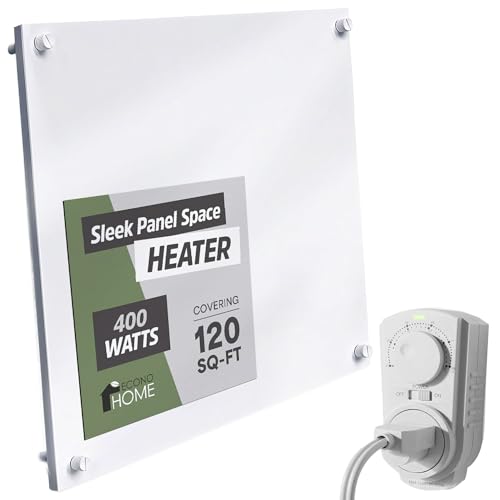
Best for rooms up to 120 square feet with a heat reflector included, this 400-watt model provides reliable convection heating with a solid safety profile. It features an updated crack-resistant version with triple insulation for electrical safety. The unit supports hard wiring and offers an overheat protection mechanism along with a 3-year warranty. Choose this if you want a durable, paintable panel that blends with any décor while delivering steady warmth.
Caution: ensure proper electrical installation and adherence to clearance guidelines as specified by the manufacturer.
Envi 220V Hardwired Panel Heater

Best for energy-conscious homes needing safe, long-running heating in bedrooms, bathrooms, or offices, this Envi panel is designed for 220V hardwired installation. It emphasizes a cool-to-the-touch surface (90°F) with a wall-sense safety sensor to cut power if removed. The fan-less design minimizes dust dispersion, and the unit supports 24/7 operation for constant comfort. Choose Envi when silent, safe, and efficient heating is a priority. Caution: some models may require professional electrical wiring.
SENMIY Wall Convection Space Heater Panel

Best for smart homes and tech-forward buyers, this 400-watt panel supports three control modes: remote, WiFi app, and touch panel. It integrates with Alexa and Google Home for voice control, and the included thermostat helps maintain precise temperatures with a reportedly low temperature error. It offers energy-saving benefits by optimizing operation through smart scheduling. Choose this if you want app-based, hands-free control. Limitation: dependent on reliable WiFi for full smart features.
Buying Guide
What matters most when choosing a wall mounted heater with a thermostat?
Power level, room size compatibility, and installation type (hardwired vs. plug-in) determine how well a panel heater will perform in a given space. Look for models that provide a clear thermostat range, energy-saving features, and safety certifications. Consider rooms’ moisture exposure and mounting height to ensure safe clearance from water sources and easy access to controls.
Which features improve energy efficiency?
- Smart controls or programmable thermostats that align heating with occupancy patterns.
- Heat reflectors and well-insulated casings to minimize heat losses.
- Overheat protection and tip-over safeguards for enhanced safety.
Hardwired vs. plug-in installation
Hardwired panels often suit permanent installations and may offer more stable electrical connections. Plug-in variants are easier to install in spaces without wired access but may require a dedicated outlet and careful placement to avoid moisture exposure.
Safety considerations
- Maintain the recommended distance from water and avoid placing heaters where they may be knocked or bumped.
- Always follow installation hardware guidelines and local electrical codes.
- Choose units with certified safety marks (UL, ETL, cETL) and protective features like cool-to-the-touch surfaces and safety sensors.
FAQ
- Q: Do these panels heat a whole room or only a zone?
- Q: Are they safe for bathrooms or damp environments?
- Q: Can I install these myself?
- Q: How do smart controls help save energy?
- Q: What maintenance is required?
- Q: Is a higher wattage always better?
A: They are designed to heat specific zones or smaller rooms efficiently, not as a replacement for central heating in large spaces.
A: Some models are rated for splash resistance or indoor use with proper installation; always check IP ratings and manufacturer guidance.
A: Many plug-in models are DIY-friendly, while hardwired units may require a licensed electrician, depending on local codes.
A: Smart controls optimize heating schedules and remote adjustments, reducing energy use when spaces are unoccupied.
A: Wipe dust from panels regularly and ensure vents remain unobstructed. No routine parts typically require replacement.
A: Not necessarily. Higher wattage suits larger rooms; for small spaces, a lower wattage with a thermostat is more energy-efficient and safer.