The best solar heater for a barn depends on the size of the space and whether you need supplemental warmth or whole-building heat. The products below are small solar-powered heaters designed mainly for coops, pet houses, and other compact areas—not full-size barn heating. Helilyco is best for a small enclosed shelter with direct sun, while the Generic kit is worth considering if you need a battery compartment and USB outputs. For larger barns, plan on a purpose-built heating system and treat these units only as localized supplemental heat.
| Product | Best For | Key Consideration |
|---|---|---|
| Helilyco 30W Solar Pet House Heater | Small enclosures with direct sunlight | Warm-air coverage is listed for spaces up to about 10 square feet |
| Generic Solar Powered Heater Kit | Small shelters and USB-device charging | Three 18650 batteries are required and not included |
| saowiu Portable Solar Heater Kit | Compact, flexible installations | Check sunlight and power requirements for your setup |
| LiebeWH 30W Portable Solar Heater | Simple temporary installations | Listed features do not specify a heating area |
| Hyuduo 30W Solar Panel Heater | Small remote spaces without an outlet | Listed features do not provide a coverage measurement |
Helilyco 30W Solar Pet House Heater

Best for: A small, enclosed animal shelter or other compact space that receives direct sunlight. This 30W unit is the clearest choice in this group for buyers who want a stated size guideline: its warm-air mode is described for areas up to about 10 square feet. It also has a natural-air mode for ventilation when heating is not needed.
The listed features describe solar-powered operation without an external electricity connection, an included cable, and a PET-laminated monocrystalline panel. An automatic overheat-protection feature is also listed. The product is described for use in pet houses, backyard chicken coops, greenhouses, sheds, and similar small settings.
Why it was selected: Its stated 30W rating, dual operating modes, and approximate heating-area guidance make it easier to assess for a small shelter than products with no coverage details. It may suit a small animal area within a barn, but the listed coverage should not be treated as a whole-barn heating estimate.
Limitation: Direct sun is needed for solar operation, and the stated warm-air area is small. Avoid choosing it as the sole heat source for a large or poorly insulated barn.
Generic Solar Powered Heater Kit
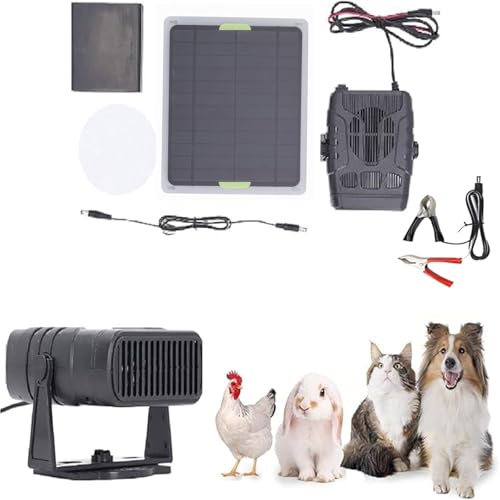
Best for: Buyers looking for a compact solar-heater kit with a separate battery compartment and USB outputs. The listed kit includes a solar panel, battery compartment, heater, and connecting cable. The battery compartment has dual USB outputs for compatible 5V electronic devices, giving the setup a function beyond localized heating.
The product description identifies chicken coops and dog houses as possible uses and describes the panel as monocrystalline silicon PET for outdoor use. It also mentions quick de-icing applications. These details make it a possible supplemental option for a small shelter or task, rather than an established solution for heating a barn interior.
Why it was selected: The included components and battery compartment are specified, which helps buyers compare it with simpler panel-and-heater designs. Choose this if you value the listed USB outputs and can provide the required batteries.
Limitation: The listing says the battery is not included and requires three 18650 batteries. Confirm the battery requirements and installation instructions before use. The features do not state a heating-area rating or guarantee operation without sufficient sunlight or stored power.
saowiu Portable Solar Heater Kit

Best for: Buyers who need a portable heater for a compact shelter and want a kit described as combining a solar panel with a fan heater. The manufacturer lists chicken coops, pet shelters, sheds, and other suitable small spaces as possible applications. The heating unit is listed at approximately 4.92 by 4.72 by 1.50 inches.
The battery box has dual USB outputs for compatible 5V electronics. The product description emphasizes flexible placement, but also makes use conditional on sunlight and the power requirements of the setup. This is important when considering a shaded barn, a north-facing wall, or an installation where the panel cannot be placed in direct sun.
Why it was selected: The portable format and compact unit dimensions may be useful where a large fixed heater is impractical. It is better suited to localized warmth than to heating an entire barn. Compare its kit arrangement and placement needs with the Helilyco model if the shelter is very small.
Limitation: The listed features do not provide a coverage area, battery-included status, or a heating output rating. Confirm those details in the product instructions before relying on it for animal care.
LiebeWH 30W Portable Solar Heater
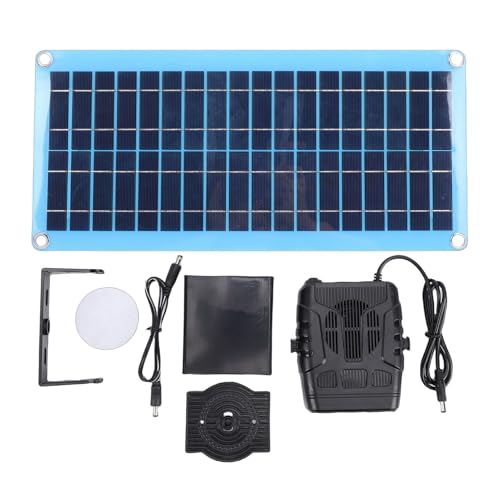
Best for: Buyers who prioritize a simple, portable installation for a small chicken coop, dog house, or greenhouse. The listed features describe both USB and DC ports, a compact design, and a 100-centimeter cable. The manufacturer says the setup requires no wiring or external power source, which may suit temporary placements away from a convenient outlet.
The product is presented as a multi-use solar heater for small spaces and is described as a way to reduce reliance on conventional energy. Its cable length and port options are useful comparison points when planning where the heater and panel will sit. As with other solar products, actual operation depends on the available sunlight and how the unit is installed.
Why it was selected: It is explicitly listed as a 30W solar heater and includes a cable length and port information. Choose it if straightforward placement and portability matter more than a published coverage figure.
Limitation: The supplied features do not state a heating-area measurement, battery arrangement, or temperature-control details. Do not assume it can maintain a target temperature in a barn or larger animal enclosure.
Hyuduo 30W Solar Panel Heater

Best for: Buyers seeking a portable solar option for a small remote area without an external power connection. The listed features describe use in pet houses, greenhouses, cars, and other small spaces. USB and DC ports are included, and the product description mentions a 100-centimeter cable and a compact design for installation.
The manufacturer presents the heater as a way to provide localized warmth while reducing dependence on traditional power. The lightweight construction is described as suitable for moving between locations. It may be considered for a small shelter inside or near a barn when the panel can receive adequate sunlight and the installation meets the product instructions.
Why it was selected: Its 30W rating, stated cable length, and USB/DC ports give buyers specific configuration details to compare. It is a plausible choice for a small outbuilding or shelter where portability is important.
Limitation: No heating-area measurement or temperature-control details are provided in the listed features. The product should not be treated as a whole-barn heater based on its 30W rating alone.
Buying Guide: How To Choose A Solar Heater For A Barn
Can a small solar heater warm an entire barn?
These listed solar products are described mainly for small spaces such as chicken coops, pet houses, and greenhouses. Their features do not establish that they can heat a full-size barn. Barns vary widely in floor area, ceiling height, insulation, air leakage, and ventilation, all of which affect heating needs. Treat a small solar unit as localized or supplemental heat unless its manufacturer provides coverage information that matches your space.
For a larger barn, first determine whether the goal is to warm the whole building, one animal enclosure, a water station, or a work area. A small heater may help with a limited target, but it should not be assumed to maintain safe temperatures throughout the building.
How much space does the heater need to cover?
Look for a clearly stated heating area and compare it with the actual enclosed space you plan to warm. Among these options, the Helilyco listing gives an approximate warm-air coverage of up to 10 square feet. The other listed solar products do not provide a comparable area measurement in the supplied features. If the intended space is larger, ask the seller or consult the product instructions rather than extrapolating from wattage.
Also account for drafts and open doors. A small, sheltered animal house can retain warmth more effectively than an open barn bay, but results still depend on ambient conditions and sunlight.
Will the panel receive enough sunlight?
Solar heaters depend on solar input. Before buying, identify a panel location with direct sun and check whether the cable can reach the intended heater position. Barn roofs, overhangs, trees, and nearby buildings can shade a panel. A product that works in direct sun may provide less heat when the panel is shaded or when daylight is limited.
Check whether the particular model includes a battery, requires separate batteries, or has no stated storage arrangement. Do not assume that a solar panel will provide heat after dark unless the product documentation confirms how stored power works.
What safety and installation details should you check?
Review the product instructions for mounting, clearances, weather exposure, and placement around animals, bedding, feed, and dust. Some listings mention overheat protection, but that feature does not replace safe installation or supervision. Keep heaters positioned so animals cannot chew cables or make direct contact unless the product design and instructions specifically allow the placement.
Consider ventilation as well as warmth. Avoid sealing an animal space so tightly that air quality suffers. For a barn with livestock, use heating equipment appropriate to the building and follow relevant fire-safety guidance.
Should you choose a solar heater or an electric barn heater?
A solar unit can be useful where sunlight is available and the target area is small. An outlet-powered heater may be more suitable when heat must be available consistently, but the right system depends on the barn, electrical supply, and local safety requirements. The product list also includes heaters that are not solar-powered; they should not be compared as solar options. Choose based on the actual power source you need, the intended coverage, and the manufacturer’s documented use.
Frequently Asked Questions
Are these solar heaters suitable for a whole barn?
The listed features do not show that these compact units can heat an entire barn. They are mainly described for small shelters and enclosed spaces. Use them only for an appropriately sized target area unless the manufacturer confirms broader coverage.
Which listed heater provides a stated coverage area?
The Helilyco 30W heater is described for warm-air use in spaces up to about 10 square feet. The other supplied product features do not give a comparable coverage measurement.
Do all of these heaters include batteries?
No. The Generic kit specifically says its battery is not included and requires three 18650 batteries. Battery details for the other products should be checked in their instructions or product information.
Can a solar heater work inside a shaded barn?
The heater needs solar input at its panel, so a shaded installation may limit operation. Consider whether the panel can be placed in direct sunlight and connected to the heater using the included or specified cable.
Can these units keep livestock warm overnight?
The supplied features do not confirm overnight heating performance for every model. Check whether the specific unit stores energy, what batteries it requires, and how long it can operate without sunlight before relying on it overnight.
What should I check before using a heater near animals?
Read the manufacturer’s instructions for placement, mounting, cable routing, and clearances. Keep the unit away from combustible materials and prevent animals from contacting or damaging the heater and cables. Use only equipment suited to the enclosure and its conditions.