If you’re shopping for an electric floor heating thermostat, you want reliability, precise temperature control, and easy installation. This guide highlights five top options, each suited to different setups—from small bathroom mats to large radiant floor systems. Whether you’re a DIY homeowner, a contractor, or a property manager, these thermostats help save energy while keeping floors warm. Below is a quick summary of the best picks, followed by in-depth product details and practical buying guidance.
| Product | Best For |
|---|---|
| OJ Microline UDG4 | Dual-voltage radiant systems with floor sensor |
| LuxHeat 35 sq ft Mat Kit | Small bathroom or tiled areas with self-adhesive mat |
| LuxHeat 130 sq ft System | Medium to large rooms with long mat runs |
| LuxHeat 70 sq ft Mat Kit | Medium spaces where a flexible mat fit is needed |
| 1 PC Dual Voltage WiFi Thermostat | Smart home integration and remote control |
OJ Microline UDG4 Touchscreen Programmable Thermostat
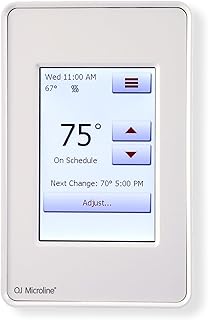
Best For: Homeowners installing a dual-voltage radiant floor system. Why selected: Combines touchscreen control with dual voltage, floor sensor, and a 3-year warranty for reliable floor heating management. Caution: Setup may require compatible wiring and sensor placement.
LuxHeat 35 Sq Ft Mat Thermostat Kit

Best For: Small bathrooms or tight tile areas. Why selected: Simple 35 sq ft mat with a dedicated thermostat, good for budget-friendly, quick installations. Caution: Limited coverage may require multiple kits for larger spaces.
LuxHeat Laminate Microline Thermostat

Best For: Larger radiant installations spanning multiple rooms. Why selected: Larger mat coverage with a responsive thermostat and floor sensor supports even heat distribution. Caution: Wiring and mat layout complexity may require planning.
LuxHeat 70 Sq Ft Mat Kit

Best For: Medium spaces requiring flexible mat placement. Why selected: A balance of coverage and ease of installation with a reliable thermostat; good for bathroom-to-kitchen transitions. Caution: Mat length and layout may affect heat uniformity in irregular rooms.
YeloDeer 1 PC Dual Voltage WiFi Thermostat

Best For: Smart-home enthusiasts needing remote control and scheduling. Why selected: Combines remote access, USB programmable features, and dual voltage support for flexible use. Caution: WiFi-dependent features require stable network for full functionality.
Buying Guide
Key considerations when choosing an electric floor heating thermostat include system compatibility, coverage area, sensor options, and ease of installation. The right thermostat should match your mat size or radiant kit, provide accurate floor or ambient sensing, and offer reliable wiring options for your voltage needs.
- Coverage and compatibility: Match the thermostat’s rated area to your mat kit size. For large spaces, choose models designed for extended mat runs or higher square footage.
- Sensors and sensing method: A floor sensor improves accuracy by measuring actual floor temperature. Some models also offer ambient sensing for room-level comfort.
- Voltage and wiring: Dual-voltage or 120/240V capable thermostats add versatility. Ensure your wiring supports the chosen voltage and sensor connections.
- Programming and control: Touchscreen interfaces, 7-day programming, or WiFi/app control provide convenience and potential energy savings.
- Safety and certifications: Look for built-in safeguards like GFCI (ground fault circuit interrupter) protection where required by code or installation location.
Frequently Asked Questions
- What is a floor sensor and why is it important? A floor sensor measures actual floor temperature to prevent overheating and provides consistent comfort.
- Do I need a separate thermostat for every room? Not necessarily. Many systems are designed to control multiple mats or zones with a single thermostat, depending on the model and wiring.
- Is WiFi control worth it for a floor heating system? WiFi-enabled thermostats allow remote scheduling and monitoring, which can save energy, especially in larger homes.
- What should I consider for bathroom installations? Choose models with appropriate moisture protection, GFCI protection if required, and compatibility with bathroom mat kits.
- How do I choose between mat-based and full radiant floor systems? Mat kits suit smaller areas and DIY installs, while full radiant systems are better for large spaces and uniform heat distribution.