The best survival wood burning stove depends on whether you need a lightweight backpacking cooker, a sturdier camp stove, or a larger tent stove. The Kuvik is best for ultralight trips, while the Ohuhu and REDCAMP are portable options for cooking with gathered fuel. The cast-iron Lineslife model favors a heavier-duty design, and the Upgraded Wood Stove is intended for tent-camping heat. Compare weight, construction, fuel options, and intended use before choosing.
| Product | Best for | Key feature |
|---|---|---|
| Kuvik Titanium Wood Stove | Ultralight backpacking | 6.8-ounce titanium body |
| Lineslife Cast Iron Stove | Durable campsite cooking | Adjustable pot holders and legs |
| REDCAMP Folding Camp Stove | Simple cooking with gathered fuel | Stainless steel grid and stable cuboid design |
| Upgraded Wood Stove | Tent-camping heat | Large firebox and thick steel construction |
| Ohuhu Camp Stove | Portable, flexible-fuel cooking | Works with wood, gas tanks, and fuel tablets |
Kuvik Titanium Wood Stove

The Kuvik Titanium Wood Stove is best for backpackers who prioritize low packed weight and a compact setup. It weighs 6.8 ounces and measures 6.25 by 5 by 5 inches when assembled. Its components collapse to 0.2 inches thick, and an included carrying case helps keep soot off other gear.
The Grade-1 titanium construction is described as corrosion-resistant, and the stove assembles by inserting tabs into slots. It uses natural materials such as dry twigs, sticks, grass, roots, or bark, rather than requiring a fuel canister. An opening provides access for adding fuel, while a rack supports different pot and pan sizes.
Why it was selected: Its listed weight and thin packed profile make it a clear option for travelers who want to minimize carried stove weight. Limitation: Its small cooking platform and reliance on suitable natural fuel may be less convenient when dry material is unavailable or a larger cooking surface is needed.
Lineslife Cast Iron Camp Stove
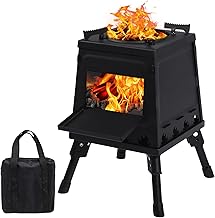
The Lineslife Cast Iron Camp Stove is best for campers who prefer a substantial stove body and adjustable cookware supports over a minimal pack weight. It is made from cast iron, which the product description characterizes as durable and resistant to rust and corrosion. The pot holders adjust to fit different cookware, and the legs rotate and fold.
Sixteen air vents are designed to support airflow. The product information says its large combustion chamber can burn for about 40 to 60 minutes when filled with firewood at one time. That duration is a listed estimate, not a guarantee; wood type, size, moisture, and conditions can affect burn time.
Why it was selected: Its adjustable supports and folding legs offer a different setup from ultralight flat-pack stoves, making it worth comparing for campsite cooking. Limitation: Cast iron is a heavier material than titanium or stainless steel, so this is a less compelling choice for buyers who prioritize carrying weight.
REDCAMP Folding Camp Stove

The REDCAMP Folding Camp Stove is best for buyers seeking a stainless steel design with a cooking grid and support for gathered natural fuel. Its cuboid shape is described as providing a stable platform for cookware, and the stainless steel grid serves as a backing plate. The product listing says the stove accepts leaves and twigs.
Before first use, remove any residual protective film, as directed in the product information. Check that the stove is assembled securely and placed on a stable, noncombustible surface before lighting it. Its simple fuel approach can be useful when users have appropriate dry material available, but wood-burning performance depends on fuel and conditions.
Why it was selected: The stainless steel construction, grid, and stated support for natural fuels make it a practical comparison for outdoor cooking. Limitation: The listing does not provide a weight or packed dimensions, so backpackers should verify those details before choosing it for a weight-sensitive trip.
Upgraded Tent Wood Stove

The Upgraded Tent Wood Stove is best for tent campers looking for a larger wood-burning appliance for outdoor heating and camping use, rather than a small backpacking cooker. Its listed features include heavy-duty steel with a stated thickness of 1.6 mm, a large-capacity firebox, and a design described as airtight and smokeproof.
The product description says the firebox holds more wood for longer burn time and that the steel is intended to resist high heat without warping. These are manufacturer-listed characteristics; the information provided does not specify dimensions, weight, included accessories, or a tested burn duration.
Why it was selected: Its larger firebox and tent-stove orientation set it apart from compact stoves intended mainly to support a pot. Limitation: This is not the natural choice for backpacking, and the supplied details do not establish what tent configuration or venting components are included. Use any stove inside or near a shelter only when the equipment and setup are specifically suitable, following the manufacturer’s instructions and local fire rules.
Ohuhu Portable Camp Stove

The Ohuhu Camp Stove is best for users who want a lightweight portable stove with more than one fuel option. The product listing gives its weight as 0.98 pounds and says it assembles in seconds without tools. Its stainless steel construction is paired with a detachable stainless steel plate and a grill grid.
Unlike a wood-only design, the listing says this stove can use wood, a traditional gas tank, or solid fuel tablets. It is described for cooking, boiling, camping, hiking, fishing, picnics, and emergency use. Follow the product instructions when selecting fuel and setting up the stove; do not assume every fuel type is appropriate for every cooking situation.
Why it was selected: Its stated support for wood and other fuel types makes it a flexible option when gathered fuel may not be available. Limitation: At 0.98 pounds, it weighs more than the Kuvik titanium model, so ultralight backpackers may prefer the lighter listed option.
Buying Guide: How To Choose A Survival Wood Burning Stove
A survival wood stove can help prepare food or boil water outdoors, but the right model depends on how you plan to carry it, what fuel you can access, and where you will use it. Compare the stove’s intended purpose with your trip rather than treating all wood-burning models as interchangeable. A compact pot-support stove is different from a larger tent stove designed for a separate heating setup.
How much weight and packed space can you carry?
For backpacking, compare both the listed weight and how the stove packs down. The Kuvik is the lightest option in this group at 6.8 ounces, and its components collapse to 0.2 inches thick. The Ohuhu is listed at 0.98 pounds. The supplied information does not give a weight for every model, so check the full product details before buying if pack weight is a deciding factor.
Car camping and stationary campsite use can make weight less important. In that case, buyers may give more attention to the cooking platform, firebox capacity, adjustable supports, or construction. A heavier stove can be inconvenient on foot even when its features suit a fixed campsite.
Will you rely on gathered wood or bring another fuel?
Wood-burning stoves use available natural material, but access to fuel is not guaranteed. Wet conditions, local restrictions, limited deadwood, or a campsite with no suitable fuel can affect whether wood is practical. The Kuvik listing names twigs, sticks, grass, roots, and bark; REDCAMP lists leaves and twigs. The Ohuhu listing also specifies gas tanks and solid fuel tablets as options.
Do not assume fuels are interchangeable among models. Check the instructions for the exact stove and fuel type. In an emergency kit, consider how you will cook if gathering wood is not allowed or the available material is damp. A stove’s fuel flexibility can matter as much as its size.
What kind of cookware and cooking support do you need?
Look for a stable surface that suits the pots or pans you intend to use. The Kuvik has a rack described as accommodating various pot and pan sizes. Lineslife offers adjustable pot holders, while REDCAMP describes its cuboid shape and grid as providing a stable cooking platform. The Ohuhu includes a grill grid and detachable plate.
Stability depends on the stove being assembled correctly and placed on firm, level ground. Consider the size and shape of your usual cookware, and avoid assuming that a listed “stable” design will be suitable on uneven or soft surfaces. The supplied product information does not give precise cookware limits for every model.
Which construction best fits your use?
Titanium, stainless steel, and cast iron represent different trade-offs in this selection. The Kuvik’s titanium design is intended to combine low weight with strength. REDCAMP and Ohuhu use stainless steel, while Lineslife uses cast iron. The tent stove is described as heavy-duty steel with a 1.6 mm thickness.
Material alone does not establish total durability or suitability for every condition. Consider packed weight, how the stove assembles, how often you will transport it, and whether the product details match your intended use. For frequent carrying, a compact design may matter more than a substantial body; for stationary use, a larger firebox or adjustable support may be more useful.
Are you choosing a cooking stove or a tent stove?
Most models here are compact outdoor cooking stoves that support cookware above a fire. The Upgraded Tent Wood Stove differs because it is described as a larger stove for tent camping and outdoor use. Its firebox is designed to hold more wood, but the supplied listing details do not establish the complete setup or the shelter requirements.
Do not place a wood-burning stove in a tent or other enclosed space unless the stove and the installation are specifically designed for that use and the manufacturer’s instructions permit it. Burning fuel can create fire and carbon monoxide hazards. Use appropriate ventilation, follow fire restrictions, and keep combustibles away from hot surfaces.
What should you check before an emergency?
Assemble and inspect the stove before relying on it. Confirm that all parts are present, understand how it is set up, and learn how to add fuel safely. Check local fire rules and practice using the stove outdoors in a controlled setting. Keep water or another suitable way to extinguish a fire available, and never leave a fire unattended.
For emergency cooking, plan for more than the stove itself. You may need suitable cookware, a way to start a fire, dry fuel, and a safe place to operate the appliance. A wood stove does not guarantee fuel availability or safe operation in every weather condition.
Frequently Asked Questions
What is the lightest stove in this selection?
The Kuvik Titanium Wood Stove is listed at 6.8 ounces. Its components also collapse to 0.2 inches thick, making it the clearest weight-focused choice among the products with stated weights.
Which option supports more than wood fuel?
The Ohuhu Camp Stove is listed as compatible with wood, a traditional gas tank, and solid fuel tablets. Check its instructions for the proper use of each fuel type.
Can a wood-burning stove be used inside a tent?
Only use a stove inside a shelter when the specific stove and setup are designed for that use and the manufacturer’s instructions allow it. Follow ventilation and fire-safety requirements; burning fuel can create a carbon monoxide hazard.
Which stove is designed for tent camping and heat?
The Upgraded Tent Wood Stove is described as a tent-camping wood stove with a large firebox and thick steel construction. Its listed information does not specify all included components or suitable tent configurations.
Do these stoves require manufactured fuel?
Several models are designed to burn natural materials such as twigs or leaves. Availability of dry fuel depends on location and conditions, and local rules may restrict collecting or burning wood. The Ohuhu listing also describes other fuel options.
What should I prioritize for backpacking?
Compare packed weight, folded size, setup, and fuel availability. The Kuvik is the listed ultralight option, while the Ohuhu offers multiple stated fuel types at a higher listed weight. Check full product specifications before making a final choice.