If you’re searching for a safe, portable propane heater for indoor spaces, you want models that balance warmth, safety features, and fuel efficiency. This guide highlights five top options and explains who each is best for. Whether you need a compact buddy heater for a workshop, a larger unit for a garage, or a versatile heater for camping with indoor use, these picks cover common needs.
Buyer snapshot: the table below compares the five featured units by heat output, best-use room size, and notable safety features to help you decide quickly.
| Product | BTU Range | Best For | |
|---|---|---|---|
| Mr. Heater 9,000 BTU Portable Buddy | 4,000–9,000 | Medium rooms up to 225 sq ft | Indoor/outdoor approved; tip-over safety |
| Mr. Heater 3,800 BTU Little Buddy | 3,800 | Small spaces up to 95 sq ft | Propane-only; compact & lightweight |
| ROVSUN 18,000 BTU Portable Heater | 6,000/12,000/18,000 | Medium-to-large spaces up to 450 sq ft | Tip-over protection; no electricity required |
| Mr. Heater Buddy 4,000–9,000 BTU (Green) | 4,000–9,000 | Similar mid-size rooms; fits in tight spaces | Indoor-safe; compact |
| CAMPLUX 12,000 BTU Portable Heater | 12,000 | Larger tents, cabins, or garages | ODS and tip-over protection; LED handle light |
Mr. Heater 9,000 BTU Portable Buddy Radiant Propane Heater

The 9,000 BTU Buddy offers versatile radiant heat suitable for spaces up to about 225 square feet. Designed for indoor and outdoor use, it is a solid option for a medium-sized workshop, garage, or a well-ventilated living area. Best for buyers who want a mid-range heater that can quickly warm up a defined room without complex setup. A practical caution: ensure adequate ventilation when using propane indoors and follow all safety guidelines to avoid risks related to combustion byproducts.
Mr. Heater 3,800 BTU Little Buddy Portable Radiant Propane Heater
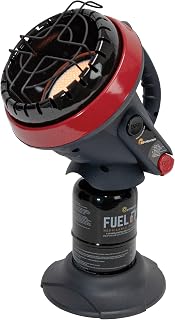
The Little Buddy delivers 3,800 BTU per hour and heats spaces up to about 95 square feet. It’s ideal for small rooms, tents, or cabins where compact size matters. Use this when you need a portable heater that is easy to store and transport. Caution: it’s propane-specific and best used in small, well-ventilated areas to minimize any safety concerns with indoor use.
ROVSUN 18,000 BTU Portable Propane Heater

This unit provides the highest heat output among the selections, with three BTU settings—6,000, 12,000, and 18,000—making it suitable for larger rooms up to 450 square feet. It features a battery-free piezo ignition and is designed for locations without a power supply. Best for users who need rapid, robust warmth and extended runtimes on a standard 20-lb tank. Limitation: higher BTU outputs mean faster fuel consumption at higher settings, so plan refueling accordingly.
Mr. Heater Buddy 4,000–9,000 BTU Indoor-Safe (Green)

The Green version mirrors the standard Buddy with a 4,000–9,000 BTU range and indoor/outdoor compatibility. It heats up to about 225 square feet, making it a flexible option for mixed spaces like living areas, sunrooms, or garages. Choose this if you want a familiar Buddy design in a distinct color. Caution: ensure proper clearance around the heater and use only in well-ventilated areas.
CAMPLUX Portable Propane Heater Outdoor and Indoor

The CAMPLUX unit delivers 12,000 BTU, suitable for larger spaces like cabins or garages. It supports both 1 lb and 20 lb propane cylinders and includes safety features such as ODS and tip-over protection. It also features an LED light integrated into the handle for low-light setups. Best for those needing substantial heat in semi-enclosed spaces. Limitation: propane tank availability and hose compatibility should be checked for your setup.
Buying Guide
What size room will you heat?
Match BTU output to room size. Smaller rooms benefit from 3,800–4,000 BTU units, while larger spaces (up to about 450 sq ft) require 12,000–18,000 BTU models. For mixed-use spaces, mid-range options offer flexibility without excessive fuel use.
Indoor safety and ventilation
Look for automatic shut-off features in case of tip-overs or low oxygen, and ensure the heater is labeled for indoor use. Always operate propane heaters in well-ventilated areas to avoid buildup of combustion byproducts.
Fuel choices and maintenance
Most portable propane heaters use standard propane cylinders. Check compatibility: some units work with both 1 lb and 20 lb tanks. Consider how easy it is to refuel in your intended space and whether you’ll have access to a standard cylinder.
Portability and setup
For frequent moves between spaces, prioritize lighter, compact models with ergonomic handles and simple ignition. Piezo ignition that does not require electrical power is advantageous in remote locations.
Safety features you should not overlook
- Tip-over switch to automatically shut off the heater.
- Low-oxygen shutoff to prevent unsafe indoor use.
- Stable base and cool-touch surfaces when possible.
- Clearance recommendations from the manufacturer and a fire-safe area free of flammable materials.
Usage scenarios to consider
- Garages and workshops needing fast, localized warmth.
- Cabins, tents, or garages without reliable electricity for large units.
- Dining or living areas where quick, temporary warmth is beneficial.
FAQ
- Can I use a propane heater indoors safely?
- Do these heaters require electricity?
- What safety features should I prioritize?
- How long can I run a 20-lb propane tank?
- Is it better to choose a higher BTU or a smaller unit for a medium room?
- What are common safety caveats with portable propane heaters?
Yes, if the unit is designed for indoor use and ventilated properly. Always follow manufacturer instructions and keep combustibles away.
Many use no electricity beyond ignition or control panels; some may require a power source for certain features. Check the model specifics.
Look for low-oxygen shutoff, tip-over protection, and a stable base. Indoor-use labeling is essential.
Runtime varies with BTU output. Higher BTUs drain fuel faster; refer to the unit’s efficiency notes and plan refueling accordingly.
For a medium room, a mid-range BTU unit (around 6,000–9,000) often provides sufficient warmth with reasonable fuel use, while leaving headroom for colder days.
Avoid enclosed spaces without ventilation; never sleep with a heater running in an enclosed room; ensure the outlet and hose connections are secure to prevent leaks.