Need reliable on‑demand hot water with flexible installation and space savings? Dual tankless electric and gas options can deliver continuous hot water for households with multiple fixtures while reducing standby heat loss. This guide highlights five well‑suited choices for American homes and campsites, from compact under‑sink models to high‑capacity RV units. Each option targets a specific buyer profile—compact apartments, off‑grid travel, high‑demand showers, smart‑home integration, and high‑volume households—so you can pick the best fit for your needs. The following summary table helps you compare at a glance before diving into detailed product sections.
| Product | Type | Best For | Key Benefit |
|---|---|---|---|
| Rheem 8kW Multi Fixture Tankless Electric Water Heater | Electric, 8kW | Compact spaces, multi‑fixture use | Up to 1.95 GPM, space‑saving design |
| RV Tankless Water Heater 12V, 65,000 BTU Propane | Propane, RV | Off‑grid camping, mobile living | Instant heat, high altitude compatible |
| 110V Tankless Water Heater Electric, 3000W | Electric, 110V | Under‑sink or point‑of‑use | Compact, precise temp control |
| Westinghouse 11kW Tankless Water Heater Electric 240V | Electrical, 11kW | Single point or small home use | Smart wifi integration, compact |
| ThermoMate 27kW Tankless Electric, 240V | Electric, 27kW | High demand, indoor showers | High flow up to 6.4 GPM, energy saving |
Rheem 8kW Multi Fixture Tankless Electric Water Heater

The Rheem 8kW tankless electric model delivers hot water on demand for homes sized to support multiple fixtures. It emphasizes proper sizing and professional installation for reliable performance. This unit is best for small to mid‑sized homes or apartment setups where electric heating is available and space is at a premium. It provides up to 1.95 GPM when correctly sized, making it a practical choice for simultaneous use at a modest flow rate. A clear caution is ensuring electrical requirements match your home’s panel capacity before installation.
Who it’s best for: Apartment dwellers or small homes needing space‑efficient, electric on‑demand hot water for several fixtures.
Why selected: It pairs compact installation with a predictable on‑demand flow for everyday use.
Limitations: Limited GPM at higher hot water outflows; requires proper electrical sizing and professional wiring.
RV Tankless Water Heater 12V, 65,000 BTU Propane

This propane‑powered RV unit is designed for off‑grid or mobile living. It delivers up to 3.9 GPM and heats water rapidly, with precise ±1°F temperature control for steady showers. It features a heavy‑duty copper heat exchanger and is built to withstand harsh conditions, including higher altitudes up to 9840 feet, freezing temperatures, and variable gas or water pressure. It automatically ignites and shuts off with faucet use, conserving propane. A limitation is the reliance on propane supply and ventilation requirements in smaller spaces.
Who it’s best for: Full‑time or occasional campers needing reliable hot water without shore power and with altitude adaptability.
Why selected: Combines rapid heating, consistent temperature, and off‑grid practicality.
Limitations: Propane dependence means fuel management and ventilation considerations are essential.
110V Tankless Electric, 3000W Under‑Sink Model

This under‑sink unit provides instant heating with precise temperature control, supporting 82°F to 131°F ranges at modest flow. It uses premium stainless steel and ABS materials for durability, and features an LED display for real‑time temperature monitoring. Its IPX4 waterproof rating and comprehensive safety protections make it a practical choice for kitchens, bathrooms, apartments, and RVs where space efficiency matters. Its maximum 0.3–0.5 GPM range means it’s best for point‑of‑use tasks rather than full‑home hot water supply.
Who it’s best for: Small apartments, offices, or single fixtures where space and exact temperature control matter.
Why selected: Slim footprint and precise, safe operation in compact spaces.
Limitations: Not suitable for whole‑home heating or high‑demand showers due to lower GPM capacity.
Westinghouse 11kW Tankless Electric 240V

This 11kW electric model adds smart wifi compatibility and a compact footprint, making it suitable for single‑point use or smaller homes seeking remote control via Alexa or Google Home. It supports up to about 2.6 GPM, depending on inlet temperature and flow. Best for homes that want smart features and reliable tankless heat within a limited space. A limitation is that higher flow demands may require a higher wattage unit or parallel installations.
Who it’s best for: Small homes or single fixtures where smart home integration matters.
Why selected: Combines visibility, control, and space efficiency.
Limitations: Not ideal for large households with high simultaneous hot water needs unless additional units are added.
ThermoMate 27kW Tankless Electric
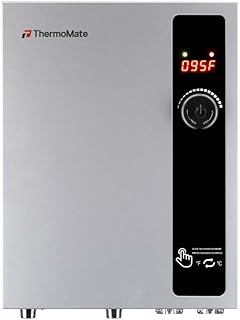
The ThermoMate 27kW electric model targets high hot water demand with up to 6.4 GPM, suitable for indoor showers and larger households. It supports self‑modulating energy use to help reduce overall consumption. This unit is best for homes needing a powerful electric solution with strong flow. A potential limitation is higher electrical load; ensure your electrical panel can support 27kW plus safety margins.
Who it’s best for: Homes with multiple simultaneous uses or people who take longer showers.
Why selected: High flow capability meets larger or busier households.
Limitations: Requires adequate electrical service capacity and may require professional electrical assessment.
Buying Guide
What type of fuel should I choose?
Electric tankless models are common in urban settings with reliable power and limited ventilation needs. Propane or gas units work well for off‑grid locations or when electricity is costly or unavailable. Consider available space, energy costs, and ventilation requirements when choosing a fuel type.
How much hot water do I need?
Estimate your peak GPM based on fixtures you use at the same time (shower, faucet, dishwasher). If you run multiple fixtures simultaneously, select a higher GPM unit or parallel units to meet demand. For compact spaces, lower GPM models may suffice for occasional use.
Is smart home compatibility important?
Some electric models offer wifi connectivity and app control. If you’re integrating with smart home ecosystems (Alexa/Google Home), consider units with reliable smart features and supported platforms.
What installation considerations matter?
Electrical service capacity, venting (for gas models), and space for mounting are key. Professional installation is recommended to ensure correct sizing, wiring, and safety compliance.
What are practical limits I should watch for?
Higher wattage units demand sturdy electrical panels. RV and off‑grid units depend on fuel supply and safe storage conditions. Under‑sink units deliver point‑of‑use heat but may not support whole‑home hot water needs.
How should I compare similar models?
- Flow rate (GPM) at your expected inlet water temperature
- Electrical or fuel requirements and run‑time feasibility
- Installation space and mounting options
- Smart features and integration
- Reliability of warm water consistency under peak demand
FAQ
- Q: What is a dual tankless water heater? A: A compact system that provides on‑demand hot water with minimal standby loss, suitable for homes with multiple fixtures or limited space.
- Q: Can I install a tankless heater myself? A: Installation is recommended by a professional to ensure correct sizing, electrical wiring or gas lines, and safety compliance.
- Q: How do I determine the right GPM? A: List all fixtures used at once and their required flow rates; choose a unit whose GPM meets or exceeds that combined load.
- Q: Do tankless heaters save energy? A: Yes, by eliminating standby heat loss; actual savings depend on usage patterns and efficiency of the unit.
- Q: Are smart tankless heaters worth it? A: They offer remote monitoring and control, which can improve comfort and energy management for tech‑savvy homes.
- Q: What about maintenance? A: Regular descaling and professional inspections help maintain performance and prevent mineral buildup, especially in hard water areas.