For an in-floor heating project, choose insulation specifically approved for your heating system and floor assembly; none of the products below is identified as a dedicated underfloor-heating board. The SmartSHIELD rolls are reflective insulation materials, the ceramic-fiber board is a high-temperature industrial material, and Heatshield is designed for vehicle use. The comparison below highlights their stated features and limitations so you can decide whether any may suit a specific application.
| Product | Best suited for | Key limitation |
|---|---|---|
| SmartSHIELD 5 mm foil/foil roll | Reflective barrier or moisture-control projects | Not listed as a floor-heating board |
| SmartSHIELD 5 mm pure-aluminum roll | Reflective and sound-barrier applications | Floor-system approval is not stated |
| SIMOND ceramic-fiber board | High-temperature insulation applications | Not specified for residential floor assemblies |
| Heatshield HP Stealth Shield | Vehicle floorboards and under-carpet heat control | Automotive product, not a general floor-heating substrate |
| SmartSHIELD 3 mm roll | Lightweight reflective insulation projects | Thin roll, not a rigid board |
SmartSHIELD 5 mm Foil/Foil Roll

This 24-inch-by-50-foot roll has a 5 mm foam core with reflective foil surfaces. The listed features say it reflects 95% of radiant energy, acts as a vapor barrier, and is unaffected by humidity and moisture. The listing also states that it meets or exceeds ASTM C1313 standards and identifies a Class A fire rating under the stated mounting conditions.
Best for: Buyers seeking a lightweight reflective insulation roll for a project where a vapor barrier and radiant barrier are relevant. It was selected because its foam core and moisture-related features may be useful in some insulation assemblies.
Limitation: It is a flexible roll, not a rigid in-floor heating board. The supplied product information does not establish its suitability beneath a particular floor finish or radiant heating system. Confirm the full floor assembly requirements before using it.
SmartSHIELD 5 mm Pure-Aluminum Roll
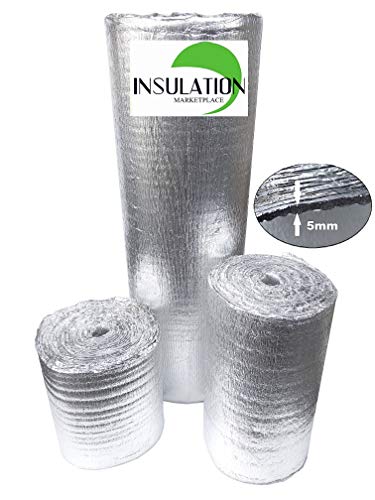
This 16-inch-by-50-foot SmartSHIELD roll uses a 5 mm foam core and pure-aluminum facing. The product information claims it reflects 97% of radiant energy and gives R-value figures of up to 15.67 with one layer and 21.10 with two layers. It is also described as a vapor barrier and sound-deadening material.
Best for: Buyers who need a narrow reflective roll and value the listed radiant-energy and sound-barrier features. It may be worth considering for a broader insulation project when the installation conditions match the product guidance.
Limitation: The stated R-values depend on the described layer configuration, and the listing does not identify this as an approved underfloor-heating board. Do not assume the roll replaces rigid insulation or a system-specific substrate.
SIMOND STORE Ceramic Fiber Board

This aluminosilicate refractory board measures 0.47 by 12 by 24 inches. The manufacturer lists a maximum use temperature of 2,300°F, a density of 20–24 pounds per cubic foot, and compressive strength of 78 PSI at 25% deformation. These specifications indicate a high-temperature insulation product rather than a typical residential floor panel.
Best for: Buyers looking for a compact ceramic-fiber board for a high-temperature application where its specified dimensions and operating limits are appropriate. It was selected because it is the clearest rigid board in the supplied products.
Limitation: The product details do not say it is designed for radiant floor heating, residential floor loads, or use beneath a floor covering. Verify load, installation, and safety requirements with the heating-system and flooring manufacturers before considering it.
Heatshield HP Stealth Shield

The HP Stealth Shield measures 1/8 inch by 24 inches by 53 inches. Its product information describes installation on vehicle floorboards, under carpet, and over sound deadeners. It is stated to withstand continuous temperatures of 1,800°F and intermittent temperatures of 2,000°F, and to reduce heat entering a vehicle from inside.
Best for: Buyers addressing heat transfer in a vehicle interior, especially around floorboards and carpeting. Its stated use directly mentions vehicle floors, making it more relevant to automotive floor insulation than to a residential heated floor.
Limitation: This is an automotive heat shield, not a listed residential underfloor-heating board. Its temperature rating alone does not establish compatibility with a floor-heating system, adhesives, flooring materials, or building-code requirements.
SmartSHIELD 3 mm Reflective Roll
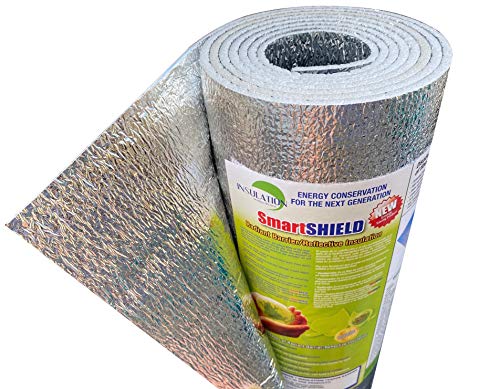
This 48-inch-by-10-foot roll has a 3 mm closed-cell polyethylene foam core between reflective engineered-foil layers. The product information says it reflects 95% of radiant energy, resists humidity and moisture, and is lightweight, easy to cut, and easy to clean. It is described as suitable for indoor or outdoor use.
Best for: Buyers who want a wider, lightweight reflective roll that is easy to cut for a general insulation project. Its foam core and foil faces make it a candidate to compare when a flexible radiant barrier is being considered.
Limitation: At 3 mm thick, this is not a rigid board, and the product details do not identify it as a floor-heating substrate. Check whether the intended system requires load-bearing insulation, a specific compressive rating, or a defined thermal resistance.
Buying Guide: Choosing Insulation For A Heated Floor
Is the product made for your floor-heating system?
Start with the heating-system manufacturer’s installation instructions. Required insulation depends on whether the system is electric or hydronic, where it is installed, and what floor assembly covers it. A product described as a radiant barrier, automotive heat shield, or refractory board is not automatically suitable for an in-floor heating installation.
Look for explicit approval or instructions for the intended floor assembly. Check whether the manufacturer specifies installation above or below the heating elements, permitted flooring types, underlayment requirements, and any limits on adhesives or fasteners. If product documentation does not address these details, ask the system manufacturer or a qualified installer before proceeding.
Do you need a rigid board or a flexible roll?
Rigid boards can provide a stable substrate or insulation layer when designed for that role. Flexible reflective rolls are easier to cut and handle, but they do not have the same form as a rigid panel. The products listed here include reflective rolls and specialty heat-insulation materials; none is explicitly identified in its supplied details as a dedicated residential in-floor heating board.
Do not select a material based only on its thickness or reflective surface. Confirm that the complete assembly can support the intended floor finish and expected loads. A flooring or heating-system manufacturer can specify whether a board, membrane, underlayment, or another component is required.
How should you compare thermal claims?
Compare stated R-values and test conditions only when the figures apply to the installation you plan to use. The SmartSHIELD pure-aluminum roll lists different R-values for one and two layers; those figures should not be treated as a guaranteed floor-system performance value. Reflective barriers may also depend on the surrounding assembly and installation conditions.
For a heated floor, the practical question is whether the specified insulation reduces heat loss in the direction intended by the system design. Ask for product documentation that explains the relevant thermal performance and installation method, rather than relying on a broad radiant-energy percentage alone.
What do moisture and temperature claims tell you?
Moisture resistance can matter in some floor assemblies, but it does not by itself prove suitability for a damp location or make a product a complete moisture-management system. Check the flooring and heating instructions for vapor-control requirements and confirm how seams and edges should be treated.
High maximum-temperature figures are also application-specific. A ceramic-fiber board or vehicle heat shield may tolerate high heat, but that does not establish that it can safely support a floor covering or work with a particular heating cable, mat, adhesive, or membrane.
What should you verify before buying?
- Whether the product is expressly approved for the heating system and floor assembly.
- Required thermal resistance, compressive strength, and thickness.
- Compatibility with the flooring material, setting products, and moisture-control layer.
- Installation location relative to the heating element and subfloor.
- Whether the product is a rigid board, flexible roll, or vehicle-specific heat shield.
- Any fire, indoor-use, or local building requirements that apply to the project.
Frequently Asked Questions
Are reflective insulation rolls the same as in-floor heating boards?
No. A reflective roll is flexible insulation material, while an in-floor heating board is generally a component specified for a particular floor assembly. Confirm the required product type with the heating-system manufacturer.
Can I put SmartSHIELD under a heated floor?
The supplied SmartSHIELD product details do not state that these rolls are approved for underfloor heating. Use them only if the system and flooring manufacturers confirm they are suitable for the planned assembly.
Is ceramic-fiber board suitable beneath residential flooring?
The SIMOND STORE listing provides high-temperature specifications but does not state that the board is designed for residential floor loads or floor-heating systems. Verify those uses before installation.
Which listed product is specifically described for vehicle floors?
Heatshield HP Stealth Shield is described for vehicle floorboards and installation under carpeting. It is an automotive product, not a general residential floor-heating board.
What is the most important specification to check?
Check explicit compatibility with the complete heating and flooring assembly first. Then verify thermal performance, load capacity, thickness, moisture requirements, and installation instructions.