The best stove-style oil space heater for heating and cooking is a portable kerosene heater with a cooktop, such as the VEVOR 9000 BTU model. For a non-fuel-burning alternative, oil-filled electric radiators provide indoor heat but are not cooking stoves. The picks below separate these two product types so you can compare fuel, heat output, portability, and intended use before choosing.
| Product | Best For | Type |
|---|---|---|
| VEVOR 9000 BTU Portable Kerosene Heater & Stove | Heating and outdoor cooking | Kerosene heater and stove |
| 2 in 1 Portable Kerosene Heater 9000 BTU | Portable heat during camping or outages | Kerosene heater and stove |
| Comfort Glow Oil Filled Radiator EOF280 | Adjustable indoor electric heat | Oil-filled electric radiator |
| EconoHome Wall Heater Panel | Low-wattage fixed room heating | Electric convection panel |
| Amazon Basics Portable Oil Radiator Heater | Quiet, adjustable room heat | Oil-filled electric radiator |
VEVOR 9000 BTU Portable Kerosene Heater & Stove

This VEVOR model combines a kerosene space heater with a surface designed to support cookware. Its listed 9,000 BTU output and 360-degree heat distribution make it the most direct match for someone searching for a stove oil space heater that can provide both warmth and a cooking surface.
- Best for: Campers and people seeking a portable heater-and-stove combination for suitable settings.
- Heating and fuel: The product listing states a 1.3-gallon tank can provide up to 20 hours of runtime, with fuel consumption listed at 0.24–0.28 gallons per hour.
- Cookware support: The listed maximum supported cookware weight is 33 pounds.
Choose this if cookware support and a stated longer runtime matter to you. The listing describes use across home, garage, camping, hunting, and outdoor settings, but fuel-burning appliances require careful attention to the manufacturer’s location and ventilation instructions. Avoid assuming it is suitable for an enclosed room; verify the manual’s requirements before indoor use.
2-in-1 Portable Kerosene Heater 9000 BTU

This portable kerosene heater is also described as a stove, with a 9,000 BTU output and a 1.22-gallon tank. Its stated heating area is approximately 108–161 square feet, making the coverage information useful for shoppers comparing it with larger or smaller heating needs.
- Best for: Buyers who want a compact kerosene heater-and-stove design for camping or emergency situations.
- Runtime: The listing gives an estimated 15–17 hours per full tank.
- Portability: It has a carrying handle and adjustable height listed from 13.98 to 16.14 inches.
Choose this model if carrying and storing a compact unit are priorities. Its listed runtime is shorter than the VEVOR model’s maximum claim, and the product information does not specify a cookware weight limit. If you plan to cook on it, check the instructions for cookware guidance and permitted operating locations. As with any fuel-burning heater, do not infer safe indoor use from a general product description alone.
Comfort Glow Oil Filled Radiator EOF280

This Comfort Glow heater is an electric oil-filled radiator, not a kerosene stove. It heats a room using electricity and has no listed cooking function. It is included as a relevant alternative for shoppers whose use of “oil heater” refers to an oil-filled electric radiator rather than a fuel-burning heater.
- Best for: Indoor users who want adjustable electric heat without a stove or fuel tank.
- Heat settings: The listed options are 600, 900, and 1,500 watts, with an adjustable thermostat.
- Coverage and safety features: The product is listed for spaces up to 250 square feet and includes overheat and tip-over protection.
Choose this if your priority is room heating and you do not need cooking capability. It is not a portable kerosene heater, and the listing does not describe it as a stove. Its 1,500-watt setting also means you should account for your electrical supply and follow the product’s operating directions.
EconoHome 400-Watt Wall Heater Panel

The EconoHome panel is a fixed electric convection heater rather than an oil stove or portable radiator. Its 400-watt rating and stated suitability for rooms up to 120 square feet make it a distinct option for buyers seeking lower-wattage supplemental heat in a smaller room.
- Best for: People looking for a wall-mounted electric heater for a small indoor space.
- Heat control: The listing describes a thermostat with a 41–86°F temperature range.
- Installation and protection: The product may be hardwired and lists overheat protection.
Choose this if you want a panel heater that remains mounted rather than a portable heater you can move between rooms. It does not provide a cooking surface, and it is not a kerosene appliance. The listing says the exterior casing becomes warm and describes it as safe for adults only, so consider that limitation when deciding where and how it will be installed.
Amazon Basics Portable Oil Radiator Heater
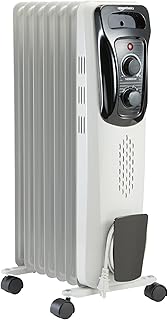
This Amazon Basics model is a portable electric radiator with seven oil-filled fins. The oil is part of the radiator’s heating system; the product is not a stove and is not listed as a kerosene heater. It is a useful comparison for shoppers who want quiet indoor warmth without a fan.
- Best for: Bedrooms, living rooms, and offices where quiet operation is important.
- Adjustable output: Three settings provide 600, 1,000, or 1,500 watts.
- Coverage and protection: The listing states coverage up to 144 square feet and includes tip-over and overheat protection.
Choose this if adjustable electric heating and fan-free operation suit your room. The listed coverage is smaller than the Comfort Glow radiator’s stated 250-square-foot coverage, so compare the figures with your intended space. Avoid choosing it for cooking: the provided product details describe a radiator, not a cooking appliance.
Buying Guide: How to Choose a Stove Oil Space Heater
Do you mean a kerosene stove or an oil-filled radiator?
These names can refer to different appliances. A kerosene heater burns fuel and, in the two combination products above, is also described as a stove. An oil-filled electric radiator uses electricity to heat sealed oil inside the radiator; it is designed for space heating, not cooking. Confirm which type you need before comparing features.
If your priority is a cooking surface as well as heat, focus on products explicitly described as heater-and-stove combinations. If you only need supplemental room heat, an electric radiator or wall panel may fit better. Do not treat an electric oil-filled radiator as a fuel-burning oil heater.
How much heat output or room coverage do you need?
Compare the listed BTU output and coverage claims, but do not treat them as guarantees for every room. The two kerosene combination heaters list 9,000 BTU. One specifies a coverage range of about 108–161 square feet; the VEVOR listing claims it can warm a 30-square-meter space. The electric models provide wattage and their own stated coverage figures.
Room size is only one consideration. Layout, insulation, drafts, ceiling height, and outdoor conditions can affect how a heater performs. Use product coverage as a comparison point, then check the manufacturer’s guidance for your specific use.
Which fuel or power source suits your setting?
Kerosene models require suitable fuel and are not interchangeable with plug-in electric heaters. Their portability can be useful in some settings, but operating a combustion heater requires following the manual’s location, fuel, ventilation, and clearance instructions. Do not use a fuel-burning heater in an enclosed area unless its documentation explicitly permits the conditions and explains how to operate it safely.
Electric radiators and panels need an appropriate electrical connection. The portable radiators list settings up to 1,500 watts, while the EconoHome panel lists 400 watts and may be hardwired. Check the appliance requirements and the electrical setup where you intend to use it.
How important are runtime and portability?
For a fuel heater, tank size and stated runtime help estimate how often refueling may be needed. The VEVOR listing gives up to 20 hours from a 1.3-gallon tank, while the other kerosene model lists 15–17 hours from a 1.22-gallon tank. These are manufacturer-provided figures; actual operation may vary.
For moving or storing a unit, compare dimensions, handles, adjustable height, and whether the product is portable or wall-mounted. The second kerosene heater lists a carrying handle and adjustable height. The EconoHome panel, by contrast, is intended to be mounted rather than carried from room to room.
What safety details should you check?
Review the instruction manual before purchase and before operation. For combustion heaters, verify the permitted setting, fuel instructions, ventilation requirements, and safe clearances. A general listing that mentions indoor or emergency use does not replace the manufacturer’s specific operating directions.
For electric heaters, compare listed protections and installation requirements. The Comfort Glow radiator lists overheat and tip-over protection; the Amazon Basics model lists both as well. The EconoHome panel lists overheat protection and may require hardwiring. Follow the instructions for placement, installation, and use rather than relying on a feature list alone.
Do you need to cook on the heater?
Only the two kerosene products in this selection are described as heater-and-stove combinations. The VEVOR listing provides a cookware weight limit; the second model’s supplied details do not state one. Check the full product instructions for allowed cookware, placement, and cooking use before relying on either unit for meal preparation.
Oil-filled electric radiators and the wall panel are heating appliances in the supplied product information. Their inclusion here is for comparison, not because they offer a stove function. Do not place cookware on an electric radiator unless its manufacturer explicitly instructs that it is designed for that use.
Frequently Asked Questions
Is an oil-filled radiator the same as a kerosene heater?
No. An oil-filled radiator is an electric appliance that uses sealed oil as part of its heating system. A kerosene heater burns fuel. The two types have different power sources, operating requirements, and intended uses.
Which product in this list is designed for both heating and cooking?
The VEVOR and 2-in-1 portable kerosene models are described as heater-and-stove combinations. Check each product’s manual for cookware limits and approved operating conditions before cooking.
Which listed heater has the longest stated runtime?
The VEVOR kerosene heater lists up to 20 hours from its 1.3-gallon tank. The other kerosene model lists 15–17 hours from a 1.22-gallon tank. These are listing claims, not guaranteed runtimes.
Can I use a kerosene space heater indoors?
Do not assume that a kerosene heater is safe for an enclosed indoor space. Check the exact model’s instructions for permitted locations, ventilation, fuel handling, and clearances before use.
Which electric radiator is listed for the larger area?
The Comfort Glow radiator is listed for spaces up to 250 square feet, while the Amazon Basics radiator is listed for up to 144 square feet. Treat these as product specifications and consider your room conditions when comparing them.