The best 3/4-inch thermostatic radiator valve depends on your system type, connection style, and need for automatic temperature adjustment. The Honeywell valve is a clearly specified option for buyers comparing pressure and capacity details; the Danfoss listing is identified as a straight thermostatic valve; and the two DN20 products describe automatic control for radiators or floor-heating circuits. The Midline valve is a replacement option for steam radiator systems, but its listing describes an air-vent temperature-control valve rather than a conventional thermostatic radiator valve.
| Product | Best suited for | Listed detail to compare |
|---|---|---|
| DN20 automatic valve with five-position setting | Buyers seeking manual temperature adjustment | Five-position scale, including off |
| DN20 angle valve with liquid sensor | Buyers seeking an angle-style option | Liquid sensor and frost protection in title |
| Midline IXW-U034 | Steam radiator valve replacement shoppers | 3/4-inch FIP x male union |
| Honeywell 3/4-inch valve | Buyers checking capacity and pressure specifications | Angle body; water and steam pressure listed |
| Danfoss 013G8020 | Buyers looking for a straight thermostatic valve | 3/4-inch straight style |
DN20 Valve With Five-Position Temperature Setting
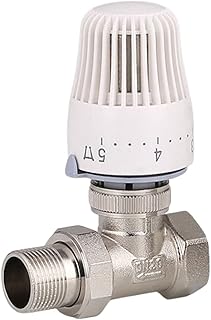
This automatic temperature-control valve is listed for a radiator or floor-heating circuit. Its features describe a sensor in the valve body that responds to water temperature by opening or closing the valve to regulate flow. That makes it a candidate for buyers who want temperature-responsive control rather than a simple manual shutoff.
Best for: Buyers who want a selectable temperature setting and a clearly described adjustment scale. The handle uses positions 0 through 5, with the listing identifying 0 as the off setting. The product is described as a straight, two-way valve with a brass threaded interface.
Why it was selected: The listed features explain both its automatic operation and how the user sets it, which helps distinguish it from products with less complete descriptions.
Limitation: The provided details do not state a temperature range, pressure rating, or full connection dimensions beyond the 3/4-inch/DN20 description in the product name. Confirm those details and the connection type before ordering.
DN20 Angle Valve With Liquid Sensor

This product is described as a 3/4-inch DN20 automatic thermostatic valve for radiator or floor heating. Its listing highlights a liquid thermostatic sensor that adjusts flow in response to temperature. The title also identifies a copper angle style, manual control, and frost protection.
Best for: Buyers who need an angle-style valve and want a liquid-sensor design. Compared with the first DN20 option, this listing emphasizes the sensor type and angle configuration rather than a numbered five-position adjustment scale.
Why it was selected: It is directly presented as a thermostatic radiator and floor-heating valve, and its stated sensor function is relevant to automatic temperature regulation.
Limitation: The supplied features do not give a temperature range, pressure rating, or detailed thread specifications. The title mentions both G1/2-inch and G3/4-inch, so verify the exact connection arrangement needed for your installation.
Midline IXW-U034 Steam Radiator Valve

The Midline IXW-U034 is described as a heavy-duty hot-water steam radiator valve with a 3/4-inch FIP connection and male union. Its stated use is as a replacement for old, rusty, or leaking radiator valves. The listed construction is brass, and the package description mentions a thermal plastic handle, nuts, and tailpieces.
Best for: Buyers seeking a replacement valve for a steam radiator and matching its stated connection arrangement. The listing emphasizes replacement use, construction, and included installation parts.
Why it was selected: It is a 3/4-inch radiator valve, but it may not serve the same purpose as an automatic thermostatic radiator valve. It is included as a relevant alternative for shoppers comparing radiator valve replacements.
Limitation: The supplied features do not describe automatic room-temperature sensing or a thermostatic adjustment function. Avoid treating it as a direct substitute for a thermostatic radiator valve unless its function matches your system requirements.
Honeywell 3/4-Inch Angle Thermostatic Valve

This Honeywell thermostatic radiator valve is listed with a 3/4-inch pipe size and an angle body style. Its product details specify a 162,000 BTU/h capacity, a 5.8 coefficient of volume, and a maximum temperature of 248 degrees Fahrenheit. The listing also gives maximum pressure as 150 psi for water and 15 psi for steam.
Best for: Buyers who need to compare a valve against system capacity, pressure, and body-style requirements. Its relatively detailed specifications make it easier to check those stated values against system documentation.
Why it was selected: The listing identifies it as a thermostatic radiator valve and provides more system-related specifications than most products in this selection.
Limitation: It has an angle body and threaded tailpiece, so buyers needing a straight configuration or another connection style should verify fit before purchase. The listed pressure limits differ for water and steam; use the applicable system rating when assessing suitability.
Danfoss 3/4-Inch Straight Thermostatic Valve

The supplied product name identifies this Danfoss item as a 3/4-inch straight thermostatic radiator valve. A straight body can be an important configuration to compare when the pipe and radiator connection are aligned, but the provided product information does not specify other technical details.
Best for: Buyers whose system calls for a straight-style thermostatic radiator valve and who can confirm the remaining specifications from the product listing or manufacturer documentation.
Why it was selected: It is explicitly named as a 3/4-inch thermostatic radiator valve, making it directly relevant to the search. Its straight configuration also gives buyers a useful contrast with the angle-style Honeywell and DN20 options.
Limitation: No feature list was provided for this item. Do not assume its pressure rating, temperature range, connection details, included parts, or compatibility without checking those details before buying.
Buying Guide: How to Choose a 3/4-Inch Thermostatic Radiator Valve
What does 3/4 inch mean for valve selection?
A 3/4-inch designation describes a nominal connection size, but it is not enough by itself to confirm a match. Valve listings may also identify a thread standard, union arrangement, or connection gender. Compare the valve’s stated connection details with the pipe, radiator, and existing valve. The DN20 label appears alongside 3/4-inch sizing in some listings here, but shoppers should still confirm the actual fitting details before ordering.
Do not choose based only on a product title or an image. Check whether the valve body is straight or angled, and determine how the pipe approaches the radiator. A valve with the wrong body orientation or connection arrangement may not suit the existing layout, even if the nominal size looks right.
Should you choose a straight or angle valve?
A straight valve is generally the configuration to investigate when the pipe and radiator connection meet in a straight line. An angle valve is a different body arrangement that may suit a layout where the connection turns. This is a fit consideration, not a guarantee of compatibility. Compare the existing valve’s orientation and connection points before selecting a replacement.
Among the products listed here, the Honeywell valve is identified as angle style, while the Danfoss product name specifies straight style. The first DN20 listing describes a straight valve, and the second specifies an angle valve. Use those labels as starting points, then confirm the dimensions and connection arrangement from the full listing.
Does your system use water or steam?
Check the heating system type before buying. A valve’s suitability for hot-water heating does not automatically establish suitability for steam, and the reverse is also true. Product specifications may state separate pressure limits for water and steam. For example, the Honeywell listing provides different maximum pressures for the two media, so buyers should compare the correct figure with their system requirements.
The Midline product is described as a hot-water steam radiator valve and as a replacement for radiator valves, but its supplied features do not identify it as an automatic thermostatic valve. If room-temperature regulation is the priority, verify that a product actually includes the thermostatic function you need.
How does a thermostatic valve regulate heat?
A thermostatic valve responds to temperature and changes the flow through the heating circuit. The first DN20 product describes a sensor in the valve body that opens and closes as water temperature changes. The second describes a liquid sensor that adjusts flow. These descriptions concern temperature-responsive flow control; they do not establish a precise room-temperature range unless the product listing provides one.
Some products use numbered settings, while others may have different adjustment methods. The first DN20 valve lists positions 0 through 5 and says position 0 turns it off. Do not assume that numbers on different valve models correspond to identical temperatures. Consult the specific product instructions when available.
Which specifications should you verify before ordering?
- System type: Confirm whether the valve is intended for your hot-water or steam application.
- Nominal size and threads: Check 3/4-inch or DN20 sizing and verify the actual thread and connection style.
- Body orientation: Match a straight or angle body to the pipe and radiator layout.
- Pressure and temperature limits: Compare listed limits with the requirements for your system.
- Control function: Confirm that the product is thermostatic if automatic temperature-responsive control is required.
- Included parts: Check whether unions, tailpieces, nuts, or other fittings are included when needed.
When a listing leaves out important details, treat those details as unknown rather than assuming standard specifications. The Danfoss product information supplied here identifies the size and straight thermostatic style but does not include a feature list. The DN20 products describe their control approach but do not provide a complete pressure or temperature specification in the supplied information.
Is a radiator valve replacement a simple fit decision?
Not always. A replacement must match the system’s connection, valve orientation, and required operating conditions. The existing valve can provide useful clues, but its appearance alone may not reveal its thread standard or internal function. If the system type or fitting is uncertain, compare the old valve’s markings and dimensions with the product documentation before purchasing.
Also distinguish a thermostatic control valve from other radiator valves and components. A product can be intended for a radiator and still lack the automatic sensing behavior expected from a thermostatic radiator valve. Confirm that the stated function—not merely the product category or image—matches the job.
Frequently Asked Questions
Are DN20 and 3/4-inch radiator valves interchangeable?
The listings pair DN20 with 3/4-inch sizing, but those labels alone do not confirm that every connection will fit. Check the thread standard, connection arrangement, and valve dimensions for the specific product and system.
What is the difference between a straight and angle radiator valve?
A straight valve has a straight body configuration, while an angle valve uses an angled arrangement. Choose by comparing the pipe route and radiator connection, then verify the product dimensions and fittings.
Can a steam radiator valve be used for hot-water heating?
Do not assume so. Check the product’s stated use and pressure limits against the heating system. A valve designed or described for one application may not be suitable for another.
Does every thermostatic radiator valve have numbered settings?
No. Adjustment methods vary by product. The first DN20 valve in this selection lists a 0-to-5 scale, but the other supplied descriptions do not establish the same control scale.
Is the Midline IXW-U034 a thermostatic radiator valve?
The supplied Midline features describe a steam radiator valve replacement, brass construction, and included parts. They do not describe automatic thermostatic sensing, so verify its function before treating it as a thermostatic valve substitute.
What should I do if a listing omits pressure or connection details?
Do not infer missing specifications. Check the full product documentation or obtain confirmation from the seller or manufacturer, then compare those details with the requirements of your radiator system.