The best 6-inch stove pipe fitting depends on the job: choose an adjustable elbow to route around obstacles, a 45-degree elbow for a fixed angled run, a damper for adjusting airflow, or a straight section for a short extension. The five options below cover those common needs. Before buying, confirm the fitting type, pipe system, and clearances required by your stove and venting manufacturer.
| Product | Best For | Key Feature |
|---|---|---|
| Imperial BM0014 Adjustable Elbow | Flexible 90-degree routing | Adjustable elbow design |
| DuraVent DVL 12-Inch Length | Double-wall pipe extensions | Air-insulated construction |
| DYVBXS 6-Inch Damper | Airflow adjustment | Stainless steel construction |
| DuraVent DuraBlack 90-Degree Elbow | Single-wall 90-degree turns | Adjustable angle |
| LEIFIDE 45-Degree Elbow | Fixed angled connections | 45-degree design |
Imperial BM0014 Adjustable Elbow

The Imperial BM0014 is a 6-inch, 90-degree adjustable stove pipe elbow. Its adjustable format is useful when a vent run needs to change direction while accommodating the layout around a stove or nearby obstruction. The listed features describe it as easy to use, highly durable, and manufactured in the United States.
Best for: Buyers who need a 90-degree elbow with some flexibility in positioning. It was selected because an adjustable elbow can suit layouts where a fixed-angle fitting may not align with the intended pipe run.
Limitation: The product information does not specify its material gauge or the full range of adjustment. Confirm its dimensions and suitability for the specific stove pipe system before ordering.
DuraVent DVL 12-Inch Double-Wall Pipe
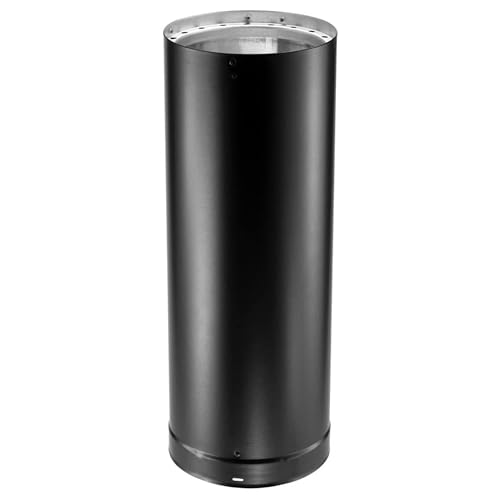
This DuraVent DVL fitting is a 6-inch-diameter, 12-inch-long double-wall stovepipe section. Its air-insulated construction is described as reducing clearances to walls from 18 inches to 6 inches and to ceilings from 8 inches. The product also features a corrosion-resistant stainless steel inner wall, which is designed to heat quickly and retain warmth.
Best for: Buyers who need a short straight section of double-wall stovepipe and whose venting plan calls for this system. It stands out among these choices because it offers a pipe length rather than an elbow or damper, and its listed design addresses clearance needs.
Limitation: This is not an elbow or a complete chimney system. The listed clearance figures should not replace the stove and venting system manufacturers’ installation instructions or local requirements.
DYVBXS 6-Inch Stove Pipe Damper

The DYVBXS fitting is a stove pipe damper intended for 6-inch pipe. Its listed dimensions are 5.95 inches at one end, 6.06 inches at the other, and 4.84 inches high. It is made from stainless steel and has a high-temperature powder-coated finish. The product description also lists a smooth handle for temperature adjustment and heat retention.
Best for: Buyers looking for a damper component to add to a compatible stove pipe run. It was selected because it serves a different purpose from the elbows and straight section: adjusting the passage of air through the pipe.
Limitation: End measurements differ slightly, so check the pipe connection and installation orientation before purchase. A damper is not a substitute for following the stove’s operating and venting instructions.
DuraVent DuraBlack 90-Degree Elbow

The DuraVent DuraBlack is a 6-inch single-wall 90-degree elbow. The product description specifies 24-gauge 430 stainless steel, lock-seamed joints, and an adjustable angle. Its listed purpose is to connect with matching single-wall stove pipe and help route the run around an obstruction or toward a horizontal direction.
Best for: Buyers who need a 90-degree turn in a compatible single-wall DuraBlack-style pipe run. It is a useful comparison with the Imperial elbow because its listed details identify the single-wall construction and steel gauge.
Limitation: This is a single-wall fitting, so do not assume it can replace a double-wall part or fit another venting system. Verify connection dimensions and required clearances for the complete installation.
LEIFIDE Fixed 45-Degree Elbow

The LEIFIDE fitting is a fixed 45-degree elbow for 6-inch stove pipe. Its product information describes thickened steel with a heat-resistant black finish and a design intended to create a stable connection between pipe sections. A fixed angle can provide a defined direction change when a 90-degree turn is not required.
Best for: Buyers whose planned pipe route specifically calls for a 45-degree elbow. It was selected to provide an angled alternative to the two 90-degree options and the adjustable products in this list.
Limitation: The angle is fixed, so it cannot be adjusted to match a different routing need. Confirm the fitting dimensions and whether its pipe system matches the rest of the installation.
Buying Guide: How To Choose 6-Inch Stove Pipe Fittings
What type of fitting does the pipe run need?
Start by identifying the fitting’s function. A straight pipe section extends a run, an elbow changes its direction, and a damper is used to adjust airflow. These parts are not interchangeable. Sketch the route from the stove toward the chimney connection, then identify each required change in direction and each straight section.
For an angled route, compare a fixed 45-degree elbow with a 90-degree elbow. Choose an adjustable elbow when the ability to set its position is useful, but verify its adjustment range. Do not select an angle based only on appearance; the stove and venting instructions determine acceptable layouts.
Does single-wall or double-wall pipe fit the installation?
Single-wall and double-wall stove pipe have different construction and clearance requirements. The DuraVent DuraBlack elbow listed here is single-wall, while the DuraVent DVL section is double-wall. A 6-inch diameter alone does not establish that two parts connect to each other. Check the product system, connection style, and installation documentation before combining components.
The DVL product lists reduced clearance figures for its air-insulated design. Treat those figures as product-specific information, not a universal rule for every stove, pipe, or building. Use the required clearances stated for the exact stove and venting system, along with applicable local requirements.
How should you check fit and dimensions?
Confirm the nominal diameter and connection dimensions for every fitting. The damper listing, for example, gives different measurements at its two ends. That information makes it especially important to check the orientation and connection points rather than relying only on the “6-inch” label.
- Check the listed diameter and the actual end dimensions when available.
- Confirm whether each part is made for the same pipe system and construction type.
- Measure the planned route, including the space needed for elbows and connections.
- Review the product documentation for required assembly and installation details.
If connection details are unclear, ask the manufacturer or a qualified installer before buying. A fitting that appears to be the right nominal size may still be unsuitable for a particular pipe system.
When is an adjustable elbow better than a fixed elbow?
An adjustable elbow is better when the route needs some flexibility to align around an obstruction or connect two sections. A fixed 45-degree elbow is better when the plan calls for that specific angle and a set direction. A fixed fitting offers a defined turn; an adjustable model may help with alignment, but its available range must be confirmed from product information.
Compare the Imperial and DuraVent 90-degree choices by the details provided. The Imperial listing emphasizes an adjustable elbow and ease of use. The DuraVent DuraBlack listing specifies single-wall construction, 24-gauge steel, and a lock-seamed design. Those distinctions matter more than treating the two products as identical.
Do you need a damper?
A damper is a separate component from an elbow or straight pipe. The DYVBXS listing describes a handle for temperature adjustment and heat retention, but a buyer should check the stove manufacturer’s guidance to determine whether a damper is appropriate for the intended setup. Follow the stove’s operating instructions, and do not use a damper as a replacement for safe vent design.
What should you verify before installation?
Review the stove manufacturer’s venting requirements and the instructions for the selected pipe system before assembling parts. Confirm the required clearances, compatible components, route, and connection method. Local building or fire-safety requirements may also apply. If you are uncertain about the design or installation, consult a qualified professional rather than improvising connections or clearances.
Frequently Asked Questions
Are all 6-inch stove pipe fittings interchangeable?
No. A shared nominal diameter does not guarantee compatibility. Check pipe construction, connection style, actual dimensions, and the product system before combining fittings.
What is the difference between a 45-degree and a 90-degree elbow?
A 45-degree elbow makes a smaller direction change, while a 90-degree elbow makes a right-angle turn. Use the angle required by the venting plan and manufacturer instructions.
Can a single-wall elbow connect to double-wall stovepipe?
Do not assume that it can. The listed DuraVent DuraBlack elbow is single-wall, and the DuraVent DVL section is double-wall. Verify compatible connections and approved transitions in the system documentation.
Does a double-wall pipe section eliminate clearance checks?
No. The DVL product lists specific reduced-clearance figures, but the required clearance depends on the exact stove and venting installation. Follow the applicable manufacturer instructions and local requirements.
How do I choose between an adjustable and fixed elbow?
Choose an adjustable elbow when positioning flexibility is needed and the adjustment range suits the route. Choose a fixed elbow when its stated angle matches the planned connection.
What is a stove pipe damper used for?
A damper is intended to adjust airflow through a compatible stove pipe. Check the stove manufacturer’s guidance to confirm whether one is appropriate and how it should be operated.