The best infrared heater light bulb depends on where you need heat: reptile keepers may prefer a lower-wattage basking bulb, while bathrooms and food-service areas often call for a 250-watt reflector bulb. The REPTI ZOO is best suited to reptile enclosures needing a 75-watt red bulb; KOHEOPT is another 75-watt option advertised as producing no visible light. BULBMASTER and Satco offer 250-watt reflector-style choices for higher-heat applications, while Philips is a familiar indoor BR40 option.
| Product | Best For | Listed Power | Key Detail |
|---|---|---|---|
| REPTI ZOO 75W | Reptile enclosures | 75W | Two bulbs; E26 base |
| KOHEOPT 75W | Reptiles and poultry | 75W | Advertised as producing no visible light |
| BULBMASTER R40 | Bathrooms and food service | 250W | Red reflector; 6,000-hour average rated life |
| Satco BR40 | Focused radiant heating | 250W | Clear finish and 2700K warm-white light |
| Philips BR40 | Indoor heating | 250W | Infrared technology; recycled glass and packaging |
REPTI ZOO 75W Reptile Heat Lamp

The REPTI ZOO two-pack is best for reptile keepers seeking a 75-watt red heat bulb for a terrarium. Its listed features include an E26 base and a soft reddish light intended to provide heat without disturbing the reptile’s day-and-night cycle. The manufacturer lists an estimated lifespan of 2,000 to 3,000 hours.
Choose this option if you want a lower-wattage bulb specifically presented for reptile and amphibian heating. The two-bulb package also provides a spare. The listing describes the lamp as an all-weather heat source that can promote animal activity, but the appropriate temperature depends on the species, enclosure, and placement.
- Best for: Reptile enclosures where a 75-watt red bulb is suitable.
- Why it stands out: Reptile-focused design, E26 base, and a two-bulb pack.
- Limitation: The listed service life is 2,000 to 3,000 hours, and the red light is visible.
KOHEOPT 75W Infrared Heat Bulb

KOHEOPT’s two-pack is best for buyers looking for a 75-watt bulb marketed for reptiles and poultry, including animals such as chickens, bearded dragons, and snakes. The product description says it produces pure infrared heat with zero visible light, which may appeal to keepers concerned about adding visible light at night.
The listing gives an estimated lifespan of 2,000 to 3,000 hours and describes upgraded vacuum-aluminizing technology. Its claims about maintaining stable warmth are not a substitute for checking the temperature in the animal’s enclosure. Compare its stated no-visible-light feature with the red appearance described in the product name and listing imagery before buying.
- Best for: Buyers who want a 75-watt heat bulb marketed for both reptiles and poultry.
- Why it stands out: The description specifically claims no visible light and continuous heating.
- Limitation: The listed lifespan is 2,000 to 3,000 hours, and the no-visible-light claim should be checked against the bulb’s actual appearance.
BULBMASTER 250W R40 Red Heat Bulbs
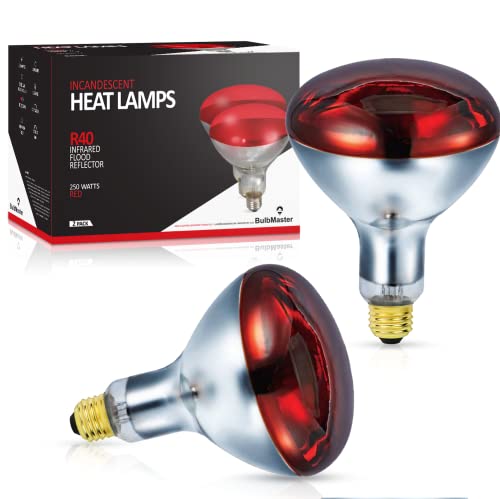
This two-pack is best for buyers who need a high-wattage red reflector bulb for applications such as bathroom heating or food service. BULBMASTER lists the bulb as 250 watts and 120 volts, with an R40 reflector shape and a medium E26 base. Its stated average rated life is 6,000 hours.
Choose this bulb when the fixture and use call for a 250-watt infrared heat lamp. The product description mentions recessed bathroom fixtures and food service, making it a broader-use option than the reptile-specific 75-watt bulbs above. Confirm that the fixture is rated for the bulb’s wattage and intended environment before installation.
- Best for: Suitable bathroom or food-service fixtures requiring a 250-watt red heat lamp.
- Why it stands out: R40 reflector format, E26 base, two-pack, and a listed 6,000-hour average rated life.
- Limitation: At 250 watts, it may be unsuitable for fixtures with lower wattage limits.
Satco S4999 250W BR40 Heat Lamp

The Satco S4999 is best for buyers seeking a clear, high-wattage BR40 bulb for focused radiant heating. The listed applications include food service, bathrooms, saunas, and animal habitats. Product details identify a 250-watt incandescent bulb with 2700K warm-white light and a 100 CRI.
Satco’s description also specifies a clear glass finish, C-9 filament, and a 1190nm peak wavelength. It states that the incandescent bulb turns on without flickering or delay. This makes it a useful comparison for shoppers who want a clear bulb rather than a red one, but the warm-white light is visible.
- Best for: Applications that call for a 250-watt clear BR40 infrared bulb.
- Why it stands out: The listing provides details on its light color, CRI, filament, and peak wavelength.
- Limitation: It produces visible warm-white light and requires a fixture rated for 250 watts.
Philips BR40 250W Infrared Heat Bulb

The Philips BR40 is best for shoppers looking for an indoor infrared heat bulb from a well-known lighting brand. Its product details identify a 250-watt BR40 flood bulb intended to provide comfortable warmth indoors. Philips also states that the bulb uses recycled glass and packaging material.
Consider this option when the fixture and heating task suit an indoor BR40 bulb. The listing gives an estimated annual energy cost based on an average of three hours of use per day, but actual energy use depends on operating time and local electricity rates. Check the bulb’s full specifications and the fixture label before installation.
- Best for: Indoor heating applications that call for a 250-watt BR40 infrared bulb.
- Why it stands out: The listing specifies infrared heating and use of recycled glass and packaging material.
- Limitation: The supplied details do not state a rated lifespan or light color.
Buying Guide: How To Choose An Infrared Heater Light Bulb
What will the bulb heat?
Start with the application. Reptile and amphibian bulbs are often described in terms of terrarium use, while larger reflector bulbs may be listed for bathrooms, food service, or other indoor heating tasks. A bulb that suits one use is not automatically appropriate for another. For animal enclosures, identify the species’ temperature needs and use a thermometer to check the actual enclosure conditions.
Use the product’s stated purpose as a starting point, not as a guarantee that it fits your situation. For example, a bulb marketed for poultry or reptiles still needs a suitable fixture and safe positioning. Follow the animal-care guidance relevant to the species, and avoid relying on bulb wattage alone to determine the temperature at the basking or resting area.
How much wattage do you need?
Wattage indicates the bulb’s electrical power, not a guaranteed temperature at a particular distance. The products here range from 75-watt reptile lamps to 250-watt reflector bulbs. A 250-watt bulb may deliver more heat, but it also requires a fixture rated for that load and can be inappropriate for a small enclosure or a fixture with a lower maximum wattage.
Check the lamp holder or fixture label before purchase. Do not exceed its wattage rating. Consider the space being heated, the bulb’s distance from the target area, ventilation, and the temperature you need to maintain. If you are replacing an existing bulb, compare its power, shape, base, and intended use rather than choosing by wattage alone.
Does visible light matter?
Infrared heating bulbs differ in visible appearance. Some are red, while the Satco bulb listed here has a clear finish and warm-white light. KOHEOPT’s product description claims zero visible light, while the REPTI ZOO listing describes soft reddish light. If darkness at night is important for an animal, verify whether the specific bulb emits visible light and consult care guidance for the species.
Visible-light preferences also matter in rooms where the bulb will be used. A red bulb changes the appearance of the illuminated area, while a clear or warm-white bulb produces a different effect. Do not assume that every infrared bulb is invisible or that every red heat bulb is suitable for nighttime use with every animal.
Which bulb shape and base fit your fixture?
Check the base type and bulb form before ordering. Several products in this selection list a standard E26 base, but that does not prove that a bulb fits every fixture. The reflector shape, bulb dimensions, fixture enclosure, and manufacturer’s maximum wattage all matter. Verify the fixture’s requirements against the exact product details.
Also consider whether the fixture is designed for the environment where it will be used. A bathroom, animal enclosure, and food-service area can have different operating conditions. Do not install a bulb in a fixture or location unless the fixture manufacturer permits that use.
How should you compare estimated bulb life?
Listed lifespans are estimates, not promises of how long a particular bulb will last in a specific setup. The products in this article give different figures: REPTI ZOO and KOHEOPT list 2,000 to 3,000 hours, while BULBMASTER lists 6,000 average rated hours. Compare these figures only as stated by each listing; testing conditions and product designs may differ.
For a frequently used heat source, replacement access and having a spare may matter. A two-pack can provide a backup, but it does not remove the need to monitor temperatures or inspect the equipment. Replace a bulb if it is damaged or no longer operating correctly.
What should you check before installation?
- Confirm the bulb’s wattage does not exceed the fixture’s maximum rating.
- Match the base and shape to the fixture specifications.
- Use the bulb only for an application supported by its product details and fixture instructions.
- For animal habitats, measure the temperature in the enclosure rather than assuming a result from the wattage.
- Keep the bulb and fixture positioned according to their instructions and away from materials that could be affected by heat.
Frequently Asked Questions
What is an infrared heater light bulb?
An infrared heater light bulb is a bulb designed to provide radiant heat. Depending on the product, it may also produce visible red or warm-white light. Check the specific bulb’s features because visible-light output, wattage, shape, and intended application vary.
Can I use a 250-watt heat bulb in any lamp?
No. Use a 250-watt bulb only in a fixture rated for that wattage and bulb type. Check the fixture label and the bulb’s specifications before installation.
Are infrared heat bulbs suitable for reptiles?
Some products are specifically marketed for reptiles, including the REPTI ZOO and KOHEOPT bulbs in this list. Suitability still depends on the animal, enclosure, fixture, and temperature requirements. Measure habitat temperatures and follow species-specific care guidance.
Do red heat bulbs provide heat without visible light?
Not necessarily. A red bulb may produce visible red light. KOHEOPT’s listing claims no visible light, while REPTI ZOO describes a soft reddish light. Check the exact product information if darkness is important.
How long does an infrared heat bulb last?
Estimated life varies by product. The listings here state figures from 2,000 to 3,000 hours for some reptile bulbs and 6,000 average rated hours for BULBMASTER. Treat these as manufacturer-provided estimates rather than guaranteed service life.
Does higher wattage mean more suitable heating?
No. Higher wattage means greater electrical power, but suitability depends on the fixture, distance, space, and heating requirements. Choose a bulb that fits the fixture and intended use, then verify the temperature in the area being heated.