The Rheem RTG Series is the clearest choice in this group for shoppers comparing a published efficiency figure: its listing states a 0.82 Uniform Energy Factor (UEF). The other listed models describe on-demand heating but do not provide an energy-factor number in the supplied product details. Choose the Rinnai V53DeN for a lower-flow natural-gas option, the MIZUDO or Ranein for higher stated flow, and the Rinnai RE140iP for propane.
| Product | Fuel and installation | Listed flow | Efficiency information provided |
|---|---|---|---|
| Rheem RTG Series | Natural gas, outdoor | 8.4 GPM | 0.82 UEF stated |
| Rinnai V53DeN | Natural gas | 5.3 GPM | On-demand heating; no numeric factor supplied |
| MIZUDO 199,000 BTU | Natural gas, indoor | Up to 10.3 GPM | On-demand heating; no numeric factor supplied |
| Ranein 190,000 BTU | Natural gas, indoor | 8.5 GPM | On-demand heating; no numeric factor supplied |
| Rinnai RE140iP | Propane, indoor | Up to 5.3 GPM | On-demand heating; no numeric factor supplied |
Rheem RTG Series: Best Published UEF

The Rheem RTG Series is the best fit for buyers who want an energy-factor figure stated in the available product information. Its listing gives a Uniform Energy Factor of 0.82 and describes the unit as a non-condensing natural-gas model for outdoor installation. UEF is useful for comparing standardized efficiency information, although a single figure does not predict every household’s energy use.
The listed capacity is 8.4 gallons per minute at a 35°F temperature rise, with 180,000 BTU per hour of output. The manufacturer’s listing positions it for whole-house use and says it can serve three to four simultaneous showers. It also says outdoor installation eliminates the need for indoor venting.
- Best for: Households seeking a natural-gas outdoor unit with a published UEF and relatively high stated flow.
- Why it was selected: It is the only product in this group whose supplied details provide a numeric UEF.
- Limitation: It is designed for outdoor installation, and the stated flow is tied to a particular temperature rise. Confirm local climate, demand, and installation requirements before choosing.
Rinnai V53DeN: Best for Moderate Demand
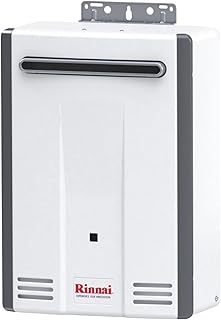
The Rinnai V53DeN is a natural-gas tankless model with a listed flow rate of 5.3 GPM. Its product information describes on-demand heating: the unit heats water when needed rather than keeping a tank of water hot. That operating approach can reduce standby heat loss compared with a conventional storage tank, but the listing does not provide a numeric energy factor or UEF for this model.
This model is best for buyers whose household hot-water demand fits its stated flow capacity and who want to compare a compact on-demand option. The product listing says it can serve up to four appliances, but actual simultaneous use depends on flow needs and incoming water temperature. The listed heat-exchanger warranty is 10 years; review the seller’s current terms for details.
- Best for: Natural-gas households with moderate simultaneous hot-water demand.
- Why it was selected: It offers a stated 5.3 GPM flow rate and explicitly describes heating water only when required.
- Limitation: No numeric energy-factor figure is included in the supplied details, so it cannot be ranked numerically against the Rheem on UEF.
MIZUDO 199,000 BTU: Best for High Flow

The MIZUDO indoor natural-gas heater is best for buyers prioritizing a high stated flow rate and features for controlling hot-water delivery. Its listing specifies 199,000 BTU of heating input and up to 10.3 GPM. It describes support for multiple bathrooms and household fixtures, but a home’s actual usable flow depends on the required temperature rise and simultaneous demand.
The product information also lists a 0.53 GPM activation threshold, temperature adjustment from 95°F to 149°F, and temperature control within ±1°F. It describes a default 107°F setting and app control. The listed features may appeal to households that want low-flow activation and adjustable temperature settings. The product listing mentions CSA certification, but buyers should verify the documentation and local requirements for their installation.
- Best for: Larger households looking for a high-capacity indoor natural-gas unit with app control and adjustable temperature.
- Why it was selected: Its stated 10.3 GPM capacity is the highest among these five products, and the listing gives specific control and activation details.
- Limitation: The supplied details do not state a numeric UEF or energy factor. Its high maximum flow should not be treated as a direct measure of efficiency.
Ranein 190,000 BTU: Best for Compact Indoor Setup

The Ranein indoor natural-gas model is a candidate for buyers who need a compact appliance with a stated 8.5 GPM maximum flow. Its listed input is 190,000 BTU. The product description says a blower adjusts its speed in response to external wind pressure and water-temperature changes, and it describes a design intended to support combustion and reduce noise.
The listed dimensions are 24.25 by 15.08 by 8.07 inches. The product also specifies standard 3/4-inch NPT water inlet fittings and describes installation as straightforward. These details can help buyers compare physical size and connection requirements, but they do not replace a professional assessment of gas supply, venting, and local code requirements.
- Best for: Buyers comparing indoor natural-gas options with a compact listed size and higher stated flow than the 5.3 GPM models.
- Why it was selected: It combines a specified 8.5 GPM flow rate with listed dimensions and connection information.
- Limitation: The supplied product details do not include an energy factor or UEF, so efficiency cannot be compared numerically with the Rheem.
Rinnai RE140iP: Best for Propane Homes

The Rinnai RE140iP is a non-condensing indoor tankless water heater designed for propane. It is the best match in this group for buyers who need a propane model rather than a natural-gas unit. The listing gives a maximum flow of 5.3 GPM and describes a compact form intended to fit a range of spaces.
The listed controls include an LED screen for service reminders and error codes. The product description says the unit heats water when needed and gives residential guarantee periods of 15 years for the heat exchanger, five years for labor, and one year for parts. It also notes that a Controlr module for Wi-Fi control is not included.
- Best for: Homes using propane that need an indoor tankless model with a listed 5.3 GPM capacity.
- Why it was selected: It provides a fuel-specific option and identifies its display, service reminders, and stated guarantee periods.
- Limitation: Wi-Fi control requires a separate module, and the supplied details do not include a numeric UEF or energy factor.
Buying Guide: How to Compare Tankless Water Heater Energy Factor
What does energy factor mean for a tankless water heater?
Energy factor is a measure used to compare how efficiently a water heater converts energy into hot water under standardized test conditions. Many current product listings use Uniform Energy Factor, or UEF. A higher comparable UEF generally indicates greater efficiency under that test method, but household energy use also depends on usage patterns, incoming water temperature, fuel, installation, and operating settings.
Do not assume that “tankless,” “on demand,” or “high efficiency” supplies a specific energy-factor rating. In this product group, only the Rheem listing provides a numeric UEF: 0.82. The other supplied descriptions say the units heat water when needed, but they do not give a number that allows a direct UEF comparison.
Should you compare UEF or flow rate first?
Check that a unit can meet your household’s hot-water demand before focusing on efficiency. Flow rate is usually stated in gallons per minute, but maximum flow figures depend on the temperature rise. For example, the Rheem listing specifies 8.4 GPM at a 35°F rise. A colder incoming water supply requires more heating, which can reduce the flow available at the desired outlet temperature.
List the fixtures likely to run at the same time, such as showers, sinks, and a dishwasher. Then compare that demand with manufacturer flow information at an appropriate temperature rise. A higher maximum GPM does not by itself mean a unit is more energy-efficient.
Which fuel and installation type do you need?
Match the heater to the fuel available at your home. The Rinnai RE140iP is listed as a propane model; the other products here are described as natural-gas models. Do not select a unit based only on flow or efficiency if its fuel does not match the home’s supply.
Installation type matters as well. The Rheem is specified for outdoor installation, while the MIZUDO, Ranein, and Rinnai RE140iP are identified as indoor units. Confirm whether the site can meet the manufacturer’s requirements for clearances, venting, combustion air, drainage where applicable, and weather exposure. A qualified installer can assess the home’s gas line and local code requirements.
What other specifications should buyers check?
- Temperature rise: Compare flow at the temperature rise relevant to your climate and preferred hot-water setting.
- Minimum activation flow: A lower activation threshold may matter for low-flow fixtures. The MIZUDO listing states 0.53 GPM.
- Fuel input and gas supply: Check the listed BTU input and confirm that the home’s gas service can support the appliance.
- Controls: Review temperature adjustment, display information, app features, and whether optional control hardware is required.
- Installation requirements: Verify indoor or outdoor placement, venting, connections, and local permits with a qualified professional.
- Warranty terms: Read the current manufacturer documentation for coverage, exclusions, and required installation conditions.
How can you estimate operating cost?
UEF is a useful comparison measure, but it is not a household bill estimate. To estimate costs, consider the amount of hot water used, local fuel rates, incoming water temperature, set temperature, and the heater’s efficiency rating. Compare products using verified specification sheets and consistent test ratings. Avoid treating a marketing statement such as “saves up to” a certain amount as a guaranteed result for every home.
Frequently Asked Questions
Which listed tankless water heater has a stated UEF?
The Rheem RTG Series listing states a 0.82 Uniform Energy Factor. The supplied product details for the other four models do not provide a numeric energy factor or UEF.
Does tankless automatically mean a higher energy factor?
No. Tankless designs heat water on demand and can reduce standby heat loss compared with a storage tank, but that does not establish a specific UEF. Compare verified ratings for the exact models under consideration.
Is a higher GPM rating the same as better efficiency?
No. GPM describes water flow, while UEF is an efficiency measure. Flow capacity should be assessed at the required temperature rise, and efficiency should be compared using a standardized rating.
Which product is listed for propane?
The Rinnai RE140iP is the propane model in this selection. The other four products are described as natural-gas units.
Can I install an indoor tankless water heater myself?
Installation requirements vary by model and local code. Gas supply, venting, combustion air, connections, and permits may require qualified professional work. Check the manufacturer’s installation documentation and consult a licensed installer.