The best thermostat for an electric radiator depends on the heater type: portable oil-filled radiators generally use built-in controls, while fixed electric baseboard or wall heaters may use a separate line-voltage thermostat. The Cadet is designed for compatible fixed electric heaters; the DREO and DUMOS models are portable radiators with their own temperature or heat controls. The Amazon Basics radiator offers three heat settings and an adjustable thermostat.
| Product | Best For | Control Type |
|---|---|---|
| DREO Oil Filled Radiator Heater | Quiet, adjustable room heating | Eco mode and temperature controls |
| DUMOS Oil Filled Radiator Heater | Small to medium rooms | Adjustable thermostat and three heat settings |
| Cadet Double Pole Thermostat | Fixed electric heaters | Line-voltage dial control |
| DREO 1500W Radiator Heater | Even heat distribution | Heater-integrated controls |
| Amazon Basics Oil Space Heater | Selectable heat output | Adjustable thermostat and three settings |
DREO Oil Filled Radiator Heater

Best for: People who want a portable oil-filled radiator with temperature-focused controls for a bedroom, office, or living room. Its eco mode, precise sensor, and smart algorithms are intended to maintain steady warmth and reduce temperature fluctuations.
The 1500-watt heater has seven fins for heat dispersion. The product information also lists quiet operation, triple overheat protection, tilt protection, a burn-proof plug, and fire-resistant materials. These features make it a choice for buyers who want a portable heater with integrated comfort controls and multiple stated safety measures.
Why it was selected: It is directly relevant to searches for a thermostat for an electric radiator because it pairs an oil-filled radiator with temperature management built into the heater.
Limitation: This is a portable heater, not a separate wall thermostat. It is not presented as a control for a fixed baseboard or wall heater.
DUMOS Radiator With Adjustable Thermostat
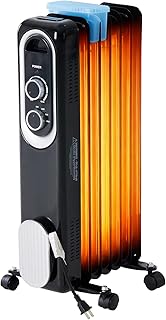
Best for: Buyers heating a smaller room who want to choose among several power levels. DUMOS describes this 1500-watt oil-filled radiator as suitable for spaces of 10–15 square meters, a range that may help shoppers compare it with their room size.
The heater offers 600-, 900-, and 1500-watt settings and an adjustable thermostat with a stated range of -5 to 60°C. It also has a power indicator light, overheat protection, and a tip-over safety switch. Its noiseless operation may suit people who prefer a quiet heater in a bedroom or office.
Why it was selected: Its built-in adjustable thermostat and selectable heat output make it a relevant option for shoppers seeking direct temperature and heating controls on a portable radiator.
Limitation: The stated room-size guidance is metric, and the product information does not describe it as a thermostat for a separate hardwired heater.
Cadet Double Pole Line Voltage Thermostat

Best for: People controlling a compatible fixed electric baseboard, fan-forced wall, or convector heater. Unlike the portable radiators in this guide, this product is a separate line-voltage thermostat intended for installation in an electric heating circuit.
Its double-pole, four-wire design switches both circuit legs. The listed maximum loads are 5,280 watts at 240 volts or 2,640 watts at 120 volts. A twist dial adjusts the setting from 40 to 80°F, and the thermostat has a positive off position. The manufacturer describes the wiring as color-coded and the unit as a replacement for most wall-mounted line-voltage thermostats.
Why it was selected: It is the clearest match for someone searching specifically for a separate thermostat for a fixed electric heater.
Limitation: It is not identified as a control for plug-in portable oil-filled radiators. Confirm the existing heater’s voltage, wiring, and load requirements before choosing a replacement; electrical installation may require a qualified professional.
DREO 1500W Oil Filled Radiator Heater

Best for: Shoppers who prioritize broad, even heat distribution from a portable radiator. This DREO model uses eight M-shaped fins, which the product description says provide a larger heat-dissipation area.
The heater operates at up to 1500 watts and is described as distributing warmth throughout a room. Its listed safety features include tip-over protection, triple overheat protection, a safety plug, and V0 flame-retardant material. The product information also states that the radiator surface is designed to maintain a safe temperature.
Why it was selected: It offers another portable radiator option for people who want integrated heating rather than a separate wall thermostat. The fin design and stated safety features provide useful comparison points against the other heaters.
Limitation: The supplied details do not specify a thermostat temperature range or dial increments. Buyers who need precise setting information should check the product controls before selecting it.
Amazon Basics Portable Oil Space Heater

Best for: Buyers who want a portable oil-filled heater with three clearly stated power settings. The heater has high, medium, and low modes at 1500, 900, and 600 watts, plus an adjustable thermostat.
Its seven oil-filled wavy fins are described as supporting faster and more even heat dispersion. The product information also says the radiator retains heat longer, providing warmth after the unit is switched off. Those traits may appeal to someone looking for steady room heating rather than a separate thermostat installation.
Why it was selected: The adjustable thermostat and selectable wattages make it easy to compare with other portable radiators in this guide. It offers a straightforward control setup for buyers who want options beyond a single heat level.
Limitation: The supplied features do not give a thermostat temperature range or room-size recommendation. It is a portable heater, not a listed line-voltage wall thermostat for fixed heating equipment.
Buying Guide: Choosing A Thermostat For An Electric Radiator
Do you have a portable radiator or a fixed electric heater?
Identify the heater type before shopping. Portable oil-filled radiators, such as the DREO, DUMOS, and Amazon Basics models above, have controls on the heater itself. A separate line-voltage thermostat, such as the Cadet, is intended for compatible fixed electric heating systems. Do not assume a wall thermostat can control a portable radiator just because both products mention electric heat.
Check the heater’s manual and product label for its control method. If the heater plugs into an outlet and has its own thermostat, a separate hardwired thermostat may not be appropriate. If it is hardwired into a home heating circuit, match the thermostat to the heater’s voltage, circuit arrangement, and electrical load.
What thermostat control do you need?
Some shoppers need simple heat-level selection; others need a specific room-temperature setting. The DUMOS and Amazon Basics heaters list three wattage levels, while the first DREO model describes eco mode and sensor-based temperature management. The Cadet uses a dial with a stated 40–80°F range. These controls serve different purposes, so compare the control type rather than treating all thermostat labels as equivalent.
For a fixed heater, look for the thermostat’s adjustment range and whether it has an off position. For a portable model, check whether the listed controls match the way you intend to heat the room. Product details vary: not every heater listing gives a numeric thermostat range.
How should you compare heater capacity?
Compare the heater’s stated wattage with the electrical supply and the room’s heating needs. The portable models in this selection are listed at up to 1500 watts, while DUMOS also provides 600- and 900-watt settings. Lower settings can reduce the heater’s power draw while it operates, but room warmth depends on factors such as room size, insulation, and outdoor conditions.
DUMOS gives a stated room range of 10–15 square meters. The other product details do not provide comparable room-size figures, so avoid assuming that all 1500-watt models will perform identically in every space.
Which safety and installation details matter?
For portable radiators, compare the stated safety features. The listed models mention protections such as tip-over shutoff or overheat protection, though the exact features differ by product. Place and operate any heater according to its instructions, and do not treat a list of safety features as a substitute for following the manual.
For a line-voltage thermostat, check voltage, pole configuration, wiring, and maximum load. The Cadet listing specifies 120- and 240-volt applications and maximum wattage limits. If the existing wiring or heater specifications are unclear, consult a qualified electrician instead of guessing. Turning off power at the breaker is a basic safety measure, but it does not replace the need to understand the circuit.
Should you choose a built-in control or a separate thermostat?
Choose a built-in control when you are buying a portable radiator and want the heater to manage its own heat output. Choose a separate line-voltage thermostat only when you have a compatible fixed electric heater and need a wall-mounted control. A separate thermostat’s compatibility depends on the heating system and electrical specifications, not simply on the word “radiator” in a product name.
For easier comparison, note whether each listing provides a temperature range, heat settings, wattage, room-size guidance, and safety features. If one of those details is essential to your decision but is not supplied, verify it with the manufacturer or product documentation before buying.
Frequently Asked Questions
Can a wall thermostat control a portable oil-filled radiator?
Not necessarily. Portable oil-filled radiators generally use controls built into the heater. The Cadet thermostat is listed for compatible fixed electric baseboard, wall, and convector heaters, not portable plug-in radiators.
What is a line-voltage thermostat?
A line-voltage thermostat controls electric heating equipment directly through its electrical circuit. It must match the heater’s voltage, wiring configuration, and load. The Cadet listing specifies use with certain 120-, 208-, and 240-volt electric heaters.
Do all electric radiators have adjustable thermostats?
No. The products in this selection have different controls and levels of detail. Some list an adjustable thermostat or eco mode, while others provide limited information about the thermostat range. Check the specific product’s control description before choosing.
Is a 1500-watt radiator suitable for every room?
No single wattage establishes suitability for every room. Room dimensions, insulation, and other conditions affect heating needs. DUMOS lists a 10–15-square-meter range; the other product details do not provide the same room-size guidance.
What should I check before replacing a fixed electric thermostat?
Check the heater’s voltage and wattage, thermostat wiring and pole configuration, and the thermostat’s load rating. Confirm that the replacement is intended for the specific heating system. Ask a qualified electrician for help if any circuit details are uncertain.